
ADA Venue Requirements – Key Standards for UK Events
Over 14 million people in the United Kingdom live with a disability , yet many british venues still fall short on true accessibility. When event spaces overlook key requirements, entire communities face exclusion from public life. Understanding what the Americans with Disabilities Act demands—and how it compares to British regulations—empowers organisers to create welcoming spaces where every guest can participate fully.
Table of Contents
- Defining ADA Venue Requirements And Accessibility
- Key Spaces And Features Requiring Compliance
- Legal Framework: ADA And UK Equality Law
- Venue Provider And Event Organiser Responsibilities
- Common Compliance Challenges And How To Address Them
Key Takeaways
| Point | Details |
|---|---|
| Accessibility is Essential | Organisations must ensure events are accessible for individuals with disabilities through comprehensive planning and strategies. |
| ADA Compliance is Fundamental | Compliance with the Americans with Disabilities Act is necessary, extending beyond physical adaptations to include programme accessibility. |
| Collaboration is Key | Venue providers and event organisers share responsibilities to create inclusive environments, facilitating a seamless experience for all participants. |
| Proactive Approach to Challenges | Addressing accessibility challenges requires innovative solutions and continuous learning rather than merely adhering to compliance checklists. |
Defining ADA Venue Requirements and Accessibility
Accessibility in event venues is a critical consideration for organisational inclusivity, ensuring that all individuals, regardless of physical ability, can fully participate in programmes and services. The Americans with Disabilities Act (ADA) provides comprehensive guidelines that establish minimum standards for venue accessibility, focusing on removing barriers and creating environments that accommodate diverse mobility needs.
Under ADA regulations, venues must implement several key accessibility features to ensure comprehensive accommodation:
- Accessible Routes : Clear, unobstructed pathways with appropriate width and minimal gradient
- Service Counter Heights : Lowered sections allowing wheelchair users comfortable interaction
- Parking Provisions : Designated disabled parking spaces with appropriate dimensions and signage
- Bathroom Facilities : Wheelchair-compatible stalls with appropriate grab rails and manoeuvring space
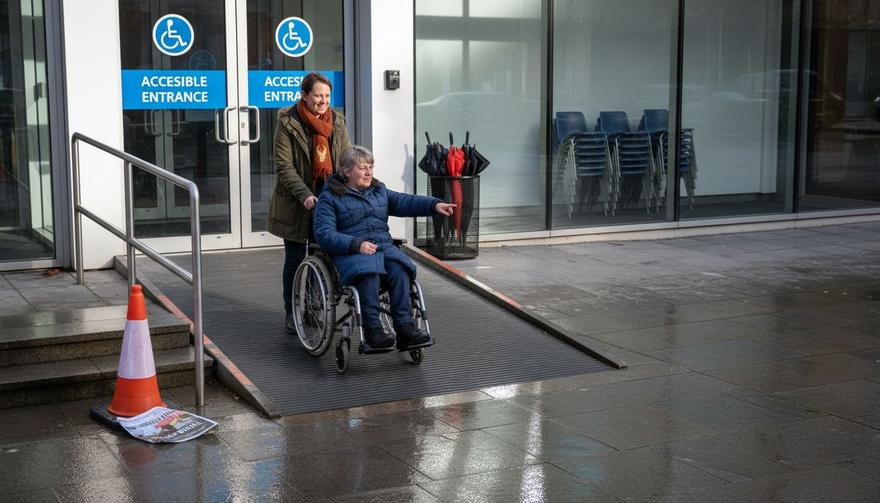
- Entrance Adaptations : Ramps, automatic doors, or level entry points for seamless access
Moreover, ADA requirements extend beyond physical infrastructure. Organisations must demonstrate programme accessibility , which means ensuring that individuals with disabilities can effectively engage with all aspects of an event, regardless of the venue’s structural limitations. This might involve providing alternative communication methods, auxiliary aids, or reasonable modifications to standard procedures.
Practical implementation of ADA guidelines requires a proactive approach. Event planners should conduct thorough accessibility audits, consult with disability access experts, and develop comprehensive strategies that go beyond mere regulatory compliance. The goal is creating genuinely inclusive environments where every participant can engage fully and comfortably, regardless of their physical capabilities.
Key Spaces and Features Requiring Compliance
Venue accessibility encompasses multiple critical spaces that demand meticulous attention to ensure comprehensive accommodation for individuals with disabilities. The Americans with Disabilities Act (ADA) mandates detailed compliance requirements across various architectural and functional elements, transforming event spaces into genuinely inclusive environments.
Key spatial zones requiring specific accessibility considerations include:
- Entrance and Arrival Areas Level or ramped entry pointsAutomatic door mechanismsClear signage indicating accessible routesMinimum width for wheelchair navigation
- Circulation Spaces Unobstructed corridorsAppropriate turning radiusesSmooth, non-slip flooring surfacesAdequate lighting and visual contrast
- Service and Interaction Zones Lowered reception countersHearing loop systemsAdjustable height workstationsCommunication support technologies
Entrance and Arrival Areas
- Level or ramped entry points
- Automatic door mechanisms
- Clear signage indicating accessible routes
- Minimum width for wheelchair navigation
Circulation Spaces
- Unobstructed corridors
- Appropriate turning radiuses
- Smooth, non-slip flooring surfaces
- Adequate lighting and visual contrast
Service and Interaction Zones
- Lowered reception counters
- Hearing loop systems
- Adjustable height workstations
- Communication support technologies
Beyond physical infrastructure, compliance extends to ensuring functional accessibility. This means venues must not only provide physical accommodations but also create environments where individuals can independently and comfortably participate in all event activities. Adaptive technologies, alternative communication methods, and flexible programme designs are essential components of comprehensive accessibility strategy.
Professional event organisers should approach ADA compliance as more than a regulatory checklist. It represents a commitment to inclusivity, demonstrating organisational respect for diverse human capabilities. Regular accessibility audits, staff training, and proactive modifications can transform venues from merely compliant spaces into genuinely welcoming environments that celebrate human diversity.
Legal Framework: ADA and UK Equality Law
The legal landscape of accessibility is a complex interplay between international standards and national legislation, with both the Americans with Disabilities Act (ADA) and the UK Equality Act 2010 establishing crucial frameworks for ensuring comprehensive rights and accommodations for individuals with disabilities. While these legislative approaches share fundamental principles, they also reflect distinct national approaches to addressing accessibility and discrimination.
Key comparative elements between ADA and UK Equality Law include:
- Scope of Protection ADA: Focuses primarily on physical accessibility and discrimination preventionUK Equality Act: Provides broader protection across multiple life domainsShared goal: Eliminating systemic barriers for disabled individuals
- Legal Enforcement Mechanisms ADA: Emphasises individual complaint and federal interventionUK Equality Act: Includes proactive duty for organisations to make reasonable adjustmentsBoth frameworks enable legal recourse for discrimination
- Definitional Approaches ADA: Defines disability through functional limitationsUK Equality Act: Adopts a more holistic, social model of disabilityCommon objective: Recognising disability as a form of human diversity
Scope of Protection
- ADA: Focuses primarily on physical accessibility and discrimination prevention
- UK Equality Act: Provides broader protection across multiple life domains
- Shared goal: Eliminating systemic barriers for disabled individuals
Legal Enforcement Mechanisms
- ADA: Emphasises individual complaint and federal intervention
- UK Equality Act: Includes proactive duty for organisations to make reasonable adjustments
- Both frameworks enable legal recourse for discrimination
Definitional Approaches
- ADA: Defines disability through functional limitations
- UK Equality Act: Adopts a more holistic, social model of disability
- Common objective: Recognising disability as a form of human diversity
Beyond legislative technicalities, these frameworks represent profound societal commitments to human dignity. The Public Sector Bodies Accessibility Regulations 2018 in the UK further strengthen this approach, mandating that public sector digital services must be inherently accessible. This progressive stance recognises that true inclusion extends far beyond physical infrastructure, encompassing comprehensive access to information, services, and societal participation.
Professional event organisers must view legal compliance not as a bureaucratic burden, but as an opportunity to create genuinely inclusive environments. By understanding and proactively implementing these legal frameworks, organisations can transform accessibility from a regulatory requirement into a meaningful expression of respect for human diversity and individual potential.
Venue Provider and Event Organiser Responsibilities
Accessibility compliance represents a shared responsibility between venue providers and event organisers, creating a collaborative framework to ensure inclusive environments for all participants. The legal landscape demands proactive approaches that go beyond mere physical adaptations, requiring strategic planning and comprehensive understanding of accessibility requirements.
Key responsibilities for venue providers include:
- Physical Infrastructure Maintaining accessible entry pointsProviding clear navigational pathwaysEnsuring appropriate signage for accessibility featuresMaintaining functional adaptive equipment
- Communication Preparations Offering alternative communication methodsProviding hearing loop systemsEnsuring staff training on disability awarenessCreating accessible information materials
- Technical Accommodations Installing adjustable height workstationsSupporting assistive technology interfacesMaintaining functional digital accessibility toolsCreating flexible space configurations
Physical Infrastructure
- Maintaining accessible entry points
- Providing clear navigational pathways
- Ensuring appropriate signage for accessibility features
- Maintaining functional adaptive equipment
Communication Preparations
- Offering alternative communication methods
- Providing hearing loop systems
- Ensuring staff training on disability awareness
- Creating accessible information materials
Technical Accommodations
- Installing adjustable height workstations
- Supporting assistive technology interfaces
- Maintaining functional digital accessibility tools
- Creating flexible space configurations
Event organisers must complement venue providers’ efforts by developing comprehensive inclusive event strategies that anticipate and address potential accessibility challenges. This involves detailed pre-event planning, participant communication, and creating contingency protocols for diverse access requirements.
Ultimately, accessibility is not a checkbox exercise but a fundamental commitment to human dignity. By viewing these responsibilities as opportunities for creating welcoming, barrier-free environments, venue providers and event organisers can transform regulatory compliance into meaningful inclusion. Proactive collaboration, continuous learning, and genuine empathy are the cornerstones of truly accessible event experiences.
Common Compliance Challenges and How to Address Them
Accessibility compliance is rarely straightforward, with venue providers encountering multifaceted challenges that demand nuanced, creative solutions. The complexity of implementing comprehensive accessibility goes far beyond simple infrastructure modifications, requiring sophisticated strategic approaches that balance legal requirements with practical constraints.
Typical compliance challenges encompass several critical domains:
- Physical Infrastructure Limitations Older buildings with structural constraintsLimited budgets for comprehensive retrofittingComplex architectural heritage considerationsSpatial configuration restrictions
- Communication and Technology Barriers Inconsistent assistive technology integrationStaff training and awareness gapsComplex digital accessibility requirementsLimited understanding of diverse accessibility needs
- Procedural and Policy Challenges Inadequate reasonable adjustment protocolsInsufficient contingency planningReactive versus proactive accessibility strategiesUnclear responsibility allocation between stakeholders
Physical Infrastructure Limitations
- Older buildings with structural constraints
- Limited budgets for comprehensive retrofitting
- Complex architectural heritage considerations
- Spatial configuration restrictions
Communication and Technology Barriers
- Inconsistent assistive technology integration
- Staff training and awareness gaps
- Complex digital accessibility requirements
- Limited understanding of diverse accessibility needs
Procedural and Policy Challenges
- Inadequate reasonable adjustment protocols
- Insufficient contingency planning
- Reactive versus proactive accessibility strategies
- Unclear responsibility allocation between stakeholders
Addressing these challenges requires a strategic approach to venue adaptation that prioritises flexibility and innovation. Organisations must move beyond compliance checklists, developing holistic strategies that view accessibility as an opportunity for creating genuinely inclusive environments.
Successful navigation of accessibility challenges demands continuous learning, collaborative problem-solving, and a commitment to understanding diverse human experiences. By reframing accessibility from a regulatory obligation to a fundamental aspect of organisational excellence, venue providers can transform potential obstacles into opportunities for meaningful inclusion and enhanced user experience.
Ensuring Full ADA Compliance for Your UK Event Venues
Navigating the complexities of ADA venue requirements can feel overwhelming, especially when aiming to create truly inclusive environments that meet both legal standards and participant needs. From accessible routes and service counters to communication support technologies, every detail matters in delivering seamless access and comfort for all attendees. Whether you face challenges with older infrastructure or need proactive strategies for accessibility, understanding and applying these key standards is essential for successful event planning.
At Jigsaw Conferences, we specialise in connecting you with venues that prioritise accessibility and inclusivity across major UK cities. Our expert team offers tailored event management solutions , helping you identify spaces that comply with ADA and UK Equality law requirements while saving you time and cost. Ready to transform your event into an accessible experience that respects the dignity of every participant Visit Jigsaw Conferences today to discover venues and receive personalised booking assistance designed to meet your accessibility goals from start to finish.
Frequently Asked Questions
What are the key accessibility features required by the ADA for event venues?
Event venues must provide accessible routes, lowered service counter heights, designated disabled parking, wheelchair-compatible bathroom facilities, and adapted entrances such as ramps or automatic doors.
How does the ADA ensure not only physical but also programme accessibility?
The ADA requires organisations to implement alternative communication methods, auxiliary aids, and reasonable modifications to ensure individuals with disabilities can engage fully in all aspects of an event.
What responsibilities do venue providers have under the ADA?
Venue providers must maintain accessible entry points, ensure clear navigational pathways, provide proper signage for accessibility features, and facilitate communication preparations like assistive technology and staff training.
What challenges do venue providers face in achieving ADA compliance?
Common challenges include physical infrastructure limitations, communication and technology barriers, and procedural challenges that hinder the implementation of effective accessibility solutions.
Jigsaw Conferences Editorial Team
Verified AuthorThe Jigsaw Conferences Editorial Team comprises venue finding experts with over 20 years of combined experience in the events and hospitality industry. Our team includes certified meeting professionals (CMP), venue sourcing specialists, and industry analysts who provide authoritative insights on venue selection, event planning, and corporate accommodation.