
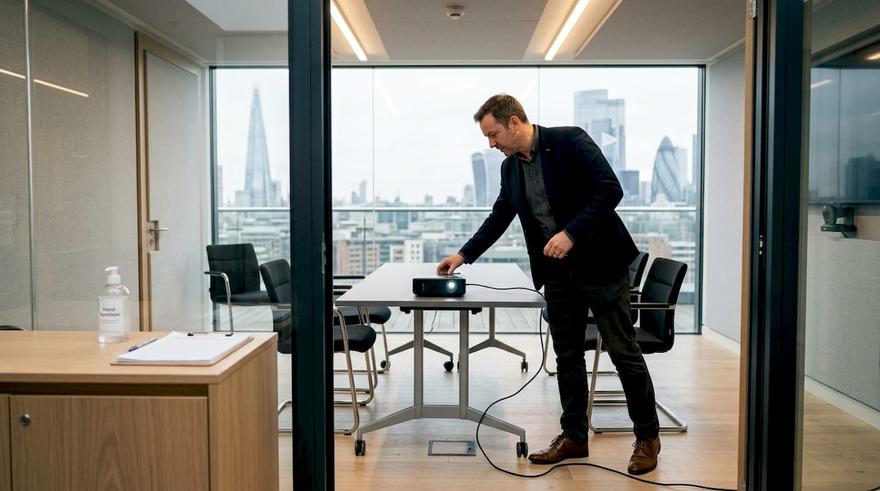
Temporary conference rooms: flexible solutions for UK events
TL;DR: Temporary conference rooms offer rapid, flexible, and cost-effective alternatives to fixed venues.Modular and acoustic solutions enable quick deployment with high connectivity and sustainability standards.Early planning and accurate sizing are key to maximizing value and minimizing waste in corporate events.
TL;DR:
- Temporary conference rooms offer rapid, flexible, and cost-effective alternatives to fixed venues.
- Modular and acoustic solutions enable quick deployment with high connectivity and sustainability standards.
- Early planning and accurate sizing are key to maximizing value and minimizing waste in corporate events.
Many corporate planners assume that booking a fixed venue is the only credible option for short-term meetings. That assumption is costing organisations both time and money. Modular cabins, acoustic pods, and short-term hires now offer genuinely competitive alternatives, with deployment timelines measured in days rather than months. This guide covers the main types of temporary conference rooms available in the UK, how they are deployed, what they cost, and how to procure them efficiently. Whether you are planning a board away-day, a regional training event, or a last-minute stakeholder session, the options are broader and more practical than most planners realise.
Table of Contents
- What is a temporary conference room?
- How temporary conference rooms are deployed
- Comparing costs and value: temporary vs fixed conference spaces
- Procuring temporary conference rooms: frameworks, booking, and best practices
- Why early planning and smart sizing are the game-changers
- Find your ideal conference room today
- Frequently asked questions
Key Takeaways
| Point | Details |
|---|---|
| Flexible space options | Temporary conference rooms include modular cabins, pods, and flexible venue hire for any corporate event need. |
| Rapid deployment | Offsite-built modular rooms can be set up in days, integrating hybrid AV and sustainability features as standard. |
| Significant savings | Costs are often 20–35% lower than fixed venues, especially outside central London, with better utilisation rates if sized properly. |
| Effortless procurement | Frameworks, venue finders, and specialist agencies streamline booking, compliance, and negotiation for UK planners. |
What is a temporary conference room?
A temporary conference room is any space specifically configured for short-term corporate meeting or event use, without a long-term lease or permanent infrastructure commitment. The category is broader than it sounds. It ranges from a modular cabin erected on a car park to a fully fitted acoustic pod placed inside an existing office, and from a single-day hire of a hotel boardroom to a multi-week pop-up conference suite on a construction site.
Portable Space modular cabins illustrate just how varied these solutions are, offering units that include audio-visual fittings, climate control, and full electrics as standard. The key distinction is impermanence: these spaces are designed to be removed, reconfigured, or vacated once the event or project concludes.
The main types of temporary conference room you will encounter in the UK are:
- Modular or portable cabins: Offsite-built units delivered and installed on your chosen site, suitable for multi-day or multi-week use
- Acoustic pods and booths: Freestanding soundproofed units placed within existing buildings, ideal for hybrid calls and smaller breakout sessions
- Pop-up event rooms: Temporary structures erected within exhibition halls, hotel lobbies, or outdoor spaces for a single event
- Short-term venue hire: Rooms within hotels with conference facilities , serviced offices, or civic buildings booked by the hour or day
Typical use cases include project planning sessions, board meetings, training days, product launches, and emergency response briefings. The speed and flexibility of these options is where they genuinely shine.
| Type | Typical duration | Approximate starting cost | Best suited for |
|---|---|---|---|
| Modular cabin | Weeks to months | From £89/week | Construction sites, campuses |
| Acoustic pod | Permanent or semi-permanent | From £3,000 purchase/lease | Office hybrid meetings |
| Pop-up event room | Hours to days | Variable by event | Exhibitions, launches |
| Short-term venue hire | Hours to days | From £61/hour (London) | Ad hoc board meetings |
For a thorough breakdown of each option, the temporary meeting room guide covers specifications, provider comparisons, and capacity planning in detail. The core advantage across all types is the same: you pay for what you use, when you use it, without being locked into a fixed overhead.
How temporary conference rooms are deployed
Understanding how these spaces actually get from a supplier’s yard to your site is what separates a smooth project from a stressful one. The mechanics are more straightforward than most planners expect.
Modular units are built offsite in controlled factory conditions, which dramatically reduces on-site disruption and shortens lead times. Offsite construction enables rapid rollout , with units that can be linked, stacked, and tailored for hybrid audio-visual requirements. A single-unit meeting room can typically be craned into position and made operational within 24 to 48 hours of delivery.
Here is how a standard modular deployment unfolds:
- Site survey: The provider assesses access, ground conditions, and utility connections
- Offsite build: The unit is constructed and fitted out to your specification in the factory
- Delivery and crane lift: The unit is transported and positioned using specialist equipment
- Connection and commissioning: Power, data, and HVAC (heating, ventilation, and air conditioning) are connected and tested
- Handover and induction: The provider walks your team through the space and safety procedures
- Removal: At the end of the hire period, the provider dismantles and removes the unit entirely
Modern modular rooms are also built with hybrid working in mind. BYOD (bring your own device) support, USB-C connectivity, and Cisco-compatible AV systems are increasingly standard rather than optional extras. This matters enormously for corporate events where remote participants are the norm.
“The best temporary conference solutions are indistinguishable from permanent ones in terms of connectivity and comfort. The difference is that they disappear when you no longer need them.”
“The best temporary conference solutions are indistinguishable from permanent ones in terms of connectivity and comfort. The difference is that they disappear when you no longer need them.”
Sustainability is another area where modular deployment has improved markedly. PIR (passive infrared) occupancy sensors reduce energy waste, reusable structural components lower material consumption, and many providers now offer carbon-neutral delivery options. For planners working to corporate ESG (environmental, social, and governance) targets, sustainable temporary meeting rooms are increasingly the preferred choice.
Pro Tip: Always request a copy of the provider’s health and safety documentation before sign-off. Reputable suppliers will include risk assessments, method statements, and electrical certification as part of their standard turnkey package. For government or public sector sites, cross-reference against government meeting space standards to ensure full compliance.
Comparing costs and value: temporary vs fixed conference spaces
The numbers are where the case for temporary conference rooms becomes genuinely compelling. Most planners are surprised by how wide the gap is between fixed venue costs and flexible alternatives.
UK venue cost benchmarks for 2026 show convention centre day rates running from £50,000 to £62,000, while modular weekly hire starts from just £89, and London short-term room hires average £61 per hour. These are not comparable products, of course, but the data illustrates the spectrum available to planners who are willing to look beyond the obvious.
| Option | Hourly rate | Daily rate | Weekly rate |
|---|---|---|---|
| London short-term hire | £61 avg | £400-£900 | Variable |
| Regional venue hire | £25-£45 | £150-£400 | Variable |
| Modular cabin (regional) | N/A | £25-£40 | From £89 |
| Convention centre | £500+ | £50,000-£62,000 | N/A |
Beyond the headline rates, there are two factors that significantly affect real-world value: no-show rates and utilisation. Research consistently shows that corporate meeting rooms are occupied for only 30 to 40 percent of their booked time. When you hire a fixed venue for a full day and attendance drops by a third, you have paid for space that sat empty. Temporary and modular options allow you to right-size the booking to actual expected attendance, which is a meaningful saving.
Key value considerations for procurement officers:
- Regional vs central: Regional modular deployments can cost 40 to 60 percent less than equivalent London hires
- Bundled packages: Many modular providers include AV, furniture, and catering connections in a single weekly rate
- No sunk costs: Unlike leased venues, temporary rooms carry no dilapidation liability or long-term maintenance obligation
- Scalability: Linked modular units can expand capacity without rebooking an entirely new venue
The honest calculation is not just about the room rate. Factor in travel costs for attendees, catering logistics, and the time your team spends managing a fixed venue relationship. When you add those figures, temporary solutions often win on total cost of ownership, not just the headline hire price. Review the event venue cost benchmarks to build a defensible business case for your next procurement decision.
Procuring temporary conference rooms: frameworks, booking, and best practices
Knowing what is available and what it costs is only half the job. Securing the right space at the right price requires a structured approach to sourcing and negotiation.
For public sector organisations, procurement frameworks are the starting point. The National Public Sector Furniture Framework covers modular hire and related solutions, providing pre-negotiated rates and compliant supplier lists. Using a framework removes much of the procurement risk and significantly reduces the time spent on supplier due diligence.
For private sector planners, the choice between using a venue finder and going direct to a provider depends on complexity and volume. Here is a practical sequence to follow:
- Define your brief: Capacity, duration, AV requirements, location, and budget ceiling
- Choose your procurement route: Framework, venue finder, or direct supplier approach
- Request multiple quotes: Always compare at least three providers on a like-for-like basis
- Scrutinise the contract: Check cancellation terms, damage liability, and what is included in the base rate
- Confirm AV and connectivity: Insist on a pre-event technical check, not just a specification sheet
- Plan for no-shows: Build a realistic attendance estimate into your capacity decision
Pro Tip: Book 12 to 18 months in advance for large or complex deployments. Early commitment locks in current pricing, gives providers time to customise the build, and ensures your preferred dates are secured before competing events claim them.
Venue finders are particularly valuable when you are sourcing across multiple locations or need to compare temporary event spaces against traditional venues simultaneously. A good venue finder will negotiate package pricing, manage supplier relationships, and flag compliance issues before they become problems. For a practical overview of the sourcing process, the guide on venue finding for corporate events sets out the full methodology step by step.
Why early planning and smart sizing are the game-changers
Here is the insight that most procurement guides skip over: the biggest waste in conference room budgets is not the rate you pay, it is the space you do not use. Planners routinely overbook capacity because they are nervous about turning delegates away. That instinct is understandable, but it is expensive.
Real utilisation data tells a different story. When you track actual attendance against booked capacity across a series of events, you almost always find that a smaller, well-configured space would have served the same purpose at lower cost. Booking 12 to 18 months out secures the best rates and gives you the lead time to design a space that fits actual need rather than worst-case fear.
Hybrid AV is another area where planners still treat the exceptional as optional. In 2026, a temporary conference room without reliable hybrid connectivity is simply not fit for purpose. Insist on it as a baseline requirement, not an upgrade.
Finally, sustainable modular deployment is no longer a nice-to-have. It is fast becoming the expected standard for corporate events, driven by both internal ESG commitments and client expectations. Providers who cannot demonstrate energy efficiency and material reuse are falling behind. For expert temporary meeting room advice that covers both sustainability and AV integration in depth, the resources are there to help you make the case internally.
Find your ideal conference room today
Putting all of this into practice is where Jigsaw Conferences makes a real difference. Since 2003, we have helped corporate planners and procurement officers across the UK source the right space at the right price, without the guesswork. Whether you need a modular suite for a six-week project, a short-term boardroom in central London, or a fully managed event venue for 500 delegates, our free venue finder connects you to options that match your brief and your budget. We handle the negotiation, the compliance checks, and the supplier coordination, so you can focus on the event itself. Explore our full range of temporary event spaces and get in touch today.
Frequently asked questions
How quickly can I deploy a temporary conference room?
Offsite construction enables rapid deployment of modular conference spaces, meaning most units can be on-site and operational within days. Pod solutions within existing buildings can often be installed in a matter of hours.
What is the average cost for hiring a temporary conference room in the UK?
UK market rates range from approximately £61 per hour for London short-term hires to £89 or more per week for modular units, with large convention centres exceeding £50,000 per day.
Can temporary conference rooms support hybrid meetings?
Yes. Hybrid AV with BYOD support is now standard in modern modular and pod rooms, with USB-C and Cisco-compatible systems enabling seamless plug-and-play integration for remote participants.
Do I need special approvals for installing a modular conference room?
In most cases, reputable providers manage all turnkey documentation including health and safety records and electrical certification. Some urban or restricted sites may require additional planning permissions, which experienced suppliers will flag during the initial site survey.
How can I secure the best rates when booking?
Book 12 to 18 months ahead and use procurement frameworks or a venue finder to access pre-negotiated rates. Early commitment also gives you greater leverage when negotiating package inclusions and cancellation terms.
Jigsaw Conferences Editorial Team
Verified AuthorThe Jigsaw Conferences Editorial Team comprises venue finding experts with over 20 years of combined experience in the events and hospitality industry. Our team includes certified meeting professionals (CMP), venue sourcing specialists, and industry analysts who provide authoritative insights on venue selection, event planning, and corporate accommodation.