
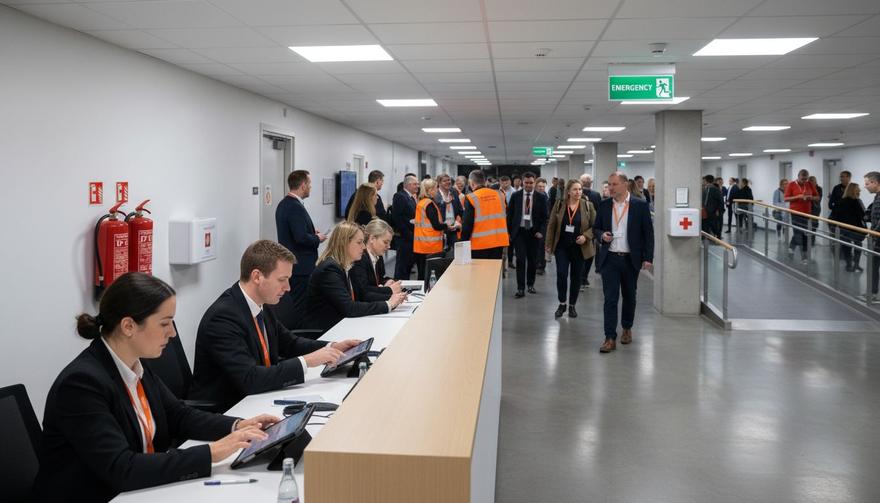
Venue Health And Safety Regulations Explained: UK Guide
Over 90 percent of british event organisers say health and safety rules are their top priority when choosing a venue. Clear regulations protect participants and staff while helping events run smoothly across the UK. From crowd capacity limits to fire safety checks, understanding these standards means fewer risks and greater confidence for organisers. This guide breaks down the essentials so you can manage any venue with trust in the process and peace of mind for every guest.
Table of Contents
- Defining Venue Health And Safety Regulations
- Types Of Venues And Applicable Rules
- Legal Framework And Regulatory Bodies
- Core Compliance Requirements For Venues
- Roles, Responsibilities And Best Practices
- Common Pitfalls And How To Avoid Them
Key Takeaways
| Point | Details |
|---|---|
| Regulatory Framework | The Health and Safety Executive (HSE) sets crucial regulations for event safety in the UK, necessitating thorough venue assessments and compliance with specific guidelines. |
| Specific Venue Considerations | Different types of venues have unique health and safety requirements; event organisers must understand these to ensure participant protection and regulatory compliance. |
| Core Compliance Essentials | Key compliance actions include comprehensive risk assessments, effective emergency planning, and continuous training and communication for all personnel involved. |
| Common Pitfalls | Avoid common mistakes such as incomplete risk assessments and inadequate staff training by fostering a proactive safety culture and regular evaluations of safety protocols. |
Defining Venue Health And Safety Regulations
Venue health and safety regulations represent a comprehensive framework of legal requirements designed to protect individuals during events, conferences, and gatherings. These regulations establish essential guidelines for organisers, venue managers, and event professionals to ensure participant wellbeing, mitigate potential risks, and create secure environments across different settings.
The Health and Safety Executive (HSE) serves as the primary regulatory authority in the United Kingdom, providing explicit guidance for venue safety management. Their comprehensive standards mandate that event organisers must thoroughly assess venue suitability, design appropriate safety protocols, and implement robust risk management strategies. Key considerations include crowd management, emergency evacuation procedures, structural integrity assessments, and comprehensive pre-event planning.
Critical regulatory components encompass multiple dimensions of venue safety, including:
- Physical infrastructure assessment
- Emergency exit accessibility
- Crowd capacity limitations
- Fire safety compliance
- Risk identification and mitigation strategies
- First aid and medical emergency preparedness
- Electrical and structural safety inspections
Navigating these regulations requires a systematic approach that prioritises participant protection while maintaining operational efficiency. Learn more about event coordination to understand the comprehensive strategies professional event managers employ to ensure regulatory compliance and participant safety.
Understanding these regulations is not merely a legal requirement but a fundamental responsibility. Event organisers must proactively develop comprehensive safety management plans that address potential risks, create clear communication protocols, and establish responsive mechanisms for managing unexpected challenges during events.
Types Of Venues And Applicable Rules
Health and safety regulations in the United Kingdom encompass a diverse range of venue types, each with unique safety requirements and regulatory frameworks. From corporate conference centres to hospitality establishments, these venues must adhere to specific guidelines designed to protect employees, visitors, and participants.
The UK government categorises venues into distinct classifications, each mandating different safety protocols. Commercial venues such as restaurants, bars, conference centres, and public houses require comprehensive licensing and safety assessments. Sports facilities, clubhouses, entertainment spaces, and temporary event locations have specific regulatory requirements that address their unique operational characteristics.
Key venue categories and their primary safety considerations include:
- Corporate Conference Centres : Crowd management, emergency evacuation, technological safety
- Hospitality Venues : Food safety, alcohol service regulations, occupational health standards
- Sports Facilities : Equipment safety, participant protection, spectator management
- Entertainment Spaces : Noise control, crowd density management, performer safety
- Temporary Event Locations : Rapid risk assessment, infrastructure safety, short-term compliance protocols
Explore temporary meeting room guidelines to understand the specific safety requirements for transient event spaces and how professional organisers navigate complex regulatory landscapes.
Understanding venue-specific regulations requires a nuanced approach. Event managers must not only comprehend general health and safety principles but also interpret how these standards apply to specific venue types, ensuring comprehensive protection through targeted risk management strategies.
Legal Framework And Regulatory Bodies
The legal framework governing venue health and safety in the United Kingdom represents a complex network of legislation, regulatory bodies, and statutory requirements designed to protect workers, participants, and the general public. This comprehensive system ensures that venues across various sectors maintain stringent safety standards and proactively manage potential risks.
Primary regulatory bodies play critical roles in developing, implementing, and enforcing these safety regulations. The Health and Safety Executive (HSE) stands as the principal national regulator, responsible for overseeing workplace safety and providing comprehensive guidelines for event and venue management. Local authorities, alongside HSE, share enforcement responsibilities, creating a multilayered approach to safety compliance that adapts to different venue types and operational contexts.
Key regulatory components and legal instruments include:
- Health and Safety at Work Act 1974 : Fundamental legislation establishing core safety obligations
- Management of Health and Safety at Work Regulations : Detailed requirements for risk assessment and management
- Licensing Act 2003 : Governing alcohol service and entertainment venue operations
- Covid-19 Specific Regulations : Temporary measures addressing pandemic-related safety protocols
- Fire Safety Regulations : Comprehensive guidelines for emergency preparedness
Explore comprehensive meeting room guidelines to understand how professional event managers navigate the intricate landscape of legal compliance and safety standards.
Understanding this legal framework requires continuous professional development and proactive risk management. Event organisers must remain current with evolving regulations, interpret complex legal requirements, and implement robust safety strategies that protect all stakeholders while maintaining operational efficiency.
Core Compliance Requirements For Venues
Venue health and safety compliance represents a multifaceted approach requiring systematic planning, comprehensive risk assessment, and proactive management strategies. Event organisers must develop robust frameworks that address potential hazards, protect participants, and ensure operational safety across all venue environments.
The Health and Safety Executive (HSE) outlines critical compliance requirements that demand meticulous attention to detail and a structured approach to risk management. These requirements emphasise the importance of proportionate planning, which means tailoring safety protocols to the specific scale, complexity, and unique characteristics of each event and venue.
Key core compliance requirements include:
- Risk Assessment : Comprehensive identification and evaluation of potential safety risks
- Emergency Planning : Detailed strategies for evacuation, medical response, and crisis management
- Worker Engagement : Involving venue staff and workers in safety planning and risk mitigation
- Information Sharing : Clear communication of safety protocols and potential hazards
- Continuous Monitoring : Regular review and updating of safety procedures
- Inter-agency Coordination : Liaison with emergency services and relevant regulatory bodies
- Documentation : Maintaining accurate records of safety assessments and incident responses
Explore venue hire considerations to understand how professional event managers integrate comprehensive safety strategies into venue selection and event planning.
Successful compliance is not about rigid adherence to checklists but creating a dynamic safety culture. Event organisers must cultivate an environment where safety is proactively considered, continuously improved, and embedded into every aspect of venue management and event planning.
Roles, Responsibilities And Best Practices
Successful venue health and safety management hinges on clearly defined roles and responsibilities, creating a comprehensive ecosystem of accountability where every stakeholder understands their specific obligations. This collaborative approach ensures that safety protocols are not merely theoretical guidelines but practical, implementable strategies that protect all participants.
Key stakeholders in venue safety management include venue owners , event organisers , site managers , and health and safety professionals . Each group plays a critical role in developing, implementing, and maintaining robust safety frameworks. The Health and Safety Executive (HSE) emphasises that these roles are interconnected, requiring seamless communication, proactive risk management, and a shared commitment to maintaining the highest safety standards.
Critical roles and their primary responsibilities include:
- Venue Owners : Ensuring premises meet fundamental safety requirements
- Event Organisers : Developing comprehensive safety management plans
- Site Managers : Implementing and monitoring daily safety protocols
- Staff Training Coordinators : Delivering essential safety education and competency training
- Risk Assessment Specialists : Conducting detailed hazard identification and mitigation strategies
- Emergency Response Coordinators : Creating and maintaining robust contingency plans
- Compliance Officers : Ensuring adherence to legal and regulatory requirements
Explore venue hire considerations to understand how professional event managers integrate comprehensive safety strategies and allocate responsibilities effectively.
Best practices in venue safety transcend mere compliance. They represent a dynamic, evolving approach that prioritises continuous learning, proactive risk management, and a culture of safety that empowers every individual to contribute to collective protection and wellbeing.
Common Pitfalls And How To Avoid Them
Navigating venue health and safety regulations requires a proactive approach that anticipates and mitigates potential risks before they escalate into significant problems. Event organisers frequently encounter challenges that, if left unaddressed, can compromise participant safety and lead to legal complications or regulatory penalties.
The Health and Safety Executive (HSE) highlights several critical areas where venue managers and event organisers often fall short. These pitfalls typically stem from inadequate planning, poor communication, and a reactive rather than preventative approach to safety management. Understanding these common mistakes is the first step in developing robust risk mitigation strategies that protect both participants and organisational interests.
Key common pitfalls and their preventative strategies include:
- Incomplete Risk Assessments : Conduct comprehensive, detailed risk evaluations for every venue and event scenario
- Inadequate Staff Training : Implement rigorous, ongoing safety training programmes for all personnel
- Poor Communication Protocols : Establish clear, multi-channel communication systems for emergency responses
- Insufficient Emergency Planning : Develop detailed, scenario-specific contingency plans with regular drills
- Neglecting Regular Venue Inspections : Schedule systematic and comprehensive venue safety audits
- Overlooking Technological Safety : Integrate modern safety technologies and monitoring systems
- Failing to Document Processes : Maintain meticulous records of safety assessments and incident responses
Explore venue hire considerations to understand how professional event managers anticipate and mitigate potential safety challenges before they become critical issues.
Successful safety management is not about avoiding every potential risk but developing a sophisticated, adaptive approach that recognises the dynamic nature of event environments. Event organisers must cultivate a proactive safety culture that empowers staff, anticipates challenges, and responds with precision and professionalism.
Simplify Venue Health and Safety Compliance with Expert Support
Navigating the complex landscape of venue health and safety regulations can feel overwhelming. The article highlights key challenges such as thorough risk assessments, emergency planning, and continuous compliance monitoring that organisers must address to protect attendees and avoid legal pitfalls. If you are aiming to create a safe environment but find yourself stretched thin by the detailed requirements like crowd management and staff training, you are not alone.
Jigsaw Conferences offers you a trusted partner to ease this burden. Our professional venue-finding and event management services provide tailored solutions to help you meet core compliance requirements efficiently. Benefit from our extensive industry experience since 2003 and access a diverse range of UK venues that prioritise safety and regulatory adherence. Whether you need meeting room hire guidance or want to explore venue hire considerations, our free, personalised service saves you time and secures the best options.
Ensure your event runs smoothly and safely without compromising quality or compliance. Start by visiting Jigsaw Conferences today and let our experts guide you through finding the perfect venue that meets all your health and safety needs.
Frequently Asked Questions
What are venue health and safety regulations?
Venue health and safety regulations are legal requirements designed to ensure the safety and wellbeing of individuals during events and gatherings. These guidelines help organisers create secure environments and mitigate potential risks.
Who is responsible for ensuring compliance with health and safety regulations at a venue?
Both venue owners and event organisers share responsibility for compliance. Venue owners must ensure their premises meet safety standards, while event organisers must develop and implement comprehensive safety management plans.
What key components should be included in a venue’s risk assessment?
A venue’s risk assessment should include identification and evaluation of potential safety risks, emergency planning strategies, and clear communication of safety protocols to all stakeholders.
How can event organisers avoid common pitfalls related to venue safety management?
Event organisers can avoid common pitfalls by conducting thorough risk assessments, providing ongoing staff training, maintaining clear communication protocols, and regularly inspecting the venue for safety compliance.
Jigsaw Conferences Editorial Team
Verified AuthorThe Jigsaw Conferences Editorial Team comprises venue finding experts with over 20 years of combined experience in the events and hospitality industry. Our team includes certified meeting professionals (CMP), venue sourcing specialists, and industry analysts who provide authoritative insights on venue selection, event planning, and corporate accommodation.