
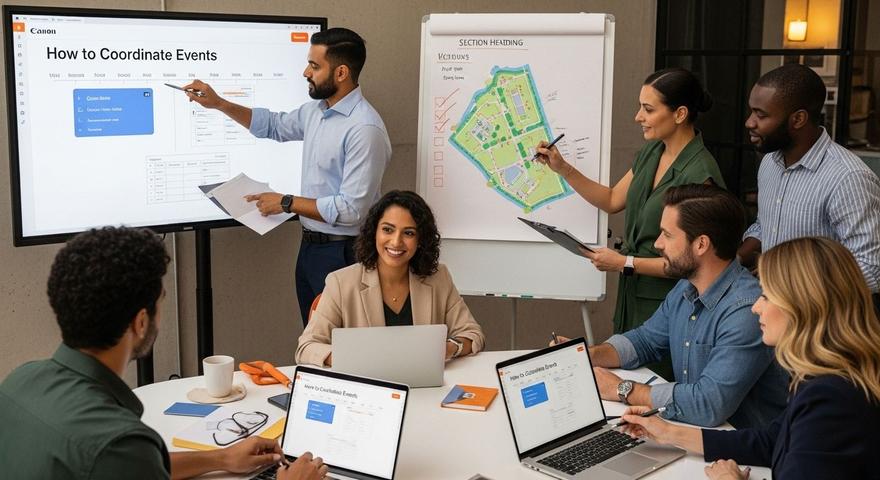
How to Coordinate Events: Mastering the Process for Success
Coordinating an event can feel like herding cats, with countless details demanding attention at every turn. Yet, the reality is even experienced professionals face chaos when objectives are unclear. Here is the surprise. Events with well-defined measurable goals are statistically far more likely to achieve participant satisfaction and strong business outcomes . The most successful event coordinators do not just rely on detailed plans and perfect venues. They start by getting those objectives sharper than ever.
Table of Contents
- Step 1: Define Event Objectives And Goals
- Step 2: Create A Detailed Event Plan
- Step 3: Secure Venue And Resources
- Step 4: Coordinate Logistics And Scheduling
- Step 5: Execute The Event
- Step 6: Evaluate And Report On Event Success
Quick Summary
| Key Point | Explanation |
|---|---|
| 1. Define clear event objectives | Establish specific, measurable goals that guide all planning decisions to ensure a targeted experience. |
| 2. Create a comprehensive event plan | Develop a detailed master document covering all logistics, budgets, and schedules to mitigate risks and ensure smooth execution. |
| 3. Select venue with careful consideration | Evaluate venues based on accessibility, facilities, and alignment with event objectives to enhance attendee experience. |
| 4. Coordinate logistics and scheduling meticulously | Develop a detailed timeline incorporating buffer times and contingencies for a seamless, well-structured event execution. |
| 5. Evaluate and report post-event | Gather feedback and compare outcomes against objectives to identify successes and areas for improvement for future events. |
Step 1: Define Event Objectives and Goals
Successful event coordination begins with crystal clear objectives that transform abstract ideas into actionable plans. Before diving into logistics, strategic goal setting provides the foundational blueprint that guides every subsequent decision in your event planning journey.
Starting with precise objectives allows you to create a targeted experience that delivers maximum impact. Professional event coordinators understand that undefined goals are like navigating without a map - you might move, but you will not reach your destination efficiently.
To define your event objectives, begin by asking fundamental questions about purpose and desired outcomes. What specific business or organisational need does this event address? Are you aiming to educate, network, launch a product, celebrate achievements, or generate potential business leads? Each objective must connect directly to a measurable result .
Consider both qualitative and quantitative goals. Quantitative objectives might include metrics like attendee numbers, engagement rates, or potential revenue generation. Qualitative goals could involve enhancing brand perception, creating meaningful connections, or generating positive industry buzz.
Key verification criteria for well-defined event objectives include:
- Specificity: Goals are clear and unambiguous
- Measurability: Outcomes can be tracked and evaluated
- Relevance: Objectives align with broader organisational strategy
- Time-bound: Clear timeline for achievement established
While developing objectives, remain flexible. Business environments evolve rapidly, and your event goals should accommodate potential shifts. Maintain a strategic yet adaptive approach that allows refinement as more information becomes available.
By investing time in meticulous objective setting, you create a robust foundation that transforms event coordination from a tactical exercise into a strategic opportunity for meaningful organisational advancement.
This table summarises the primary steps involved in the event coordination process, outlining each step with its key focus and core outcome for easy reference.
| Step | Key Focus | Core Outcome |
|---|---|---|
| 1. Define event objectives and goals | Establish measurable, relevant aims | Strategic blueprint for planning |
| 2. Create detailed event plan | Document all logistics, timelines, and risks | Comprehensive action guide for execution |
| 3. Secure venue and resources | Source venues and essential requirements | Physical foundation and resource assurance |
| 4. Coordinate logistics and scheduling | Arrange detailed timings and responsibilities | Operational structure for smooth event flow |
| 5. Execute the event | Implement plans and manage on the day | Real-time delivery and attendee engagement |
| 6. Evaluate and report on success | Gather and assess outcomes | Insights and recommendations for improvement |
Step 2: Create a Detailed Event Plan
With clear objectives established, your next critical step involves developing a comprehensive event plan that transforms strategic goals into tangible actions. A meticulously crafted event plan serves as your operational roadmap, ensuring every aspect of your event receives careful consideration and precise execution.
Begin by creating a master document that becomes your central planning resource. This living document will track all critical components including timelines, budget allocations, vendor contracts, logistical requirements, and stakeholder responsibilities. Professional event coordinators understand that a robust planning document minimises potential risks and prevents last-minute complications .
Break down your event plan into granular sections covering venue selection, technical requirements, personnel management, marketing strategies, and contingency planning. Each section requires thorough investigation and detailed documentation. Consider potential variables such as seasonal availability, participant accessibility, technological infrastructure, and potential scheduling conflicts that might impact your event’s success.
Technology can significantly streamline your planning process. Utilise project management platforms that offer collaborative features, allowing real-time updates and transparent communication among team members. These digital tools help track progress, assign responsibilities, and maintain accountability throughout the planning cycle.
Key verification criteria for a comprehensive event plan include:
- Complete timeline with milestone dates
- Detailed budget breakdown
- Clear role assignments
- Comprehensive risk management strategy
- Backup plans for potential disruptions
Remember that flexibility remains paramount. While your plan should be detailed, it must also accommodate unexpected changes. Build adaptive mechanisms that allow swift modifications without derailing the entire event strategy.
The following table provides a checklist of key verification criteria for a comprehensive event plan, helping to ensure every aspect is covered and reducing the risk of overlooked details.
| Verification Criterion | Description |
|---|---|
| Complete timeline with milestone dates | Outlines critical tasks and deadlines for all event phases |
| Detailed budget breakdown | Specifies allocated and forecast expenditures by category |
| Clear role assignments | Assigns responsibilities and tasks to each team member |
| Comprehensive risk management strategy | Identifies potential risks and outlines solutions |
| Backup plans for potential disruptions | Ensures readiness should unforeseen complications arise |
By investing substantial effort in creating a meticulous event plan, you establish a solid foundation that transforms complex logistics into a seamless, professionally executed experience. Your detailed roadmap becomes the difference between an average gathering and an exceptional, memorable event.
Step 3: Secure Venue and Resources
Transitioning from event planning to tangible execution requires strategic venue selection and resource allocation. This critical phase transforms your conceptual blueprint into a physical reality, where every logistical detail determines your event’s potential success.
Venue selection represents more than simply finding an available space . It demands a holistic approach that considers multiple interconnected factors beyond square metres and seating capacity. Professional event coordinators evaluate venues through a comprehensive lens that examines technological capabilities, accessibility, ambience, technical infrastructure, catering options, and alignment with event objectives.
Begin your venue search by developing a detailed requirements matrix that objectively scores potential locations. Consider factors such as transportation accessibility, parking facilities, audio-visual capabilities, wireless connectivity, proximity to accommodation, and potential backup options. Budget constraints will inevitably influence your choices, so negotiate intelligently and explore venues offering package deals or flexible pricing structures.
Resource procurement extends beyond physical space. You will need to secure essential equipment, technological support, catering services, and potential auxiliary resources like translation services, technical support, or specialised event management personnel. Create a comprehensive inventory that maps each resource requirement against potential suppliers, ensuring multiple backup options are available.
Key verification criteria for venue and resource selection include:
- Complete venue technical specification documentation
- Signed contractual agreements with clear cancellation terms
- Detailed resource inventory with supplier contact information
- Comprehensive cost breakdown
- Backup venue and resource alternatives
Technology platforms can significantly streamline venue sourcing. Leverage digital tools that aggregate venue information, provide virtual tours, and offer comparative analysis. These platforms help you make informed decisions efficiently, reducing time spent on manual research.
Remember that venue selection is not just a logistical task but a strategic decision that profoundly impacts attendee experience. Your chosen location communicates volumes about your event’s professional standard and organisational approach. Invest time in meticulous research, negotiate confidently, and maintain flexibility to ensure you secure the optimal venue and resources for your event.
Step 4: Coordinate Logistics and Scheduling
Logistics and scheduling form the intricate operational backbone that transforms event plans from theoretical concepts into precisely executed experiences. This critical phase demands meticulous attention to detail, strategic timing, and comprehensive coordination across multiple interconnected elements.
Effective scheduling begins with creating a granular, minute-by-minute event timeline that accounts for every potential scenario and contingency. Professional event coordinators develop comprehensive schedules that not only outline primary activities but also incorporate buffer periods, transition times, and potential unexpected interruptions.
Start by developing a master schedule that breaks down each event segment into precise timeframes. Consider the complex choreography of participant movements, speaker transitions, technical setup requirements, catering service windows, and potential networking opportunities. Your schedule must provide sufficient flexibility while maintaining a structured framework that ensures smooth progression.
Technological tools can significantly enhance scheduling precision. Utilize collaborative project management platforms that allow real-time updates, send automated notifications, and provide visual timeline representations. These digital solutions help track progress, assign responsibilities, and maintain transparent communication among team members and stakeholders.
Key verification criteria for logistics and scheduling include:
- Comprehensive minute-by-minute event timeline
- Clearly defined roles and responsibility matrix
- Contingency plans for potential scheduling disruptions
- Communication protocols for real-time adjustments
- Technical equipment and resource allocation schedule
Remember that scheduling is not merely about rigid time management but creating a fluid, responsive framework. Anticipate potential challenges by building adaptive mechanisms that allow swift modifications without compromising the overall event integrity. Maintain open communication channels with all involved parties, ensuring everyone understands their specific responsibilities and the broader event context.
By investing substantial effort in coordinating logistics and scheduling, you transform complex operational requirements into a seamless, professionally executed event experience that appears effortless to participants while maintaining rigorous behind-the-scenes precision.
Step 5: Execute the Event
Event execution represents the critical moment where meticulous planning transforms into a live, dynamic experience. This stage demands unwavering focus, rapid problem-solving skills, and the ability to maintain composure under potential pressure.
Professional event coordination requires a combination of proactive management and adaptive responsiveness . Your preparation during previous planning stages now becomes the foundation for seamless implementation. Arrive at the venue significantly earlier than the scheduled start time, allowing sufficient buffer for final technical checks, last-minute adjustments, and unexpected contingencies.
Establish a central command centre where your core team can communicate efficiently and monitor event progression. Equip this space with comprehensive communication tools, backup technological resources, and a clear protocol for addressing potential disruptions. Assign specific roles to team members, ensuring each individual understands their precise responsibilities and has the authority to make rapid decisions when necessary.
Maintain continuous situational awareness throughout the event. This involves monitoring participant engagement, technical functionality, adherence to scheduled timelines, and overall attendee experience. Be prepared to make subtle yet strategic interventions that maintain the event’s intended flow and quality.
Key verification criteria for event execution include:
- Continuous real-time event monitoring
- Immediate problem resolution capabilities
- Maintaining originally planned event timeline
- Ensuring participant satisfaction and engagement
- Collecting immediate feedback mechanisms
Technology can be a powerful ally during event execution. Utilize live communication platforms, digital feedback tools, and real-time tracking systems that provide instant insights and facilitate swift decision-making. These digital resources enable you to respond proactively to emerging situations while maintaining a comprehensive overview of the entire event landscape.
Remember that successful event execution is not about perfection but about creating a memorable, smooth experience that appears effortless to participants. Your behind-the-scenes preparation and adaptability will determine the event’s ultimate success, transforming potential challenges into opportunities for exceptional delivery.
Step 6: Evaluate and Report on Event Success
The final stage of event coordination transforms your experience into strategic intelligence, converting immediate outcomes into valuable organisational insights. Comprehensive event evaluation goes far beyond simple participant feedback, representing a critical opportunity for continuous improvement and future strategic planning .
Begin your evaluation process immediately after the event concludes, while details remain fresh in participants’ and organisational team members’ memories. Develop a structured approach that captures both quantitative metrics and qualitative insights. This holistic assessment provides a nuanced understanding of your event’s actual performance against original objectives.
Utilise multiple data collection methods to ensure comprehensive feedback. Digital survey tools, direct interviews, email questionnaires, and real-time feedback platforms can help gather diverse perspectives. Design questions that probe beyond surface-level reactions, seeking substantive insights into participant experience, content relevance, logistical effectiveness, and overall event impact.
Your evaluation report should present a clear, structured analysis that addresses key performance indicators established during initial event planning. Compare actual outcomes against original objectives, highlighting successes, identifying potential improvement areas, and providing actionable recommendations for future events.
Key verification criteria for event evaluation include:
- Comprehensive participant feedback analysis
- Detailed comparison against original event objectives
- Financial performance review
- Logistical effectiveness assessment
- Recommendations for future event improvements
Technology platforms can significantly enhance your evaluation process. Advanced analytics tools can help aggregate and interpret complex datasets, transforming raw feedback into meaningful insights. These digital solutions provide visual representations of performance metrics, making it easier to communicate results to stakeholders.
Remember that effective evaluation is not about criticism but continuous learning. Approach your analysis with an open, constructive mindset that views each event as an opportunity to refine organisational capabilities. By establishing a robust evaluation framework, you create a sustainable cycle of improvement that elevates future event experiences and demonstrates tangible organisational value.
Unlock Stress-Free Event Coordination with Jigsaw Conferences
Are you feeling overwhelmed by the sheer number of moving parts that successful event coordination demands? From defining objectives and building detailed plans to securing venues and handling last-minute complications, the path to a seamless event is paved with potential pitfalls. If this sounds familiar, you are not alone. Many professionals struggle to juggle logistics, source the ideal venue, and ensure everything runs on time, especially when resources and industry contacts are limited.
Let Jigsaw Conferences turn your learning into real-world success. Take the complexity out of event planning by leveraging our network, expertise, and free venue-finding service. With just one point of contact, you can access tailored workspace solutions, find and reserve the perfect event venue , and rely on years of trusted industry experience. If time or quality is at stake, act now. Visit Jigsaw Conferences to submit your requirements and let our team handle the details for you, transforming your strategic goals into a flawlessly executed event.
Frequently Asked Questions
What are the first steps in coordinating an event?
Successful event coordination starts with defining clear objectives and goals. This creates a foundational blueprint that guides logistical decisions and ensures the event meets its intended purpose.
How can I create a detailed event plan?
A comprehensive event plan should outline timelines, budget allocations, vendor contracts, and logistics. Breaking it down into sections like venue selection and marketing strategies helps ensure all aspects are thoroughly considered.
What factors should I consider when selecting a venue?
Venue selection involves evaluating space size, technological capabilities, accessibility, and alignment with event objectives. A detailed requirements matrix can help objectively score potential locations based on these criteria.
How do I effectively evaluate the success of an event?
To evaluate an event’s success, gather both quantitative metrics and qualitative feedback immediately after the event. An analysis comparing actual outcomes with original objectives provides insights for future improvements.
Recommended
- Event Venues: Key Differences for Corporate Events | Jigsaw Conferences
- Event Accommodation Explained: Essential Solutions for Corporates | Jigsaw Conferences
- Event Accommodation Policies – Safeguarding Corporate Success | Jigsaw Conferences
- Venue Capacity Planning: Optimising Events Safely | Jigsaw Conferences
- What to Do if You Need Emergency Housing: A Step-by-Step Guide | Jigsaw Conferences
Jigsaw Conferences Editorial Team
Verified AuthorThe Jigsaw Conferences Editorial Team comprises venue finding experts with over 20 years of combined experience in the events and hospitality industry. Our team includes certified meeting professionals (CMP), venue sourcing specialists, and industry analysts who provide authoritative insights on venue selection, event planning, and corporate accommodation.