
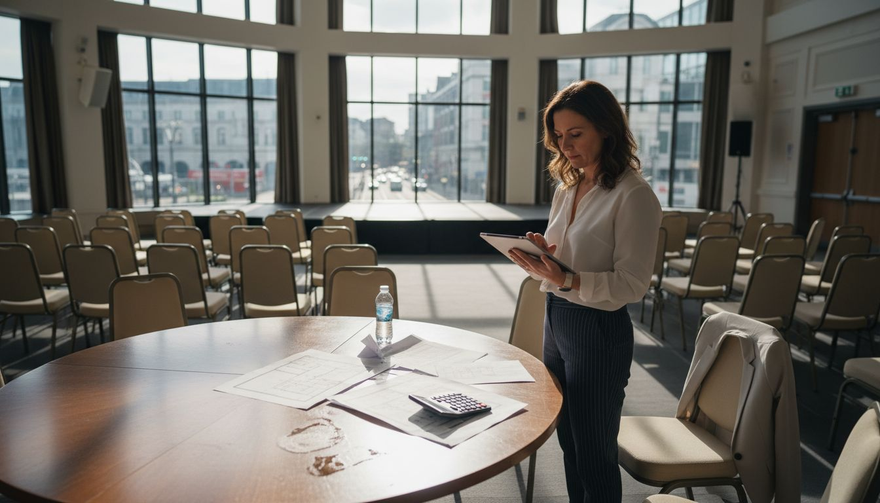
Cost Factors for Event Venues: Impact on Budget
Finding an event venue that meets both quality standards and budget targets feels like a constant juggling act for corporate planners across the United Kingdom. Venue costs are shaped by a web of factors, from rising food and beverage prices to staffing and technology requirements, all of which can drive expenses upward if not managed carefully. This guide breaks down the main cost categories, highlights variables you can influence, and shows how understanding venue pricing models helps you make smarter decisions for your next large-scale conference or retreat.
Table of Contents
- Defining Cost Factors For Event Venues
- Different Pricing Models And Packages
- Main Variables Influencing Venue Costs
- Hidden Fees And Overlooked Expenses
- Negotiation Tactics And Cost-Saving Tips
Key Takeaways
| Point | Details |
|---|---|
| Understand Cost Factors | Event venue costs encompass more than just room hire; consider food, staffing, and hidden fees when budgeting. |
| Compare Pricing Models | Be aware of pricing structures such as flat rate, hourly, and tiered pricing to find the best fit for your event. |
| Anticipate Additional Charges | Always request itemised quotes and clarify what expenses are included or excluded to avoid unexpected costs. |
| Negotiate Wisely | Approach negotiations with flexibility and focus on eliminating hidden fees instead of just seeking discounts to achieve better value. |
Defining Cost Factors for Event Venues
Event venue costs extend far beyond the room hire itself. Understanding what drives pricing helps you allocate your budget strategically and avoid surprise expenses that derail your conference planning.
Venue cost factors break down into several distinct categories. Each one influences your total spend differently, and together they determine whether your event stays within budget or spirals over.
Main Cost Categories
Accommodation and room hire forms the foundation. This includes the space itself, basic setup, and room configuration. Larger spaces and premium locations command higher rates.
Food and beverage expenses typically represent 25-40% of total event costs. Rising food and beverage prices reflect supply chain pressures and labour market changes. Menu complexity, dietary requirements, and service levels all affect this line item.
Staffing and labour costs cover front-of-house teams, technical support, and catering staff. Peak seasons drive wages higher, and specialist roles cost more than standard positions.
Additional taxes and fees often appear as surprise charges:
- Service charges (typically 10-15%)
- VAT on food, beverages, and services
- Parking and facility fees
- Damage deposits or cancellation insurance
- Equipment rental surcharges
Technology and audio-visual services include projection, microphones, Wi-Fi upgrades, and hybrid event capabilities. These costs scale with your headcount and technical complexity.
Risk management and contingency costs matter more than most planners realise. Comprehensive budgeting and cost control measures protect your event from unexpected expenses. Building in 10-15% contingency helps absorb unforeseen charges.
When comparing venues, you’ll notice pricing structures vary widely. Some venues bundle services whilst others itemise everything separately. This affects how you evaluate total cost against your budget.
Understanding every cost component before negotiating ensures you recognise genuine value rather than just comparing headline prices.
Understanding every cost component before negotiating ensures you recognise genuine value rather than just comparing headline prices.
When reviewing venue quotes, ask what’s included in the base rate and what costs extra. Hidden fees—parking, setup charges, early arrival fees—add up quickly. Request itemised breakdowns from each venue so you can compare apples to apples.
Pro tip: Request quotes that specify what’s included in the base price and requestessential questions to ask venuesso you understand the complete cost picture before committing.
Different Pricing Models and Packages
Venues don’t all charge the same way. Understanding the different pricing structures helps you compare quotes accurately and choose the model that suits your event timeline and budget.
Most venues use one of three main approaches. Some blend these together, so always clarify which model applies to your booking.
Common Pricing Structures
Flat rate pricing charges a single fixed fee regardless of guest numbers. You pay the same amount whether 50 or 200 people attend. This works well when your headcount is confirmed early.
Hourly or daily rates charge based on how long you use the space. A half-day rate (4-6 hours) costs less than a full day (8-10 hours). This suits shorter conferences or morning-only events.
Tiered pricing based on seasonality reflects demand fluctuations. Venue pricing varies by season and demand , with peak months costing more than shoulder seasons. Summer Fridays command premium rates. Mid-week winter bookings offer discounts.
Packages bundle multiple services together to simplify budgeting:
- Basic packages include room hire and standard setup
- Premium packages add catering, audio-visual, and staffing
- Bespoke packages let you select exactly what you need
Fixed versus variable costs matter when selecting a model. Fixed costs stay the same regardless of attendance. Variable costs scale with guest numbers—catering particularly affects this.
When structuring pricing packages , venues calculate total expenses, set profit margins, and estimate realistic attendance. This determines what they charge you.
Corporate planners often negotiate hybrid arrangements. You might pay a flat rate for the room plus per-head charges for food and beverage. This balances budget certainty with cost control.
Here is a comparison of the main event venue pricing models and when each is most suitable:
| Pricing Model | Predictability | Best For | Main Drawback |
|---|---|---|---|
| Flat rate | High | Stable guest numbers | Can be costly if few attend |
| Per hour/day | Moderate | Short or variable events | Overage fees if you run late |
| Tiered/seasonal | Low | Flexible date selection | Price spikes in peak season |
| Packages | High | Simpler budgeting | Less customisation possible |
The best pricing model matches your event timeline, expected attendance, and budget flexibility—not just the lowest headline number.
The best pricing model matches your event timeline, expected attendance, and budget flexibility—not just the lowest headline number.
Different venues structure packages differently, so comparing them requires standardising your criteria. Request quotes with identical specifications from multiple venues. Ask whether prices include VAT, service charges, and equipment fees.
Seasonal discounts typically range from 10-25% for off-peak dates. Committing to dates 3-6 months ahead often unlocks better rates. Last-minute bookings rarely qualify for discounts unless venues have availability gaps.
Pro tip: Ask venues for their pricing structure in writing and clarify whether rates are all-inclusive or if additional charges apply for staffing, equipment, and contingency fees.
Main Variables Influencing Venue Costs
Venue pricing isn’t arbitrary. Several interconnected variables shape what you’ll actually pay, and understanding each one lets you predict costs more accurately and negotiate smarter deals.
Think of these variables as levers you can pull to adjust your budget. Some you control; others depend on market forces beyond your influence.
Location Matters Most
Geographic location drives pricing more than almost anything else. London venues cost significantly more than equivalent spaces in Manchester or Birmingham. City-centre locations command premiums over suburban alternatives. Geographic location, facility quality, and venue capacity are the primary cost drivers that influence overall venue pricing.
Transport accessibility affects location value. Venues near major rail stations or motorway junctions justify higher rates. Remote locations may offer discounts but create travel complications for delegates.
Venue reputation and track record influence pricing. Established venues with corporate portfolios charge more than newly opened spaces. Brand recognition allows venues to command premium rates.
Capacity and Facilities
Venue capacity determines base costs. Larger spaces cost more to heat, light, and staff. Rooms with built-in audio-visual technology cost more than bare shells requiring equipment hire.
Amenities and facility quality significantly affect pricing:
- Natural daylight and high ceilings command premiums
- On-site catering kitchens reduce external catering costs
- Breakout rooms enable parallel sessions
- Disabled access and modern facilities increase value
- Car parking availability justifies higher rates
Operational efficiency matters too. Venues with streamlined processes, experienced staff, and modern booking systems often charge more because they deliver better value and lower your organisational burden.
Seasonal and Demand Variables
Seasonal demand fluctuations create significant price variations. Summer months and autumn see peak demand and premium pricing. January through March offer discounts as venues chase bookings during quieter periods.
Weekend events cost more than mid-week conferences. Friday and Saturday command 30-50% premiums over Tuesday through Thursday dates. Public holidays and school holidays affect pricing substantially.
Day-specific demand varies by industry. Technology conferences peak in spring; summer appeals to training providers. Understanding your sector’s patterns helps you time bookings strategically.
Location, capacity, reputation, and seasonal demand interact to create your venue’s final cost—but you can influence several of these factors through flexible dates and alternative locations.
Location, capacity, reputation, and seasonal demand interact to create your venue’s final cost—but you can influence several of these factors through flexible dates and alternative locations.
Market consolidation and talent costs in entertainment sectors create additional pricing pressures. Competition levels in your region affect what venues charge. Supplier power dynamics influence whether venues absorb or pass along cost increases.
Pro tip: Map out which variables you can control—dates, location alternatives, capacity requirements—and which you cannot, thenprioritise venue selection criteriato focus negotiation efforts on the variables with the biggest budget impact.
The following table summarises which key cost factors planners can and cannot control when budgeting for venues:
| Cost Factor | Planner Control Level | Example of Influence |
|---|---|---|
| Venue location | Low | Select city or suburb |
| Event date/season | High | Book mid-week, off-peak |
| Headcount | High | Adjust guest list |
| Venue amenities | Moderate | Prioritise essential features |
| Supplier selection | High | Choose bundled services |
| Market conditions | Low | External to planner control |
Hidden Fees and Overlooked Expenses
The quoted venue price rarely reflects your actual spend. Corporate planners discover hidden charges weeks into planning when they’ve already committed to a date. These overlooked expenses erode your contingency buffer and force difficult trade-offs.
Most venues quote base rates intentionally low, then layer on charges that weren’t obvious upfront. Your job is uncovering these before signing the contract.
Common Hidden Charges
Setup and breakdown fees appear on invoices unexpectedly. Venues charge for room configuration, table and chair arrangement, and clearing the space afterwards. These range from £200 to £1,500 depending on complexity. Early access fees apply if you need the space before standard opening times.
Equipment rental surcharges stack up quickly. Projectors, screens, lecterns, and lighting cost extra beyond basic audio-visual provision. Microphone packages, stage setup, and technical support staff all incur additional charges.
Service charges and gratuity often surprise planners:
- Automatic service charges (10-15%) on food and beverage
- Gratuity expectations for venue staff
- Bar service fees separate from alcohol costs
- Corkage charges if bringing external wine or spirits
Parking and facility fees add unexpected costs. Per-vehicle parking charges, coach parking premiums, and electric vehicle charging fees aren’t always quoted initially. Disabled access facilities sometimes incur separate charges despite legal obligations.
Insurance and damage deposits protect venues but drain your budget. Event liability insurance requirements, damage waiver deposits (typically 10-20% of total spend), and cancellation insurance all represent significant line items.
Contingency charges appear as venue “add-ons.” Weather protection fees, extended operating hour charges, and last-minute capacity adjustments all cost extra.
Hidden fees typically add 15-25% to your quoted venue cost, turning a £5,000 booking into a £6,250 actual expense before catering even begins.
Hidden fees typically add 15-25% to your quoted venue cost, turning a £5,000 booking into a £6,250 actual expense before catering even begins.
Technology and connectivity upgrades prove expensive. Enhanced Wi-Fi for hundreds of delegates, video conferencing setup, and live streaming capabilities require specialist installation and support fees. Virtual event integration costs mount when venues lack experience.
Staffing costs beyond standard included hours multiply quickly. Additional ushers, registration staff, security personnel, and break-time attendants all charge separately. Overtime rates apply after standard hours.
Requesting Transparent Quotes
Request itemised quotes listing every potential charge separately. Ask venues specifically about charges not included in base rates. Request clarity on VAT treatment—is the quoted price inclusive or exclusive?
Get cancellation terms in writing. Understand what happens if you reduce headcount, change dates, or cancel entirely. Some venues charge penalties even with notice.
Pro tip: Request written confirmation that the quoted price includes setup, breakdown, standard audio-visual, Wi-Fi, and basic staffing, then ask them to list every additional charge separately so you build an accurate budget without surprises later.
Negotiation Tactics and Cost-Saving Tips
Venue pricing isn’t fixed. Smart negotiation can reduce costs by 10-25% without compromising quality or service. The key is approaching venues as partners rather than adversaries, understanding their constraints, and finding creative solutions that benefit both sides.
Most planners accept first quotes without questioning them. That’s leaving money on the table.
Timing and Strategic Booking
Off-peak booking delivers the biggest savings. Venues have lower demand January through March and mid-week (Tuesday through Thursday). Booking off-peak dates secures meaningful discounts compared to summer or weekend bookings.
Catch venues during their slowest periods and they’ll negotiate harder. A Tuesday in February costs significantly less than a Friday in June. Flexibility with dates is your strongest negotiating tool.
Early booking creates leverage. Venues prefer confirmed bookings months ahead over last-minute enquiries. Commit 4-6 months early and you’ll access better rates and potentially complimentary upgrades.
Bundling and Service Consolidation
Bundled packages reduce costs through negotiation. Rather than purchasing services separately, propose integrated packages combining venue hire, catering, and audio-visual. This simplifies venues’ operations and justifies price reductions.
Consolidate your supplier base. Venues that handle everything internally offer better deals than those outsourcing services. Ask whether they employ catering staff or contract externally—in-house teams typically cost less.
Service trade-offs create negotiating room:
- Accept standard room configurations instead of custom setups
- Use venue-provided catering rather than external suppliers
- Skip premium audio-visual in favour of basic provision
- Reduce staffing levels for straightforward events
- Book flexible cancellation terms for fixed lower rates
Competitive Leverage
Transparent multi-venue shopping encourages competitive bidding. Tell venues you’re comparing options (honestly). Most will sharpen their pricing when they know you’re evaluating alternatives. Request quotes on identical specifications so you can compare genuinely.
Market research and understanding venue goals enable more effective negotiation. Learn what venues prioritise—repeat business, full-capacity bookings, or specific event types. Emphasise how your event meets their strategic goals.
Volume commitment drives discounts. If you’re booking multiple events or bringing regular conferences, negotiate packages across the year. Annual commitments justify substantial rate reductions.
Venues have more flexibility than they initially suggest—your job is discovering where they can bend without breaking profitability.
Venues have more flexibility than they initially suggest—your job is discovering where they can bend without breaking profitability.
Build relationships with venue managers. Repeat interactions create personal investment in your success. Managers with discretionary authority can waive fees, upgrade spaces, or offer complimentary services you wouldn’t get through formal quotes.
Request fee elimination rather than discounts. Venues struggle to reduce headline rates without setting precedent, but they can eliminate add-on charges. Ask them to absorb setup fees, remove service charges, or waive damage deposits instead of cutting room rates.
Pro tip: Approach venue negotiations by asking what’s flexible rather than demanding discounts, and usecompany event management strategiesto demonstrate you’ll deliver a smooth, professional event that requires minimal venue staff intervention.
Simplify Your Event Budget with Expert Venue Solutions
Navigating the complex cost factors for event venues can be overwhelming when hidden fees and variable pricing models threaten to inflate your budget unexpectedly. The challenge lies in balancing essential needs like location, capacity, and seasonal demand while avoiding surprise charges that eat into your contingency. With concepts like bundled packages, off-peak booking, and transparency on taxes and service fees critical to controlling costs, you need a trusted partner who understands these nuances and negotiates on your behalf.
Jigsaw Conferences specialises in addressing these challenges by offering a free, personalised venue-finding and event management service designed specifically for corporate clients. Whether you are seeking competitive rates in major UK cities or tailored accommodations for your delegates, benefit from our extensive industry experience since 2003 and our focus on cost-effective, professional solutions. Explore our venue search tools , leverage our expertise on pricing structures, and request detailed quotes knowing we prioritise transparency and value. Don’t let unpredictable venue costs derail your event – take control today with Jigsaw Conferences and secure the ideal space for your needs with confidence and ease.
Frequently Asked Questions
What are the main cost factors associated with event venues?
Venue costs typically stem from accommodation and room hire, food and beverage expenses, staffing and labour costs, additional taxes and fees, technology and audio-visual services, and risk management and contingency costs.
How can I identify hidden fees when comparing venue quotes?
Request itemised quotes that list every potential charge separately. Specifically ask venues about setup and breakdown fees, equipment rental surcharges, service charges, and any additional requirements like insurance or damage deposits to avoid unexpected expenses.
What are the common pricing models used by event venues?
Event venues primarily use flat-rate pricing, hourly or daily rates, tiered pricing based on seasonality, and bundled packages. Understanding these models helps you accurately compare quotes and find a structure that suits your event needs.
How can I negotiate better pricing for my event venue?
Timing your booking for off-peak dates, requesting bundled packages, shopping around for multiple quotes, and developing a relationship with venue managers can all help you negotiate better prices and potentially eliminate some hidden charges.
Jigsaw Conferences Editorial Team
Verified AuthorThe Jigsaw Conferences Editorial Team comprises venue finding experts with over 20 years of combined experience in the events and hospitality industry. Our team includes certified meeting professionals (CMP), venue sourcing specialists, and industry analysts who provide authoritative insights on venue selection, event planning, and corporate accommodation.