
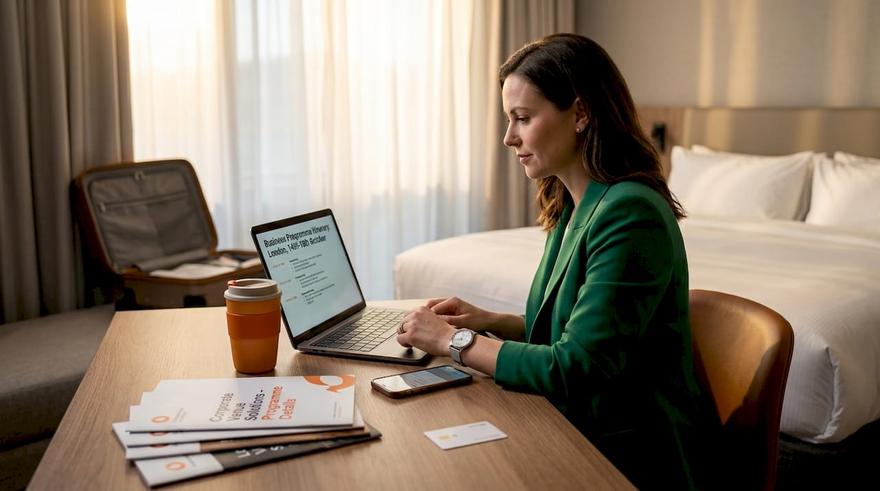
Business travel accommodation hacks that save time
TL;DR: Effective business travel accommodation hinges on location, connectivity, and active management, not just cost.Prioritize flexible, refundable rates and strategic site choices to optimize productivity and control expenses.
TL;DR:
- Effective business travel accommodation hinges on location, connectivity, and active management, not just cost.
- Prioritize flexible, refundable rates and strategic site choices to optimize productivity and control expenses.
Poor Wi-Fi, inflexible bookings, noisy rooms, and costs that quietly balloon trip after trip. These are the real frustrations behind business travel accommodation hacks that actually matter. Most guides tell you to “book early” and call it done. This one goes further. Whether you are managing a one-night stopover or a three-week project stay, the right preparation, booking approach, location logic, and in-stay habits make the difference between a productive trip and an exhausting one. Here is what corporate professionals who travel regularly have learned to do differently.
Table of Contents
- Key takeaways
- Business travel accommodation hacks start with preparation
- Booking strategies that balance cost and flexibility
- Choosing the right location and accommodation type
- Maximising productivity and comfort in your room
- Verifying and managing your stay actively
- My honest view on what actually matters in business lodging
- How Jigsawconferences can simplify your next business stay
- FAQ
Key takeaways
| Point | Details |
|---|---|
| Preparation before booking | Clarify trip purpose, budget, and flexibility needs before choosing any accommodation channel. |
| Refundable rates save money | Paying 5 to 15% more for a cancellable rate lets you rebook if prices drop or plans shift. |
| Location is a cost multiplier | Proximity to meetings and transport reduces taxi spend and recovers lost working time. |
| Test connectivity immediately | Run a Wi-Fi speed test at check-in and escalate issues before your first critical call. |
| Long stays suit serviced apartments | Extended trips of a week or more benefit from furnished apartments that control ancillary costs. |
Business travel accommodation hacks start with preparation
The biggest mistake business travellers make is treating accommodation as an afterthought. You book the flights, sort the agenda, then grab whatever hotel appears first. That approach is where cost creep and friction begin.
Before you touch any booking platform, clarify three things: what the trip actually demands, how likely your plans are to change, and how long you will be staying. A one-night stay before an early flight calls for a different decision to a week-long client project. Mixing those up wastes money.
Here is a preparation checklist worth running through before every trip:
- Trip purpose: Is your priority client proximity, airport access, or a city centre location?
- Flexibility risk: How likely is the meeting to shift dates or cancel entirely?
- Duration: Three nights or fewer favours a hotel. Seven or more starts favouring a serviced apartment.
- Loyalty status: Which programmes can you activate before booking to unlock perks or preferred rates?
- Cancellation policy: Read it. Understand the deadline. Set a reminder.
Pro Tip: Sign up for rate alert tools or hotel chain newsletters before your trip. Loyalty programme pre-registration takes minutes and can unlock free breakfast, late checkout, and room upgrades that would otherwise cost extra.
Corporate travel surveys show that balancing cost control with traveller satisfaction is the top operational concern for 2026. Getting preparation right is what prevents those two priorities from conflicting.
Booking strategies that balance cost and flexibility
This is where most business travel lodging advice gets it wrong. The instinct is to find the cheapest rate and book it. The smarter move is to find the most valuable rate, which is not always the same thing.
Direct booking vs OTAs vs opaque deals
Direct hotel bookings offer better service and easier modifications, which matters significantly when client plans shift at short notice. Online travel agencies (OTAs) sometimes surface better headline rates, but the terms are often less flexible and customer service is slower when things go wrong.
Opaque discount deals, which offer 30 to 60% off but do not reveal the hotel until after purchase, are generally unsuitable for business travel. You cannot verify the location, Wi-Fi quality, or amenities before committing. That is too much uncertainty for a trip where productivity is at stake.
The refundable rate logic
Refundable rates typically cost 5 to 15% more than non-refundable options. For most business travellers, that premium is rational. If your plans change, you avoid losing the full booking cost. If rates drop after you book, you cancel and rebook at the lower price. That is the hack many overlook: refundable rates are price monitoring tools, not just insurance policies.
Flight and hotel bundles through OTAs can save around 14% versus booking separately, but check the refund policy carefully before committing. Bundle savings evaporate quickly if you need to cancel only one component.
| Booking channel | Flexibility | Loyalty points | Best for |
|---|---|---|---|
| Direct with hotel | High | Yes | Changing plans, loyalty perks |
| OTA (refundable rate) | Medium | Sometimes | Price comparison, bundles |
| OTA (non-refundable) | None | Rarely | Fixed, certain itineraries |
| Opaque deal | None | No | Leisure only |
Pro Tip: Book refundable and then keep monitoring rates. If the same hotel drops its price before your cancellation deadline, rebook at the lower rate and pocket the saving. This accommodation booking trick alone can recoup a significant portion of your travel budget over a year.
Choosing the right location and accommodation type
Hotel location functions as a cost multiplier in business travel. A cheaper hotel 40 minutes from your meeting venue is rarely cheaper once you factor in taxis, wasted travel time, and the mental load of managing logistics. The nightly rate is only one line item.
Airport hotels make sense for early departures or single-night transits. City centre properties suit multi-meeting agendas where walkability matters. The question to ask is not “what is the cheapest room?” but “what does this location cost me in time and transport across the full trip?”
Here is how different accommodation types align with different trip profiles:
- Chain hotels: Consistent standards, loyalty programme integration, and reliable business amenities. Best for short trips where predictability matters.
- Airport hotels: Purpose-built for early flights and late arrivals. Often include good connectivity and transport links but limited surrounding options.
- Serviced apartments: Extended stays of a week or more benefit significantly from apartments that include a kitchen, laundry, and workspace. The daily rate is often lower and ancillary costs shrink considerably.
- Boutique business hotels: Useful when client entertainment or impression management is part of the brief.
For longer UK projects, explore long-stay business travel strategies that consolidate accommodation across extended assignments. Consolidating two three-day trips into one six-day stay often unlocks weekly rates and eliminates duplicate travel costs entirely.
Pro Tip: Before booking, run a quick calculation: nightly rate plus average daily transport to your primary venue. Compare that total across two or three location options. The “expensive” central hotel frequently wins on total cost.
Maximising productivity and comfort in your room
Getting into your room and immediately opening your laptop is the wrong move. Spend the first ten minutes checking the things that will either support or undermine the entire stay.
- Test Wi-Fi immediately. Run a speed test on both the 2.4GHz and 5GHz bands. Wi-Fi reliability is consistently rated the single most important hotel amenity for business travellers. If it fails, you need time to fix it.
- Escalate connectivity issues early. Testing Wi-Fi and engaging the front desk early prevents last-minute failures before critical video calls. Leading hotels are also rolling out Wi-Fi 6E and 5G backup systems, so ask what technology the property uses.
- Request a room change if needed. Noise from a lift, a street-facing room, or inadequate desk space are all valid reasons to ask for a move. Proactive requests for quiet rooms or extra power outlets are standard and rarely refused.
- Set up your workspace properly. Move the chair, adjust the lighting, position the desk to face natural light where possible. Bring a compact travel power board if you regularly run multiple devices.
- Use hotel amenities strategically. Business lounges often offer quieter Wi-Fi than your room, plus free food and drinks during peak hours. Executive lounge access, whether included or purchasable, frequently delivers more value than its cost suggests.
- Carry a personal hotspot. For calls where connection quality cannot be compromised, a mobile hotspot from your phone network is your fallback. Do not rely solely on hotel infrastructure for client-facing calls.
For further guidance on hotel-specific strategies, essential hotel tips for business travellers cover comfort and productivity in more detail.
Verifying and managing your stay actively
Most business travellers check in, accept whatever they are given, and endure problems rather than resolve them. That passive approach compounds discomfort across multi-day stays and erodes both performance and morale.
Treat the first hour in any new accommodation as a verification period. Check the obvious things before unpacking fully:
- Wi-Fi speed and stability: If download speeds are below 25 Mbps or the connection drops, report it immediately. You have the most leverage before you settle in.
- Room condition and temperature: Is the air conditioning functional? Is the desk actually workable? Are there enough power points for your devices?
- Noise exposure: Is the room adjacent to a service lift, kitchen, or busy street? If so, request a move now rather than after a disrupted night.
- Cancellation deadline: If you booked a refundable rate, set a calendar reminder for the cancellation window. Rates in your destination may drop, or your dates may shift.
Once you are settled, use your loyalty programme benefits actively. Late checkout alone can be worth significant money, particularly when you have an afternoon flight and would otherwise need to vacate your room at 11am. Lounge access on the morning of departure can turn a wasted transit hour into productive work time.
If the accommodation genuinely is not working, do not hesitate to move. The friction of switching hotels is real but finite. The friction of tolerating a bad situation across four more nights is far greater. Reducing operational friction in lodging delivers measurable return on investment across the full trip.
My honest view on what actually matters in business lodging
I have watched clients choose accommodation almost entirely on nightly rate and then spend the next three days in taxis because the hotel was inconvenient, on long hold calls because the booking was inflexible, and in a low-level fog of irritability because the Wi-Fi killed their 9am client call.
The cheapest room rarely produces the cheapest trip. That is the uncomfortable truth most cost-saving travel hacks glossy over.
In my experience, the two factors that have the greatest impact on business trip quality are location and connectivity. Get those right and almost everything else is manageable. Get them wrong and no amount of loyalty points or free breakfast compensates.
What I have also learned is that flexibility has a price, and it is almost always worth paying. Refundable rates, direct bookings, and central locations cost marginally more on paper. In practice, they prevent the disproportionate losses that come from rigid bookings when plans change, which they always do eventually.
Manage your accommodation actively. Verify, escalate, request changes. Most hotels will accommodate reasonable requests. The travellers who get the best experience are rarely the ones who spent the most. They are the ones who asked.
— Jigsaw
— Jigsaw
How Jigsawconferences can simplify your next business stay
At Jigsawconferences, we have been sourcing corporate accommodation since 2003, and we understand that business trip lodging advice only goes so far when you are short on time and need confirmed, reliable options. Our free venue and accommodation search service connects corporate clients with properties across UK cities and beyond, including serviced apartments, corporate housing, and hotel blocks suited to both short trips and extended stays.
Whether you need a single night near a conference venue or tailored business accommodation across a month-long project, we use our buying power and industry relationships to negotiate competitive rates on your behalf. Explore corporate housing solutions for longer assignments or get in touch to discuss what your next trip requires. No search fees. No obligation. Just the right accommodation, found efficiently.
FAQ
What are the most effective business travel accommodation hacks?
The highest-impact hacks are: booking refundable rates and monitoring for price drops, choosing locations within walking distance of meetings, and testing Wi-Fi immediately at check-in. These three alone eliminate the most common sources of business travel friction.
Is it better to book hotels directly or through an OTA?
Direct hotel booking generally offers better flexibility, customer service, and loyalty point accumulation, making it the preferred option when plans may change. OTAs are worth considering for bundled savings when your itinerary is fixed and refund risk is low.
How do I get a hotel upgrade as a business traveller?
Joining the hotel’s loyalty programme before booking is the most reliable route to upgrades. Booking directly, achieving any tier status, and politely requesting an upgrade at check-in when the property is not fully occupied all improve your chances considerably.
When do serviced apartments beat hotels for business travel?
Serviced apartments typically offer better value for stays of seven nights or more. They reduce ancillary costs through kitchen access and laundry facilities, and typically provide a more productive workspace than a standard hotel room.
How important is hotel Wi-Fi for business travellers?
Wi-Fi is consistently rated the most critical hotel amenity for business travellers. Speeds below 25 Mbps or unstable connections directly impair productivity. Always test on arrival and carry a personal hotspot as a backup for high-stakes calls.
Jigsaw Conferences Editorial Team
Verified AuthorThe Jigsaw Conferences Editorial Team comprises venue finding experts with over 20 years of combined experience in the events and hospitality industry. Our team includes certified meeting professionals (CMP), venue sourcing specialists, and industry analysts who provide authoritative insights on venue selection, event planning, and corporate accommodation.