
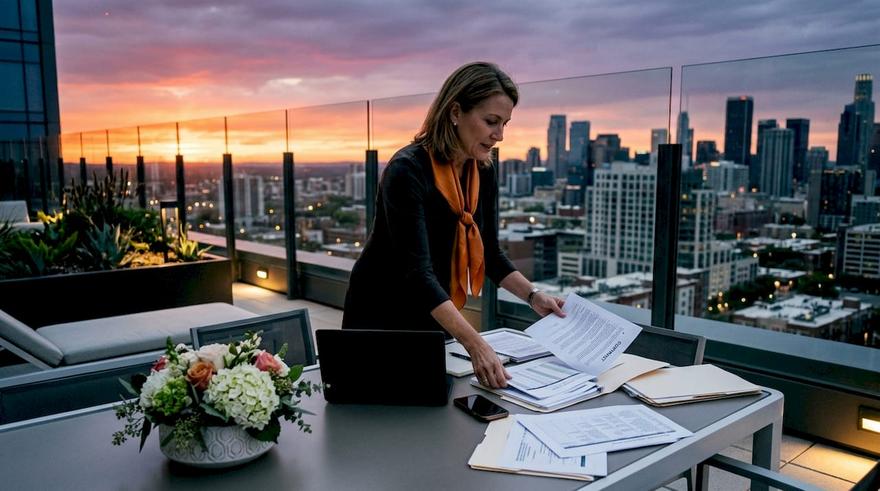
Intl meeting planner: your 2026 corporate guide
TL;DR: An international meeting planner coordinates every aspect of a global event, including visas, venues, and budgets. Proper planning requires starting 12 to 18 months early, focusing on local expertise, and adapting programs to local cultures. Building relationships and including contingency funds ensure successful execution across international jurisdictions.
TL;DR:
- An international meeting planner coordinates every aspect of a global event, including visas, venues, and budgets. Proper planning requires starting 12 to 18 months early, focusing on local expertise, and adapting programs to local cultures. Building relationships and including contingency funds ensure successful execution across international jurisdictions.
An intl meeting planner is a specialist who coordinates every element of a corporate event across national borders, from visa compliance and venue contracts to cross-currency budgets and cultural protocols. The role sits at the intersection of project management, diplomacy, and logistics. Get it right, and your global meeting runs without a hitch. Get it wrong, and a single missed visa deadline or a cultural misstep can derail months of preparation. This guide gives corporate leaders and managers the frameworks, timelines, and venue strategies needed to plan large-scale international meetings with confidence in 2026.
What does an intl meeting planner actually manage?
An international meeting planner manages far more than a venue booking. The role covers time zone coordination, multi-currency budgeting, attendee visa support, speaker contracting, local vendor management, and post-event compliance. Each of those workstreams carries its own deadlines and dependencies.
The industry term for this discipline is “global meeting management,” and it sits within the broader field of Meetings, Incentives, Conferences, and Exhibitions (MICE). Planners working at this level must understand the ISO 20121 standard for sustainable event management, which sets a recognised framework for responsible procurement and supplier accountability across borders.
Corporate leaders often underestimate how early the planning cycle must begin. A multinational conference organiser is not simply booking rooms. They are coordinating legal, financial, and cultural variables that can take twelve months or more to resolve properly.
How to establish effective timelines for international meetings
Large international conferences with 200 or more delegates require a 12–18 month lead time for venue contracts. That window exists because premium venues in major cities fill quickly, and late bookings attract significantly higher rates.
A practical planning timeline works backward from the event date. Here is the sequence that experienced global meeting organisers follow:
- 12–18 months out: Confirm the destination, secure the venue, and sign the primary accommodation block. Begin speaker outreach immediately.
- 9–12 months out: High-demand keynote speakers must be engaged 6–12 months in advance. Starting at three to four months out regularly leads to availability failures.
- 6–9 months out: Finalise vendor contracts, catering agreements, and audio-visual requirements. Begin attendee communications with travel and visa guidance.
- 3–6 months out: Open visa applications. Schengen visas process in 15–45 days, and Chinese business visas take three to six weeks. Starting this process late is one of the most common and costly mistakes.
- 1 month out: Set a firm shipping deadline for all event materials. Backwards planning from a drop-dead shipping date one month before the event protects against customs delays that are the primary cause of on-site material failures.
Pro Tip: Build a master dependency map at the twelve-month mark. List every deadline and the tasks that depend on it. When one item slips, you will immediately see which downstream tasks are at risk.
Visa timelines deserve particular attention in 2026. The UK Electronic Travel Authorisation costs £16 and applies to nationals from dozens of countries. Planners must confirm which authorisation each attendee requires before sending save-the-date communications.
Budgeting and financial management for global events
A 3-day corporate retreat costs £2,000–£3,000 per person, inclusive of flights and accommodation. That figure gives corporate leaders a realistic baseline for international events, though destination choice, delegate count, and programme complexity all shift the final number.
Sound financial management for a cross-border event planner rests on five principles:
- Set a 10–15% contingency reserve. A 10–15% contingency budget is the industry standard for absorbing unexpected cost fluctuations, from currency swings to last-minute venue changes.
- Engage a local tax consultant early. VAT and local taxes significantly affect total event cost. Local specialists prevent accounting errors and ensure correct pricing structures, particularly in markets with complex indirect tax regimes.
- Address cross-currency payment complexity. Paying international vendors in their local currency reduces friction and avoids unfavourable conversion rates. Corporate travel payment cards with multi-currency functionality are the practical solution for most organisations.
- Separate fixed and variable costs. Venue hire, AV, and speaker fees are fixed. Catering, transport, and delegate gifts are variable. Tracking them separately makes budget management far cleaner.
- Account for UK-specific cost pressures. UK business events face VAT and business rates that affect overall event competitiveness . When comparing UK versus international destinations, factor these structural costs into the decision.
For detailed guidance on allocating budgets across event categories, the Jigsawconferences article on corporate event budgeting provides a practical framework for 2026.
How do you select venues for international corporate events?
Venue selection is the single decision that shapes every other element of an international event. The right space must match your delegate count, support your programme format, and comply with local regulations.
| Venue consideration | What to assess |
|---|---|
| Capacity and layout | Confirm theatre, cabaret, and breakout configurations match your programme |
| Accommodation proximity | Co-located or adjacent hotels reduce transport complexity and delegate fatigue |
| Local regulations | Union labour rules, catering restrictions, and noise ordinances vary by city |
| Accessibility | Confirm step-free access, hearing loops, and translation facilities |
| Sustainability credentials | ISO 20121 certification or equivalent signals responsible venue management |
| Technology infrastructure | Verify broadband capacity, AV standards, and power socket compatibility |
Synchronising venue and accommodation bookings is non-negotiable for events above 100 delegates. When these are booked separately, room block attrition clauses can create significant financial exposure if attendance changes.
Experienced Destination Management Companies (DMCs) provide access to local suppliers at pricing and accountability levels that public searches cannot match. Top-tier local vendors prioritise relationships with established DMCs over new enquiries. That means a destination meeting planner working without a DMC partner is often paying more and getting less.
Pro Tip: Ask your DMC for references from events of a similar size in the same city. A DMC that has delivered a 300-delegate conference in Berlin will have solved problems you have not yet thought of.
Jigsawconferences has supported corporate leaders with global venue sourcing since 2003, providing access to competitive rates through established industry relationships. Their free venue search service removes the time cost of initial shortlisting.
Managing cultural and logistical complexity in international meetings
Cultural differences in scheduling, meal timing, and networking customs directly affect attendee engagement and satisfaction. A programme designed for a London audience will not land the same way in Tokyo or Riyadh. Adapting to local norms is not optional; it is a core planning competency.
Practical steps for managing cultural and logistical complexity include:
- Adapt the daily schedule to local working patterns. Business day length, lunch duration, and evening networking expectations vary significantly across cultures. A 7:30 AM breakfast session that works in New York may alienate delegates in Spain.
- Communicate visa and travel requirements clearly and early. Send a dedicated pre-event travel briefing that covers visa type, entry requirements, local transport, and emergency contacts. Attendees who feel prepared arrive less stressed and engage more fully.
- Verify technology compatibility before the event. Power socket standards, Wi-Fi frequencies, and AV formats differ across regions. A UK presenter using a three-pin plug in a venue wired for Type C sockets will lose time on the day.
- Coordinate with local vendors for compliance. DMCs understand local labour laws and catering restrictions that international planners often miss. Ignoring these creates last-minute failures that no contingency budget can fully absorb.
- Provide dietary and accessibility information in advance. Collect dietary requirements at registration and confirm them with the venue caterer at least four weeks before the event. This is particularly important in destinations where certain ingredients are culturally significant.
Strong event branding also plays a role in cultural alignment. A consistent visual identity that respects local colour associations and avoids culturally sensitive imagery signals professionalism and builds delegate confidence before they arrive.
For events with a significant travel component, Jigsawconferences covers sustainable event travel approaches that reduce environmental impact without compromising delegate experience.
Key takeaways
Successful international meeting planning depends on starting early, budgeting honestly, choosing venues with local expertise, and adapting every element of the programme to the cultural context of the destination.
| Point | Details |
|---|---|
| Start planning 12–18 months out | Large conferences need this lead time to secure venues and avoid premium pricing. |
| Set a 10–15% contingency budget | Cost fluctuations in international events are predictable; the contingency absorbs them. |
| Engage a DMC for local access | DMCs unlock supplier networks and pricing that public searches cannot reach. |
| Begin visa processes at least 8 weeks early | Schengen and Chinese business visas require weeks of processing time. |
| Adapt the programme to local culture | Scheduling, meals, and networking formats must reflect the host destination’s norms. |
What I have learned from two decades of international event planning
The biggest mistake corporate leaders make is treating international meeting planning as a scaled-up version of a domestic event. It is not. The variables multiply, and the consequences of errors are harder to reverse when you are operating across time zones and legal jurisdictions.
The planners who consistently deliver strong international events share one habit: they build relationships before they need them. A DMC contact in Singapore or a trusted venue manager in Frankfurt is worth more than any checklist when something goes wrong at 11 PM the night before the event opens.
Flexibility is the other non-negotiable. I have seen meticulously planned conferences derailed by a public holiday that nobody checked, a catering supplier who cancelled due to a local labour dispute, and a keynote speaker whose visa was delayed by a processing backlog. The events that recovered well had contingency plans for each of those scenarios. The ones that did not recover well had assumed everything would go to plan.
My honest advice to any corporate leader commissioning a large international meeting: invest in local expertise early, build more time into every deadline than you think you need, and treat the cultural briefing as seriously as the budget. The events that attendees remember are the ones that felt effortless. That effortlessness is the product of months of detailed, unglamorous preparation.
— Jigsaw
— Jigsaw
How Jigsawconferences supports international corporate meeting planning
Jigsawconferences has worked with corporate clients across every major industry since 2003, providing free venue sourcing and event management support for meetings of all sizes. Their team handles the time-consuming elements of international event logistics, from shortlisting venues that meet your capacity and sustainability requirements to negotiating competitive rates through established supplier relationships.
For corporate leaders who need to plan a large-scale global meeting without adding headcount, Jigsawconferences offers a practical starting point. Their international meeting planning support covers venue sourcing, accommodation blocks, and event coordination across the UK and internationally. Contact the team directly to discuss your event requirements and receive a tailored venue shortlist at no cost.
FAQ
What lead time does an international conference need?
Large international conferences with 200 or more delegates require 12–18 months of planning lead time. This window covers venue contracting, visa processing, speaker booking, and vendor finalisation.
How much does an international corporate event cost per person?
A 3-day corporate retreat typically costs £2,000–£3,000 per person, including flights and accommodation. Final costs vary by destination, delegate count, and programme complexity.
What is a Destination Management Company and why does it matter?
A DMC is a local specialist organisation that provides access to vetted suppliers, venue relationships, and compliance knowledge in a specific destination. Experienced DMCs deliver pricing and accountability that international planners cannot access through public searches alone.
How early should visa applications be started for international events?
Visa applications should begin at least 8 weeks before the event. Schengen visas take 15–45 days to process, and Chinese business visas require three to six weeks, so earlier is always safer.
What contingency budget should I set for an international meeting?
A 10–15% contingency reserve is the industry standard for international corporate events. This buffer covers currency fluctuations, last-minute supplier changes, and unexpected regulatory costs.
Jigsaw Conferences Editorial Team
Verified AuthorThe Jigsaw Conferences Editorial Team comprises venue finding experts with over 20 years of combined experience in the events and hospitality industry. Our team includes certified meeting professionals (CMP), venue sourcing specialists, and industry analysts who provide authoritative insights on venue selection, event planning, and corporate accommodation.