
Optimise wedding venue layouts for corporate events 2026
Planning large wedding events at professional venues presents unique challenges for corporate event coordinators. You need to balance guest capacity, ensure smooth transitions between ceremony and reception, and maintain comfortable circulation throughout multiple event stages. Getting the layout right directly impacts guest satisfaction, operational efficiency, and your venue’s reputation. This guide provides practical, data-backed layout strategies specifically designed for UK event planners managing high-capacity weddings and corporate celebrations at professional venues.
Table of Contents
- Understanding Space Requirements And Table Configurations
- Designing Flexible Layouts For Multi-Stage Wedding Events
- Special Considerations For Outdoor And Marquee Wedding Layouts
- Optimising Guest Experience With Site Visits And Tailored Flow Planning
- Discover Venues Designed For Flexible, Optimised Weddings
Key takeaways
| Point | Details |
|---|---|
| Space planning determines success | Proper spacing between tables and circulation areas prevents overcrowding whilst maximising venue capacity for large events. |
| Modular designs enable transitions | Flexible furniture and retractable elements allow quick changeovers between ceremony, dinner, and dancing stages. |
| Outdoor layouts need extra space | Marquee and outdoor setups require wider aisles and buffer zones, with weather contingencies essential for UK events. |
| Site visits reveal hidden constraints | On-site assessments identify flow bottlenecks and access limitations that floor plans cannot show. |
Understanding space requirements and table configurations
Getting your table layouts right forms the foundation of successful wedding venue planning. 60-inch round tables seat 8 guests with 5 feet between tables and 10 feet from dance floor for optimal flow. These measurements aren’t arbitrary; they ensure guests can move comfortably whilst staff navigate service routes efficiently. When you compromise on spacing to squeeze in extra tables, you create bottlenecks that frustrate guests and slow service.
Different event formats demand different spatial allowances. Theatre seating uses 80% of expected attendance for capacity planning, whilst seated dinners require roughly 1.2 square metres per person. For wedding receptions combining dinner and dancing, you need to account for both static seating areas and dynamic circulation zones. The dance floor area alone should accommodate at least 40% of your guest count simultaneously, with clear access paths from all table clusters.
Circulation space near high-traffic zones deserves special attention. Position bar areas and buffet stations away from main thoroughfares to prevent congestion. Leave at least 1.5 metres for primary walkways and 1 metre for secondary paths between table groupings. These corridors become critical during peak movement times, such as the transition from ceremony to dinner or when guests move between indoor and outdoor spaces.
Pro tip: Create a scaled floor plan using 1:50 ratio and test it with physical furniture mockups before the event day. This reveals spacing issues that digital plans miss, particularly around columns, doorways, and service access points.
When planning venue capacity for events , remember that maximum capacity and comfortable capacity differ significantly. A venue rated for 200 theatre-style might only comfortably accommodate 150 for a seated dinner with dancing. Factor in space for gift tables, cake displays, photo booths, and DJ equipment, each requiring dedicated zones that don’t impede guest movement.
Consider these essential spacing benchmarks:
- Ceremony seating: 45cm width per guest, 75cm row spacing
- Cocktail reception: 1 square metre per guest for standing events
- Dinner service: 1.2 square metres per seated guest
- Dance floor: 0.5 square metres per dancing guest
- Bar service area: 3 square metres minimum, plus queuing space
Designing flexible layouts for multi-stage wedding events
Modern wedding venues must adapt quickly between distinct event phases. Modular designs with retractable seating and movable walls enable changeovers in as little as 15 minutes, enhancing event fluidity. This flexibility transforms how you manage complex wedding timelines, eliminating lengthy gaps between ceremony and reception whilst maintaining professional presentation standards.
The most successful multi-stage layouts share common characteristics. They incorporate furniture that stacks efficiently, use modular staging elements that reconfigure without tools, and designate clear storage zones for ceremony chairs during dinner service. When specifying venue requirements, prioritise spaces with built-in flexibility features rather than trying to retrofit rigid environments. Venues offering flexible event rooms typically provide dedicated staff and equipment for rapid transitions.
Plan your layout transitions in reverse chronological order. Start with your final configuration (usually dinner and dancing), then work backwards to determine what elements need removal or repositioning. This approach prevents you from creating ceremony setups that block efficient conversion to reception layouts. For example, if your ceremony uses the same space as dinner, position the aisle and altar area where they won’t obstruct table placement or require moving heavy decorative elements.
Pro tip: Schedule a 20-minute transition buffer between major event phases, even with modular furniture. This accounts for unexpected delays and allows staff to perfect details rather than rushing through changeovers.
Consider these flexibility features when evaluating venues:
- Retractable or stackable ceremony seating
- Movable partition walls to separate ceremony and reception prep areas
- Built-in rigging points for draping that transforms spaces
- Dedicated storage rooms adjacent to event spaces
- Service corridors that allow furniture movement without crossing guest areas
- Modular staging systems that adjust height and configuration
Successful flexible layouts also account for audiovisual transitions. Your ceremony sound system placement should allow quick repositioning for reception entertainment without disruptive cable runs across guest areas. Lighting systems with programmable scenes let you transform ambiance instantly, supporting the psychological shift between event phases without physical furniture changes.
Special considerations for outdoor and marquee wedding layouts
Outdoor wedding venues introduce spatial complexities that indoor spaces avoid. Outdoor layouts need 96-inch buffet lines , 48-inch aisles, and lose 10-15% usable space in pole tents; weather contingencies are essential. These expanded dimensions account for uneven ground, grass surfaces that impede furniture movement, and the psychological need for more personal space in open-air settings.
Marquee structures present unique layout challenges due to structural poles and guy lines. Traditional pole marquees sacrifice significant floor space to support columns, typically positioned every 3 to 5 metres depending on tent size. Map these pole locations precisely during your planning phase, as they cannot be moved and will dictate table placement patterns. Clear-span marquees eliminate internal poles but cost substantially more and may not suit all venue sites or budgets.
UK weather demands robust contingency planning for outdoor weddings. Your layout must accommodate heating equipment for cool evenings, which requires additional clearance around heaters and fuel storage access. Flooring systems become essential rather than optional, providing stable surfaces for furniture and preventing guest shoes from sinking into soft ground. Budget at least 15% additional space for these environmental control systems and their associated equipment.
| Outdoor element | Indoor equivalent | Additional space required |
|---|---|---|
| Buffet line | 72 inches | 96 inches (33% more) |
| Guest aisle | 36 inches | 48 inches (33% more) |
| Usable floor space | 100% | 85-90% (pole tents) |
| Service access | Standard doorways | 60-inch tent flaps |
Weather contingency planning checklist:
- Designate covered holding areas for guests during sudden rain
- Specify waterproof flooring with non-slip surfaces throughout
- Plan lighting systems that function in daylight and darkness
- Position marquee entrances away from prevailing wind directions
- Arrange backup indoor space for ceremony if weather deteriorates
- Schedule tent installation 48 hours early to allow ground settling
Outdoor catering logistics require expanded service areas compared to indoor events. Your layout needs dedicated zones for generator placement (positioned downwind to minimise noise), refrigeration units, and staff preparation areas, all screened from guest view. These functional spaces typically consume 20-25% of your total event footprint but remain invisible to guests when planned properly. Use your event venue checklist to ensure no critical outdoor elements are overlooked during planning.
Optimising guest experience with site visits and tailored flow planning
Floor plans and venue specifications tell only part of the story. Matching layout to event goals and thorough site visits ensure effective guest flow and prevent overcrowding. Physical site assessments reveal ceiling heights that affect acoustics, natural light patterns that influence dinner timing, and subtle floor level changes that impact accessibility and furniture stability.
During site visits, simulate guest movement patterns by walking primary circulation routes at normal pace. Time how long it takes to move from ceremony seating to cocktail areas, then from cocktails to dinner tables. These real-world measurements often expose bottlenecks that look adequate on paper but create congestion with 150 guests moving simultaneously. Pay special attention to doorway widths, staircase capacity, and lift access if your event spans multiple floors.
Your layout design should align with the wedding’s social objectives. Communal dining layouts with long banquet tables encourage interaction and suit couples wanting relaxed, festival-style atmospheres. Conversely, corporate clients hosting networking-focused weddings benefit from smaller table clusters that facilitate conversation rotation and business relationship building. The physical layout directly shapes social dynamics, making this alignment critical for event success.
“The best wedding layouts feel invisible to guests. They move naturally through spaces, never questioning where to go next or feeling cramped. That seamlessness comes from planners who’ve walked the venue in their guests’ shoes.”
“The best wedding layouts feel invisible to guests. They move naturally through spaces, never questioning where to go next or feeling cramped. That seamlessness comes from planners who’ve walked the venue in their guests’ shoes.”
Common layout mistakes that compromise guest experience:
- Positioning bars or toilets that require guests to cross dance floors
- Creating dead-end spaces where guests become trapped during peak times
- Placing elderly or mobility-impaired guests far from facilities
- Blocking emergency exits with decorative elements or furniture
- Underestimating coat check and gift table space requirements
- Forgetting to designate quiet zones for guests needing respite from music
Tailored flow planning means anticipating guest behaviour throughout the event timeline. Cocktail hour naturally draws guests toward bars and canapé stations, so position these to pull traffic away from ceremony breakdown areas. As dinner approaches, create visual cues (signage, lighting changes, staff direction) that guide guests toward their tables without confusion. After dinner, your layout should naturally funnel guests toward the dance floor whilst maintaining comfortable seating areas for those preferring conversation.
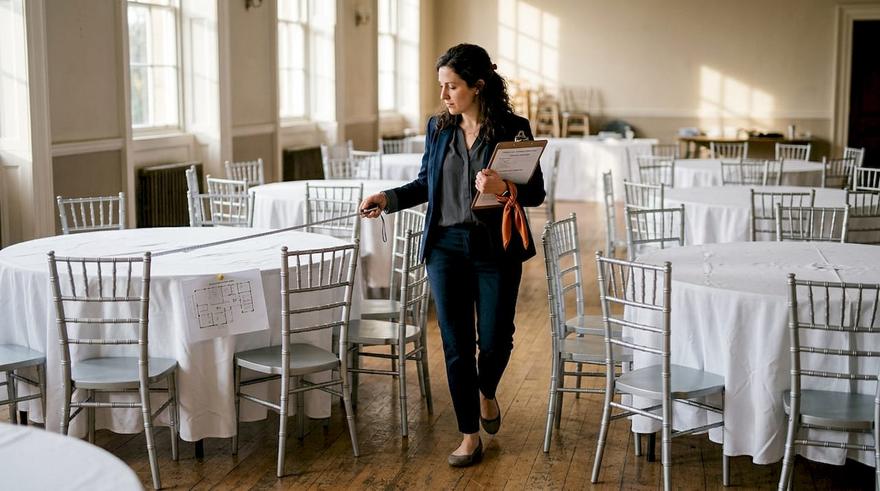
Understanding what site visits entail helps you maximise their value. Bring your floor plan, measuring tape, and camera to document sight lines, service access points, and potential layout obstacles. Test furniture placement ideas physically by marking floor positions with tape, then viewing from multiple guest perspectives. This hands-on approach catches issues that computer-aided design tools miss, particularly regarding ambiance, acoustics, and the emotional feel of different layout configurations.
Discover venues designed for flexible, optimised weddings
Implementing these layout strategies requires venues equipped for adaptability and scale. Jigsaw Conferences specialises in connecting event planners with UK venues offering the modular infrastructure, professional support, and spatial flexibility that complex wedding events demand. Our free venue finder provides access to properties specifically selected for their capacity to accommodate multi-stage events with efficient layout transitions. Whether you’re planning intimate celebrations or large corporate weddings, our venue specialists understand the spatial requirements and operational logistics that make events successful. With over two decades of industry experience, we’ve built relationships that deliver competitive rates and preferential booking terms, saving you time whilst ensuring venue capabilities match your layout ambitions.
FAQ
What is the best table shape for wedding receptions?
Round tables encourage communal interaction and fit well in varied spaces, comfortably seating 8 guests with adequate spacing for service and circulation. They create intimate conversation groups whilst maximising floor space efficiency. Rectangular tables suit buffet-style or corporate layouts but may reduce informal guest mingling, working better for formal dinners or when you need to maximise linear seating capacity along walls.
How can venues quickly transition layouts between ceremony, dinner, and dancing?
Using modular furniture like retractable seating and movable walls enables changeovers in 15 minutes when properly planned and executed by trained staff. The key lies in designing your initial ceremony layout with the final configuration in mind, positioning elements that won’t require relocation. Planning stacking and storage layouts in advance streamlines transitions, with dedicated holding areas for ceremony furniture that don’t impede dinner setup activities or guest movement during changeover periods.
Do outdoor weddings need different spacing than indoor events?
Yes, outdoor layouts require approximately 30% more space for equivalent guest counts due to wider aisles, expanded buffet lines, and structural elements like marquee poles. Uneven ground surfaces and the psychological need for more personal space in open-air settings also contribute to increased spatial requirements. Additionally, you must account for weather protection equipment, flooring systems, lighting infrastructure, and generator placement that indoor venues provide through existing building systems.
Recommended
Jigsaw Conferences Editorial Team
Verified AuthorThe Jigsaw Conferences Editorial Team comprises venue finding experts with over 20 years of combined experience in the events and hospitality industry. Our team includes certified meeting professionals (CMP), venue sourcing specialists, and industry analysts who provide authoritative insights on venue selection, event planning, and corporate accommodation.