
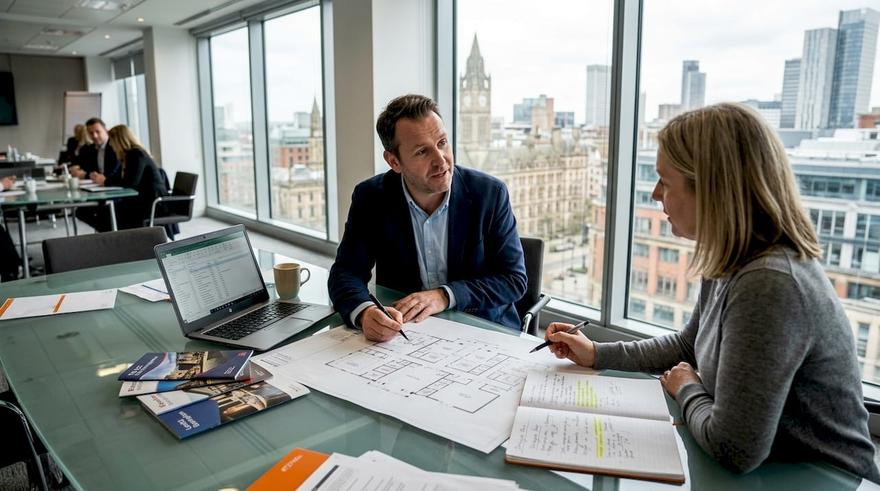
Enhancing guest experience: guide for UK corporate planners
TL;DR: Venue selection significantly impacts up to 40% of event success and delegate satisfaction.Modern delegates prioritize networking, accessibility, personalization, and technology reliability over spectacle.Using hybrid formats and advanced technology enhances engagement and creates memorable guest experiences.
TL;DR:
- Venue selection significantly impacts up to 40% of event success and delegate satisfaction.
- Modern delegates prioritize networking, accessibility, personalization, and technology reliability over spectacle.
- Using hybrid formats and advanced technology enhances engagement and creates memorable guest experiences.
Venue selection drives up to 40% of event success , yet many corporate planners still treat it as a box-ticking exercise rather than a strategic decision. The reality is that guest experience lives or dies on foundational choices made weeks or months before anyone walks through the door. Technical failures, poor accessibility, and mismatched capacity are not rare edge cases; they are the leading causes of delegate dissatisfaction across the UK. This guide draws on current data and proven frameworks to help you avoid the most common pitfalls and build events where every attendee leaves genuinely impressed, not just adequately entertained.
Table of Contents
- The evolving expectations of UK event attendees
- How venue selection shapes guest experience
- Event management strategies for seamless guest journeys
- Innovations transforming the future of guest experience
- What most planners overlook about guest experience
- Take your guest experience further with expert venue support
- Frequently asked questions
Key Takeaways
| Point | Details |
|---|---|
| Venue selection is critical | Choosing the right venue drives up to 40% of your event’s success and directly influences attendance and satisfaction. |
| Prioritise attendee needs | Guests value networking, personalisation, and smooth logistics over spectacle, so plan accordingly. |
| Embrace new technologies | Hybrid formats and advanced event tech are transforming engagement and boosting ROI for UK corporate events. |
| Measure what matters | Track delegate satisfaction and recommendation rates, not just attendance, for true event impact. |
The evolving expectations of UK event attendees
The UK corporate events sector is enormous and growing. The market generated £19.3 billion in direct spend in 2024, hosting 95.4 million delegates across 1.08 million events, with an average delegate satisfaction score of 8.1 out of 10. Those numbers tell a story of scale, but they also raise the bar considerably. When satisfaction is already high across the industry, standing out requires genuine intentionality.
So what do today’s delegates actually want? The answer might surprise you. It is not lavish production or celebrity keynote speakers. The primary reason 58% of attendees come to corporate events is to network, and 72% are more likely to recommend a brand after a positive event experience. That is a powerful commercial argument for investing in guest experience, not just event logistics.
Modern attendees also expect personalisation, meaningful outcomes, and a sense that the event was designed with them in mind. A generic conference format with little room for interaction or customisation will feel flat, regardless of how impressive the venue looks in photographs. You can explore event venue selection insights to understand how these expectations translate into practical venue requirements.
“Delegates in 2026 are not impressed by spectacle alone. They want relevance, connection, and a clear reason to have attended.”
“Delegates in 2026 are not impressed by spectacle alone. They want relevance, connection, and a clear reason to have attended.”
Here is a breakdown of the key satisfaction drivers and their relative weight for corporate delegates:
| Satisfaction driver | Weighted importance |
|---|---|
| Networking opportunities | Very high |
| Venue accessibility and location | High |
| Personalised content and agenda | High |
| Technical reliability (AV, WiFi) | High |
| Catering quality and comfort | Medium |
| Visual production and staging | Medium |
| Post-event follow-up | Medium |
The table makes it clear: the basics consistently outperform the extras. Planners who invest in networking infrastructure, accessible venues, and reliable technology will consistently outscore those chasing visual spectacle.
Key priorities for modern UK delegates:
- Genuine networking time and facilitated introductions
- Agendas that reflect their professional goals
- Venues that are easy to reach by public transport
- Seamless technology with no frustrating interruptions
- Clear, measurable takeaways from sessions
How venue selection shapes guest experience
Once you understand what delegates value, the venue decision becomes far more consequential. Venue location alone impacts attendance by 35% , and 42% of corporate events face venue-related issues such as technical failures or capacity problems. These are not minor inconveniences; they directly undermine the experience you have spent months building.
The most common venue-related failures are entirely preventable. Poor AV setup, insufficient WiFi bandwidth, and rooms that are too large or too small for the audience all create friction that delegates remember long after the content has faded. A step-by-step venue selection process helps you systematically eliminate these risks before they become day-of disasters.
Accessibility is another area that planners frequently underestimate. Venue accessibility requirements are not just a legal consideration; they are a guest experience consideration. An attendee who struggles to navigate a venue, find parking, or access facilities will carry that frustration into every session they attend. Checking 2026 venue standards ensures you are meeting both regulatory and experiential expectations.
Best practice guidance recommends prioritising accessibility, capacity at 80% for theatre style seating, technical checks, and site visits, with hybrid and AV readiness treated as non-negotiable rather than optional extras.
Pro Tip: Always conduct a site visit during a live event at the venue if possible. Seeing how staff manage flow, where bottlenecks form, and how the AV performs under real conditions tells you far more than any brochure.
Use this checklist when vetting any prospective venue:
- Confirm transport links and parking capacity for your expected delegate numbers
- Test WiFi bandwidth under simulated load conditions
- Walk the delegate journey from arrival to main room and back
- Verify AV equipment is current and that technical support is on-site during your event
- Check room capacity at 80% of maximum for comfort
- Review accessibility provisions for delegates with mobility or sensory needs
- Confirm contingency spaces for breakout sessions or overflow
Here is a quick comparison of how venues that meet core requirements stack up against those that do not:
| Venue quality | Typical delegate satisfaction | Common issues |
|---|---|---|
| Meets all core requirements | 8.5 to 9.5 out of 10 | Minimal |
| Partially meets requirements | 6.5 to 7.5 out of 10 | AV or flow issues |
| Fails core requirements | Below 6 out of 10 | Technical failures, complaints |
Event management strategies for seamless guest journeys
Selecting the right venue is only half the equation. How you manage the event operationally determines whether that venue delivers on its promise. The most effective approach combines structured planning with built-in flexibility, using what is known as a hybrid project management model.
Hybrid project management combining Waterfall and Agile methods, alongside risk registers and a 10 to 15% budget contingency, is now considered best practice for corporate and luxury events. The Waterfall element gives you a clear sequential timeline, while Agile principles allow your team to adapt quickly when circumstances change, as they always do.
Risk management is not pessimism; it is professionalism. A risk register documents every potential failure point and assigns a response plan before the event begins. You can review event management logistics to see how this works in practice for complex corporate events.
Personalisation is the other major lever available to planners in 2026. AI-driven agendas and networking matches are now baseline expectations for premium events, with the focus firmly on outcomes over spectacle. Delegates want to feel that the event was built for them, not just for the average attendee. Dynamic agendas that adapt to delegate interests, pre-event surveys that inform session groupings, and technology that facilitates meaningful introductions all contribute to this.
Pro Tip: Test your WiFi under simulated peak load at least two weeks before the event. Build AV redundancy into your technical plan, and always have a dedicated technical support contact on-site, not on call.
Key operational strategies for a seamless guest journey:
- Build a detailed risk register covering technical, logistical and supplier risks
- Allocate 10 to 15% of your total budget as a contingency reserve
- Use pre-event surveys to personalise agendas and networking groupings
- Measure success through NPS scores and engagement analytics, not just attendance figures
- Brief all on-site staff on delegate experience priorities, not just their functional roles
Knowing the right questions to ask venues before you commit is equally important. The answers will reveal whether a venue can genuinely support your operational plan or whether you are building on unstable ground. Understanding venue sourcing explained gives you a clearer picture of how professional sourcing services add value at this stage.
Innovations transforming the future of guest experience
The corporate events landscape has shifted dramatically since 2020, and the pace of change has not slowed. Hybrid events have surged by 35%, with ROI improvements of 25 to 34% reported by organisations that invest in technical readiness for hybrid formats. That is not a trend to monitor cautiously; it is a format to plan for actively.
The business case for investing in guest experience extends beyond the event itself. 80% of businesses report higher job satisfaction and 75% see a productivity boost following well-managed corporate events. These are outcomes that justify serious investment in planning quality.
“The events that generate lasting commercial value are those where delegates leave energised, connected, and clear on what they gained. The venue and format are the infrastructure that makes that possible.”
“The events that generate lasting commercial value are those where delegates leave energised, connected, and clear on what they gained. The venue and format are the infrastructure that makes that possible.”
Here is how the most impactful technologies compare for UK corporate events in 2026:
| Technology | Primary benefit | Impact level |
|---|---|---|
| AI-driven networking tools | Meaningful delegate connections | Very high |
| Hybrid streaming platforms | Extended reach and ROI | High |
| Immersive environments (AR/VR) | Memorable brand experiences | Medium to high |
| Real-time feedback tools | Immediate satisfaction data | High |
| Digital event apps | Personalised agendas and navigation | High |
The technologies making the greatest difference to UK corporate event success right now include:
- AI matchmaking platforms that connect delegates based on professional goals
- Hybrid streaming solutions with interactive Q&A and polling features
- Immersive environments that create memorable, shareable moments
- Real-time NPS and sentiment tools that allow planners to course-correct mid-event
- Venue apps that guide delegates through complex spaces and personalise their experience
Exploring a hybrid event planning guide is a practical starting point for planners who want to build these capabilities into their next event. Understanding event tech impact in venues helps you ask the right questions when evaluating whether a space can support your technical ambitions.
What most planners overlook about guest experience
Here is an uncomfortable truth: many corporate events that look impressive on paper deliver mediocre delegate experiences in practice. The reason is almost always the same. Planners become distracted by what is visible and impressive, high production values, elaborate theming, headline speakers, and underinvest in what is invisible but essential.
Some prioritise spectacle and production, but experts consistently stress relevance, personalisation and outcomes over attendance numbers or visual impact. A delegate who cannot find a seat near a power socket, who struggles to connect to WiFi, or who leaves without a single meaningful new contact will not remember the impressive stage design. They will remember the friction.
The planners who consistently deliver outstanding guest experiences are not necessarily those with the biggest budgets. They are the ones who ask a simple question before every decision: will this directly improve delegate outcomes, or does it just look good? That discipline, applied consistently, is what separates good events from genuinely great ones. A strong venue guide with guest focus keeps that question front and centre throughout the planning process.
Take your guest experience further with expert venue support
Putting these principles into practice takes time, industry knowledge, and access to the right venues. Jigsaw Conferences has been supporting corporate event planners across the UK since 2003, offering expert venue sourcing and event management support that is entirely free to use. Our relationships with leading UK venues give you access to competitive rates and honest advice about which spaces will genuinely deliver on your guest experience goals. Whether you are planning a small board meeting or a large-scale conference, we match your brief to venues that meet your technical, accessibility, and logistical requirements. Let us do the groundwork so you can focus on creating events that your delegates will remember for the right reasons.
Frequently asked questions
What factors influence guest satisfaction at corporate events?
Attendees value networking opportunities, accessible venues, personalisation, technical reliability and clear outcomes over spectacle alone. These fundamentals consistently outperform high production value in delegate satisfaction scores.
How does venue selection affect event attendance and success?
Venue selection impacts up to 40% of overall event success, and inadequate facilities account for a significant share of event issues including technical failures and capacity mismatches. Location alone can shift attendance by 35%.
What are the latest trends in enhancing guest experience for corporate events?
Hybrid event formats, AI-driven personalisation, immersive environments and robust feedback measurement are the defining trends shaping UK corporate guest experience in 2026.
How can event planners measure the ROI of guest experience improvements?
Measure ROI through delegate NPS, engagement analytics and tracking recommendation rates post-event. With 72% more likely to recommend a brand after a positive event, satisfaction data translates directly into commercial value.
Jigsaw Conferences Editorial Team
Verified AuthorThe Jigsaw Conferences Editorial Team comprises venue finding experts with over 20 years of combined experience in the events and hospitality industry. Our team includes certified meeting professionals (CMP), venue sourcing specialists, and industry analysts who provide authoritative insights on venue selection, event planning, and corporate accommodation.