
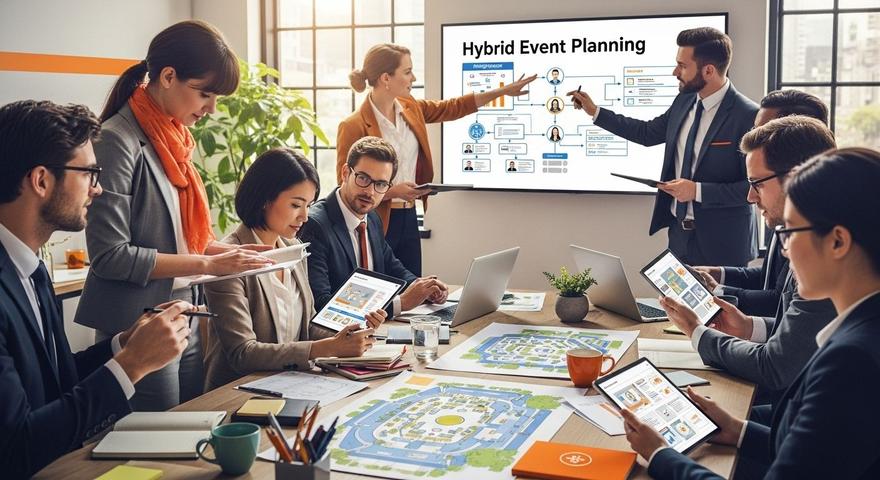
Master Hybrid Event Planning for Seamless Corporate Engagements
Hybrid event planning might sound daunting, especially when corporate teams now expect seamless engagement from both in-person and remote settings. Yet, more than 72 percent of companies say hybrid events have become their preferred meeting format, combining the best of both worlds . Most surprising of all, the power of a successful hybrid event does not just come from fancy tech or a big budget, but from a series of deceptively simple steps that anyone can start using straight away.
Table of Contents
- Step 1: Identify Your Event Objectives And Audience
- Step 2: Choose The Right Technology And Platforms
- Step 3: Develop An Inclusive Agenda For All Participants
- Step 4: Coordinate Logistics For Hybrid Engagement
- Step 5: Execute The Event With Precision
- Step 6: Evaluate Success And Gather Feedback
Quick Summary
| Key Point | Explanation |
|---|---|
| 1. Define Clear Event Objectives | Establishing precise goals ensures the event remains focused and effective for all participants. |
| 2. Assess Technological Compatibility | Choose platforms that seamlessly integrate in-person and virtual experiences, enhancing engagement across both formats. |
| 3. Create an Inclusive Agenda | Design sessions to equally involve both physical and virtual attendees, fostering active participation regardless of attendance mode. |
| 4. Coordinate Effective Logistics | Develop clear communication strategies and manage resources to support smooth interactions for all participants. |
| 5. Gather Comprehensive Feedback | Post-event analysis should capture insights on participant experiences and technological performance for continuous improvement. |
Step 1: Identify Your Event Objectives and Audience
Successful hybrid event planning begins with crystal clear objectives and a precise understanding of your audience. Without this foundational step, your event risks becoming an unfocused and ineffective gathering that fails to deliver meaningful outcomes.
Start by conducting a strategic assessment of your core event purpose. Are you aiming to educate, network, launch a product, train employees, or celebrate corporate achievements? Each objective demands a unique approach to hybrid event design. Clarify your primary goal with absolute precision . For corporate clients, this might mean increasing team collaboration, sharing critical business updates, or generating strategic connections across geographic boundaries.
Your audience analysis must go beyond basic demographics. Map out participant characteristics including professional roles, technological comfort levels, geographical distribution, and potential engagement preferences. Understanding whether attendees will join virtually or physically helps design tailored experiences. Corporate event planners should consider factors like time zones, technological infrastructure, and participant accessibility when structuring hybrid event frameworks.
Practical tools can streamline this initial planning phase. Consider using survey platforms like SurveyMonkey or Google Forms to gather preliminary audience insights. Create focused questionnaires that reveal participant expectations, preferred interaction methods, and potential technological constraints. These data points become your roadmap for designing an inclusive, engaging hybrid event experience.
Verify your objectives and audience understanding through these key checkpoints:
- Clear, measurable event purpose statement
- Comprehensive audience profile document
- Preliminary engagement strategy aligned with participant needs
- Initial technological compatibility assessment
Remember that hybrid event planning is an iterative process . Your initial objectives and audience understanding might shift as you progress through planning stages. Maintain flexibility while keeping your core mission firmly in focus. Each decision should connect directly back to your original event goals and participant requirements.
Step 2: Choose the Right Technology and Platforms
Selecting the appropriate technology and platforms represents the critical infrastructure of hybrid event planning. This step transforms your event vision from conceptual to executable, bridging physical and virtual participant experiences with seamless digital solutions.
Technological compatibility becomes your primary consideration . Your chosen platforms must effortlessly integrate in-person and remote participation, providing intuitive interfaces for all attendees. Professional event technology now offers sophisticated solutions that accommodate diverse participant engagement levels. Look for platforms supporting multiple interaction modes: live streaming, real-time chat, interactive polling, breakout rooms, and comprehensive networking capabilities.
Consider platform scalability and technical robustness when making selections. Enterprise-grade solutions like Zoom or Microsoft Teams offer robust features designed for corporate environments. Evaluate each platform against specific event requirements such as participant capacity, global accessibility, security protocols, and integration potential with existing corporate communication systems.
Technical infrastructure assessment involves more than platform selection. Examine your venue’s technological capabilities carefully. Confirm reliable internet bandwidth, multiple power sources, comprehensive audio visual equipment, and seamless connectivity options. High-quality audio visual infrastructure determines participant engagement levels . Consider professional AV support that can manage complex hybrid event technical requirements, ensuring smooth transitions between physical and virtual event spaces.
Verify your technology and platform selection through these critical checkpoints:
- Comprehensive platform feature compatibility assessment
- Confirmed technical infrastructure readiness
- Successful platform integration test
- Backup technology contingency plan
Remember that technology selection is not a one-size-fits-all process. Your chosen platforms must align precisely with your event objectives, audience expectations, and organisational technological ecosystem. Remain adaptable and prepared to make nuanced adjustments throughout your hybrid event planning journey.
The following table summarises essential technological tools and platforms referenced in the article, alongside their primary purposes for hybrid event planning.
| Tool/Platform | Main Purpose | Key Features |
|---|---|---|
| SurveyMonkey | Collect audience feedback & insights | Surveys, questionnaires, segmented feedback |
| Google Forms | Audience profiling & preliminary assessment | Custom forms, response tracking |
| Zoom | Hybrid event hosting | Live streaming, real-time chat, scalability |
| Microsoft Teams | Corporate remote collaboration | Integration, security, breakout rooms |
| Mentimeter (Menti) | Interactive participant engagement | Polling, Q&A, digital collaboration |
| Eventbrite | Event registration & logistics coordination | Registration management, tracking |
| Hopin | Real-time participant interaction monitoring | Digital queues, live chat, streaming |
Step 3: Develop an Inclusive Agenda for All Participants
Crafting an inclusive agenda represents the heart of successful hybrid event planning. Your goal is creating an experience that seamlessly engages both physical and virtual participants, ensuring every attendee feels equally valued and connected regardless of their participation mode.
Balanced engagement becomes your primary design principle . Structure your agenda to provide equivalent interaction opportunities for in-person and remote participants. This means designing sessions that incorporate real-time digital participation mechanisms, interactive polling, simultaneous breakout discussions, and synchronised networking opportunities. Virtual attendees should never feel like secondary observers but active event contributors.
Consider time management and technological constraints when mapping your event schedule. Global participants might join from different time zones, so design flexible session structures that accommodate varied schedules. Implement strategic timing windows that allow maximum accessibility. For instance, record critical sessions for asynchronous viewing, provide digital session replays, and create interactive discussion forums that extend beyond live event hours.
Interactive technology platforms like Menti can transform traditional presentation formats into dynamic, participatory experiences. Integrate live polling, Q&A sessions, and digital collaboration tools that bridge physical and virtual participant interactions. Ensure your presentation content uses clear, adaptable visual designs that translate effectively across different viewing platforms and devices.
Verify your inclusive agenda through these essential checkpoints:
- Confirmed equal participation opportunities for virtual and physical attendees
- Comprehensive session timing and accessibility assessment
- Multiple interaction channel options
- Backup content delivery mechanisms
Remember that inclusivity requires continuous adaptation . Monitor participant feedback during the event, remain flexible, and be prepared to make real-time adjustments that enhance overall engagement. Your agenda should feel like a living, responsive framework that celebrates diverse participant experiences.
Step 4: Coordinate Logistics for Hybrid Engagement
Logistical coordination represents the intricate backbone of successful hybrid event planning. Your objective is creating a seamless operational framework that eliminates friction for both physical and virtual participants, ensuring smooth technological integration and participant experience.
Communication infrastructure becomes your primary operational focus . Develop comprehensive participant communication protocols that provide crystal clear instructions for accessing and navigating the event. This includes detailed guidance on technological requirements, login procedures, participation mechanisms, and technical support channels. Prepare digital welcome packages that outline everything participants need to know, from internet bandwidth recommendations to specific platform access instructions.
Physical and virtual space management requires meticulous planning. Configure your venue to accommodate simultaneous in-person and digital interactions. This means designing physical spaces with strategic camera placements, ensuring high-quality audio visual equipment, and creating dedicated zones that facilitate smooth digital interactions. Consider room layouts that allow virtual participants to feel genuinely integrated, using technologies that enable real-time visual and audio connections.
Professional event management platforms like Eventbrite can streamline complex logistical coordination. Leverage these tools to manage registrations, track participant engagement, and provide personalised event experiences. Implement robust technical support mechanisms that offer immediate assistance for both in-person and virtual attendees, reducing potential technological barriers to participation.
Verify your logistical coordination through these critical checkpoints:
- Comprehensive participant communication strategy
- Confirmed technological infrastructure readiness
- Detailed technical support framework
- Backup communication and participation mechanisms
Flexibility remains your most valuable logistical asset . Prepare contingency plans that can adapt to unexpected technological challenges or participation shifts. Your goal is creating an event environment that feels effortless and intuitive, regardless of how participants choose to engage.
This checklist table provides a concise summary of verification steps and criteria to ensure all vital aspects are addressed during the hybrid event planning process.
| Verification Step | Description | Status (Tick/Mark) |
|---|---|---|
| Event objectives clarified | Create a clear, measurable event purpose statement | |
| Audience profile documented | Develop a comprehensive profile document | |
| Engagement strategy aligned | Strategy tailored to participant needs | |
| Platform technical compatibility reviewed | Assess platform features and technical readiness | |
| Inclusive agenda structured | Sessions allow equal participation for all attendees | |
| Communication strategy implemented | Clear protocols for participant access and support | |
| Technical support and contingency planned | Detailed support and backup mechanisms established | |
| Feedback and evaluation measures prepared | Post-event surveys and data collection tools set up |
Step 5: Execute the Event with Precision
Event execution represents the culmination of your meticulous hybrid event planning. This critical stage transforms carefully crafted strategies into a dynamic, engaging participant experience that seamlessly bridges physical and virtual environments.
Real-time management becomes your operational cornerstone . Assign dedicated team members with specific roles that ensure comprehensive event oversight. Designate primary and backup moderators responsible for managing technological transitions, monitoring participant engagement, and addressing potential technical interruptions. Your team should operate like a well-choreographed orchestra, anticipating potential challenges and responding with immediate, professional interventions.
Technological monitoring requires constant, proactive attention. Use professional event management platforms like Hopin to track participant interactions, manage digital queues, and facilitate real-time communication channels. Implement redundant internet connections and backup streaming solutions to mitigate potential connectivity disruptions. Ensure your technical support team remains vigilant, prepared to troubleshoot issues instantaneously without disrupting overall event flow.
Participant engagement demands dynamic, responsive facilitation. Create multiple interaction pathways that accommodate diverse participant preferences. This means providing simultaneous chat functions, live polling, interactive Q&A sessions, and real-time digital networking opportunities. Your goal is creating an immersive experience that feels equally compelling for in-person and virtual attendees, regardless of their physical location.
Verify your event execution through these critical checkpoints:
- Confirmed technological stability across all platforms
- Comprehensive participant interaction tracking
- Immediate technical support readiness
- Backup communication and participation mechanisms
Adaptability represents your most powerful execution strategy . Remain flexible, monitor participant feedback in real-time, and be prepared to make swift adjustments that enhance overall event experience. Your precision determines the difference between a good hybrid event and an extraordinary one.
Step 6: Evaluate Success and Gather Feedback
Post-event evaluation represents the critical reflection phase that transforms your hybrid event experience into actionable future improvements. This step goes beyond simple data collection, providing comprehensive insights into your event’s effectiveness, participant satisfaction, and strategic performance.
Quantitative and qualitative data analysis becomes your primary evaluation framework . Develop a multifaceted feedback mechanism that captures nuanced participant experiences across different engagement channels. Utilise survey platforms that allow detailed, segmented feedback collection, distinguishing between in-person and virtual participant perspectives. Your evaluation should encompass technological performance, content relevance, interaction quality, and overall participant satisfaction.
Implement comprehensive metrics tracking using professional tools like SurveyMonkey to gather structured participant insights. Create assessment frameworks that measure key performance indicators such as participant engagement rates, session attendance, interaction levels, and learning outcomes. Consider developing separate evaluation tracks for physical and virtual participants to capture the unique experiences of each group.
Technological performance analysis requires meticulous examination. Review platform functionality, connectivity stability, audio visual quality, and interactive tool effectiveness. Analyze participant interaction data to understand engagement patterns, identifying potential improvements for future hybrid events. Your goal is creating a holistic understanding of the event’s strengths and potential enhancement areas.
Verify your evaluation process through these critical checkpoints:
- Comprehensive participant feedback collection
- Detailed technological performance analysis
- Comparative assessment of in-person and virtual experiences
- Actionable improvement recommendations
Continuous improvement represents the ultimate objective of your evaluation . Transform collected insights into strategic recommendations for future hybrid events. View each event as a learning opportunity, using participant feedback to refine your approach, enhance technological integration, and create increasingly sophisticated hybrid event experiences.
Elevate Your Hybrid Event Planning with Proven Corporate Solutions
Navigating the complexities of hybrid event planning often leaves businesses facing frustrations like scattered objectives, technological uncertainty, and the risk of disengaged participants. The article highlights the meticulous steps required to achieve seamless corporate engagement, from defining clear event objectives to delivering flawless execution and evaluation. But if the thought of balancing technology, venues, and participant needs feels overwhelming, you are not alone. The right partner can save you valuable time, relieve planning stress, and dramatically improve your event outcomes.
Bring your event vision to life with Jigsaw Conferences , the trusted venue-finding and event management specialist for corporate clients since 2003. Our expert team offers tailored venue sourcing and meeting solutions so you can focus on strategic goals while we handle logistics and technology integration. Whether you need venues across the UK, curated corporate housing, or emergency accommodation, our free-to-use services are designed for discerning professionals who value cost-effectiveness, sustainability, and quality. Do not let planning hurdles hold back your next hybrid event. Discover how Jigsaw Conferences can streamline your process and deliver exceptional results. Visit https://jigsawconferences.co.uk to start your enquiry today.
Frequently Asked Questions
What are the key objectives to consider when planning a hybrid event?
Successful hybrid event planning begins with clearly defined objectives, which could include educating participants, networking, product launches, or training. Understanding your primary goal and aligning it with your audience’s needs is crucial for effectiveness.
How can I ensure both physical and virtual participants are equally engaged during a hybrid event?
To ensure balanced engagement, structure your agenda to provide equal interaction opportunities. Incorporate real-time digital participation mechanisms, interactive polling, and simultaneous breakout discussions tailored to both in-person and remote attendees.
What technology should I consider for hybrid event planning?
Choose platforms that facilitate seamless integration of in-person and virtual participation, featuring live streaming, real-time chat, polling, and networking capabilities. Ensure the platform is scalable and aligns with your event requirements.
How can I evaluate the success of a hybrid event after it has concluded?
Evaluate success by collecting quantitative and qualitative feedback from attendees. Use surveys to gather insights on participant engagement, session effectiveness, and technological performance to identify strengths and areas for improvement.
Recommended
- Why Use Venue Finders for Corporate Events | Jigsaw Conferences
- How to Find a Venue for an Event: A Step-by-Step Guide | Jigsaw Conferences
- What Is Emergency Accommodation and Why It Matters | Jigsaw Conferences
- 7 Essential Tips for Hotels for Business Travelers | Jigsaw Conferences
- Why More Venue Options Are Making Your Events Worse | Jigsaw Conferences
Jigsaw Conferences Editorial Team
Verified AuthorThe Jigsaw Conferences Editorial Team comprises venue finding experts with over 20 years of combined experience in the events and hospitality industry. Our team includes certified meeting professionals (CMP), venue sourcing specialists, and industry analysts who provide authoritative insights on venue selection, event planning, and corporate accommodation.