
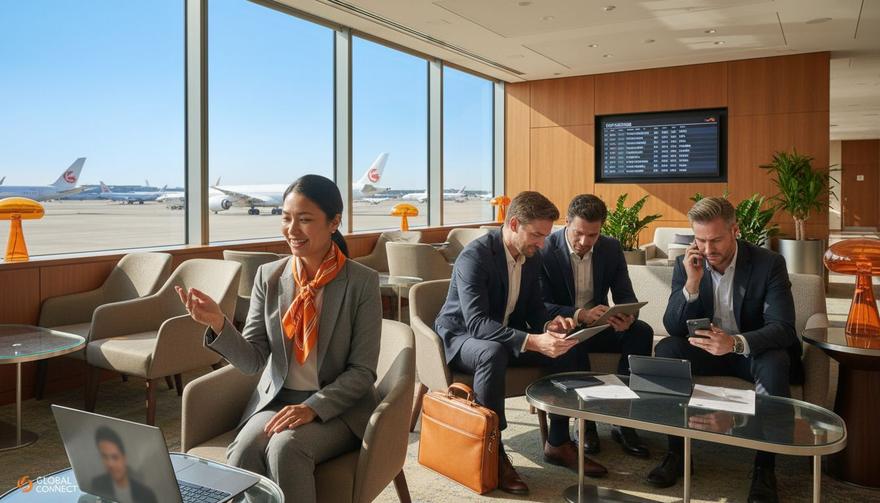
Complete Guide to Business Travel and Accommodation
Over 85 percent of british businesses report that travel is vital for growth and client retention. Corporate trips today demand more than just a flight and hotel booking. As expectations rise, decision makers must weigh comfort, technology, compliance, and cost. This guide breaks down what defines business travel and corporate accommodation, highlighting the tailored solutions and strategies that set modern professional journeys apart.
Table of Contents
- Defining Business Travel And Corporate Accommodation
- Major Types Of Business Travel Explained
- Accommodation Options For Corporate Clients
- Key Factors In Selecting Business Accommodation
- Cost, Compliance, And Duty Of Care Implications
Key Takeaways
| Point | Details |
|---|---|
| Importance of Business Travel | Business travel is a strategic investment that supports professional development, networking, and organisational growth. |
| Corporate Accommodation Evolution | Modern corporate lodging prioritises functionality and comfort, offering tailored solutions beyond traditional hotels. |
| Diverse Travel Types | Categories such as sales, conferences, and internal meetings optimise mobility strategies and ensure effective outcomes. |
| Cost and Compliance Considerations | Effective corporate travel management balances financial control, legal compliance, and employee welfare for successful outcomes. |
Defining Business Travel and Corporate Accommodation
Business travel represents more than just moving from point A to point B - it’s a strategic ecosystem of professional mobility designed to support organisational objectives and enable corporate interactions. At its core, business travel encompasses professional journeys undertaken by employees, executives, and teams to conduct work-related activities beyond their standard workplace environment.
Within this landscape, corporate accommodation emerges as a critical support structure, providing professional-grade lodging solutions tailored specifically for business travellers. Drawing from research on corporate housing , these accommodations go far beyond traditional hotel stays, offering furnished spaces that integrate comfort, functionality, and cost-effectiveness for corporate clients.
The MICE tourism segment - encompassing Meetings, Incentives, Conferences, and Exhibitions - represents a sophisticated subset of business travel. This specialised category focuses on organised professional events that require comprehensive logistical planning, including transportation, lodging, and event management. Key characteristics of business travel and corporate accommodation include:
- Purposeful travel with clear professional objectives
- Flexible accommodation solutions adaptable to diverse corporate needs
- Emphasis on efficiency, productivity, and cost management
- Integrated technology and connectivity support
- Compliance with corporate travel policies and expense guidelines
Modern business travel has evolved from simple transportation to a complex, strategic discipline. Companies now view travel not just as a necessity, but as an investment in professional development, networking, and organisational growth. Corporate accommodation providers understand this shift, offering solutions that balance professional requirements with individual comfort and operational efficiency.
Major Types of Business Travel Explained
Business travel encompasses a diverse range of professional journeys, each serving unique organisational objectives and strategic goals. Understanding these different travel types helps companies optimise their mobility strategies, manage resources effectively, and ensure productive outcomes for every professional engagement.
Traditionally, business travel can be categorised into several key segments. Sales and client-facing travel remains the most prevalent type, where professionals journey to meet potential customers, negotiate contracts, and develop critical business relationships. Companies in professional services often rely heavily on these interactions to drive revenue and expand market presence.
Another significant category is conference and industry event travel , which includes attendance at trade shows, professional conferences, seminars, and networking events. These journeys are crucial for:
- Knowledge acquisition and professional development
- Industry trend identification
- Building strategic partnerships
- Showcasing company capabilities
- Competitive intelligence gathering
Additional prominent business travel types include:
- Internal Meetings and Training : Trips for team meetings, corporate training sessions, and inter-office collaborations
- Consultancy and Project-Based Travel : Professionals visiting client sites to deliver specialised services
- Technology and Innovation Exchanges : Journeys focused on research, product development, and technological collaboration
- Corporate Retreats and Team Building : Strategic trips designed to enhance organisational culture and team dynamics
Industries with the most frequent business travel include technology, consulting, healthcare, finance, construction, and professional services. Each sector has unique travel requirements, reflecting the specialised nature of their professional interactions and operational strategies.
Accommodation Options for Corporate Clients
Corporate accommodation represents a sophisticated ecosystem of professional lodging solutions designed to meet the complex needs of business travelers. Unlike traditional hospitality models, these options prioritize functionality, efficiency, and professional support across diverse travel requirements.
Traditional corporate hotels remain a cornerstone of business travel accommodation. When selecting appropriate venues , companies now evaluate properties offering comprehensive business amenities such as high-speed internet, dedicated workspaces, meeting rooms, and 24-hour business centers. These establishments understand the unique demands of professional travelers, providing integrated services that support productivity and comfort.
Modern corporate accommodation encompasses several strategic options:
- Serviced Apartments : Long-term stays with home-like environments
- Boutique Business Hotels : Personalised experiences with professional infrastructure
- Co-living Spaces : Collaborative environments for networked professionals
- Corporate Housing : Fully furnished accommodations for extended assignments
- Hybrid Hotel Concepts : Flexible spaces blending residential and professional features
Key considerations for selecting corporate accommodation include:
- Proximity to work locations
- Technology and connectivity infrastructure
- Cost-effectiveness
- Scalability for team or group bookings
- Compliance with corporate travel policies
Industries with frequent business travel - such as consulting, technology, and professional services - increasingly demand adaptable accommodation solutions that transcend traditional hotel experiences. The evolution of corporate lodging reflects a broader understanding that effective business travel requires more than just a place to sleep, but a comprehensive support ecosystem for professional success.
Key Factors in Selecting Business Accommodation
Business accommodation selection is a strategic process that goes far beyond simply choosing a place to sleep. Modern corporate travelers require sophisticated environments that support productivity, comfort, and professional effectiveness across multiple dimensions of their work experience.
Conference room amenities represent one critical consideration in evaluating potential business lodging. Technological infrastructure stands as the cornerstone of contemporary corporate accommodation, with professionals demanding seamless connectivity, robust communication capabilities, and integrated work environments that enable immediate productivity upon arrival.
Essential factors for selecting optimal business accommodation include:
- Technological Capabilities High-speed, reliable internetMultiple charging stationsSecure network connectionsAdvanced audiovisual equipment
- Workspace Functionality Ergonomic furnitureDedicated work areasQuiet environments24-hour business centers
- Location and Accessibility Proximity to business districtsEasy transportation linksSafe neighborhood environmentsConvenient parking facilities
Technological Capabilities
- High-speed, reliable internet
- Multiple charging stations
- Secure network connections
- Advanced audiovisual equipment
Workspace Functionality
- Ergonomic furniture
- Dedicated work areas
- Quiet environments
- 24-hour business centers
Location and Accessibility
- Proximity to business districts
- Easy transportation links
- Safe neighborhood environments
- Convenient parking facilities
Key performance metrics for evaluating business accommodation encompass:
- Connectivity Speed : Minimum 50 Mbps upload/download
- Workspace Quality : Dedicated desk areas with electrical outlets
- Privacy Levels : Sound-insulated rooms
- Additional Services : Laundry, meal preparation facilities
- Security Measures : 24-hour surveillance, secure access systems
Ultimately, successful business accommodation transcends basic lodging.
It represents a comprehensive ecosystem designed to support professional performance, personal well-being, and organisational efficiency. Companies increasingly view accommodation as a strategic asset that directly influences employee productivity, satisfaction, and overall travel experience.
Cost, Compliance, and Duty of Care Implications
Corporate travel management represents a complex balancing act between financial responsibility, legal compliance, and employee welfare. Modern organisations must navigate intricate frameworks that simultaneously address cost control, regulatory requirements, and comprehensive traveler protection strategies.
Strategic event branding opportunities extend beyond marketing considerations and intersect critically with travel risk management. Financial prudence requires sophisticated approaches to accommodation selection that integrate cost-effectiveness with robust safety protocols and policy alignment.
Key considerations in corporate travel risk management include:
- Financial Control Mechanisms Standardised accommodation booking proceduresPre-approved vendor networksTransparent expense trackingNegotiated corporate rates
- Compliance Requirements Adherence to corporate travel policiesRegulatory health and safety standardsInsurance coverage verificationDocumentation and reporting protocols
- Duty of Care Obligations Real-time traveler trackingEmergency response planningMedical support arrangementsLocation risk assessment
Financial Control Mechanisms
- Standardised accommodation booking procedures
- Pre-approved vendor networks
- Transparent expense tracking
- Negotiated corporate rates
Compliance Requirements
- Adherence to corporate travel policies
- Regulatory health and safety standards
- Insurance coverage verification
- Documentation and reporting protocols
Duty of Care Obligations
- Real-time traveler tracking
- Emergency response planning
- Medical support arrangements
- Location risk assessment
Critical compliance dimensions encompass:
- Budget Alignment : Matching accommodation expenses with departmental allocations
- Risk Mitigation : Implementing comprehensive traveler safety frameworks
- Policy Enforcement : Ensuring consistent adherence to organisational guidelines
- Legal Protection : Maintaining appropriate insurance and liability coverage
- Traveler Well-being : Prioritising employee health and safety throughout travel
Successful corporate travel management transcends traditional cost accounting. It represents a holistic approach that balances financial efficiency, legal compliance, and genuine care for employee welfare, recognising that each business journey involves both strategic and human dimensions.
Streamline Your Business Travel with Expert Corporate Accommodation Solutions
Understanding the complexities of business travel and corporate accommodation can be overwhelming. This article highlights the challenges professionals face such as finding flexible lodging that supports productivity, managing compliance with travel policies, and balancing cost with comfort. Whether you are navigating the demands of MICE tourism, long-term assignments, or last-minute corporate events, having a trusted partner is essential.
At Jigsaw Conferences , we specialise in simplifying your corporate event and accommodation needs by offering personalised venue finding and business lodging solutions. Our extensive experience since 2003 means you benefit from access to competitive rates, carefully selected venues, and seamless booking assistance designed for busy professionals. With options ranging from serviced apartments to boutique hotels, we ensure your accommodation supports every aspect of your business travel strategy.
Discover how you can enhance productivity and traveller satisfaction while controlling costs by exploring our venue sourcing and corporate housing services. Save precious time and mitigate risk knowing your accommodation choices align with your company’s compliance and duty of care requirements. Start your efficient business travel journey today with Jigsaw Conferences and experience the difference a dedicated corporate accommodation partner makes.
Frequently Asked Questions
What is business travel?
Business travel refers to professional journeys undertaken by employees and executives for work-related activities outside their regular workplace, aimed at supporting organisational objectives and corporate interactions.
What types of accommodation are available for business travellers?
Business travellers can choose from various accommodation options, including serviced apartments, corporate housing, boutique business hotels, co-living spaces, and hybrid hotel concepts that offer tailored environments for professional needs.
How do companies ensure compliance with travel policies during business trips?
Companies manage compliance by adhering to corporate travel policies, using pre-approved vendor networks, applying standardised booking procedures, and ensuring that lodging and expenses align with regulatory health and safety standards.
What key factors should be considered when selecting business accommodation?
When selecting business accommodation, key factors include technological capabilities such as high-speed internet, workspace functionality, location accessibility, and cost-effectiveness, along with compliance with the company’s travel policies.
Jigsaw Conferences Editorial Team
Verified AuthorThe Jigsaw Conferences Editorial Team comprises venue finding experts with over 20 years of combined experience in the events and hospitality industry. Our team includes certified meeting professionals (CMP), venue sourcing specialists, and industry analysts who provide authoritative insights on venue selection, event planning, and corporate accommodation.