
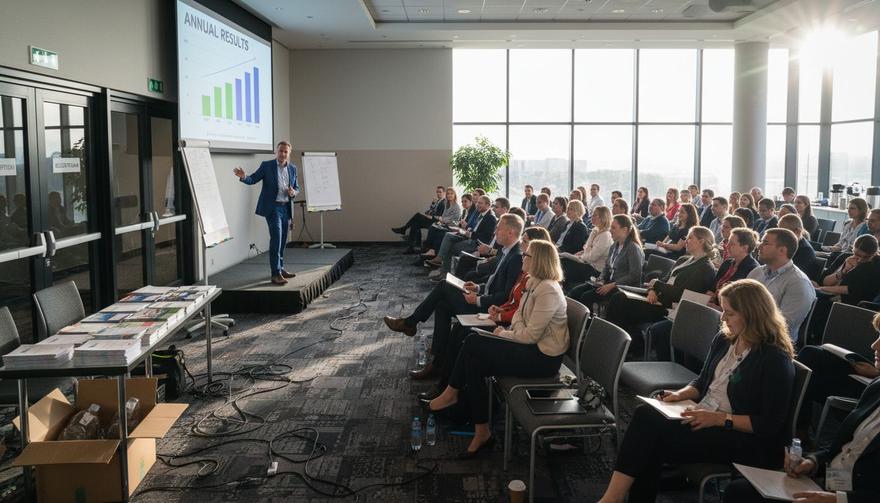
Conference Facilities UK: Boosting Corporate Event Success
Every british business event starts with a single decision: where to meet. Conference facilities across the United Kingdom have transformed into high-tech hubs, offering more than just a table and chairs. With over 80 percent of professional gatherings relying on dedicated venues, organisations recognise that the right environment drives focus and collaboration. If you want to understand what makes modern conference spaces truly effective, this guide reveals how venues evolve to match the demands of british corporate culture.
Table of Contents
- Defining Conference Facilities in the UK
- Types of Conference Venues Available
- Essential Services and Amenities Offered
- Venue Sourcing and Booking Process
- Cost Factors and Potential Pitfalls
Key Takeaways
| Point | Details |
|---|---|
| Conference Facilities Are Comprehensive | They support professional gatherings with dedicated spaces equipped for seamless communication and collaboration. |
| Diverse Venue Options Exist | The UK provides a range of venues from hotels to unique historic sites, catering to various event requirements. |
| Integrated Services Enhance Experience | Modern facilities offer advanced technology and logistical support that facilitate efficient event management. |
| Strategic Venue Selection is Crucial | Careful evaluation of factors such as accessibility, capacity, and costs is essential for a successful event. |
Defining Conference Facilities in the UK
Conference facilities represent specialised spaces designed to support professional gatherings, meetings, and corporate events across the United Kingdom. These dedicated venues provide comprehensive infrastructures that enable businesses to conduct strategic discussions, host training sessions, launch products, and facilitate critical organisational interactions. Conference facilities are more than just rooms - they are sophisticated environments engineered to support seamless professional communication and collaboration.
Typically, conference facilities encompass a wide range of physical spaces and technical capabilities. These may include meeting rooms of various sizes, large conference halls, breakout spaces, presentation theatres, and technological support areas. Modern conference venues in the UK often feature state-of-the-art audiovisual equipment, high-speed internet connectivity, flexible seating arrangements, and integrated technology platforms that support both in-person and hybrid event configurations .
The core characteristics of exceptional conference facilities in the UK include adaptable spatial designs, advanced technological infrastructure, and comprehensive support services. Venues might be located within hotels, purpose-built conference centres, university campuses, or specialist corporate event spaces. Key considerations for businesses include room capacity, technological capabilities, accessibility, catering options, and proximity to transportation networks. Professional event organisers and corporate decision-makers carefully evaluate these factors to select venues that align precisely with their specific event requirements and strategic objectives.
Beyond physical infrastructure, conference facilities represent strategic platforms for professional engagement. They are not merely spaces but ecosystems designed to facilitate knowledge exchange, networking, skill development, and organisational communication. From intimate boardroom meetings to large-scale industry conferences, these facilities provide the critical environments where business ideas are shared, strategies are developed, and professional relationships are forged.
Types of Conference Venues Available
The United Kingdom offers an impressive array of conference venues that cater to diverse corporate and professional event requirements. Conference venues range from traditional institutional spaces to innovative modern environments, providing organisations with multiple options to suit their specific event needs. These venues are strategically designed to accommodate everything from small executive meetings to large-scale international conferences, ensuring flexibility and professional functionality.
Typical conference venue categories in the UK include:
- Hotel Conference Centres : Large hotel chains offering integrated meeting spaces with comprehensive amenities
- Purpose-Built Conference Centres : Dedicated facilities specifically engineered for professional events
- University and Academic Venues : Educational institutions with sophisticated presentation spaces
- Business Parks and Corporate Facilities : Modern spaces within professional commercial complexes
- Historic and Unique Venues : Characterful locations like heritage sites, museums, and renovated industrial spaces
Modern conference venues increasingly emphasise technological integration and flexible spatial designs. Corporate venues in smaller cities like Salisbury demonstrate how regional locations can provide high-quality professional event spaces that rival metropolitan offerings. These venues typically feature advanced audiovisual equipment, high-speed internet connectivity, adaptable room configurations, and comprehensive technical support to ensure seamless event execution.
The selection of an appropriate conference venue depends on multiple strategic considerations. Organisations must evaluate factors such as geographical accessibility, technological capabilities, room capacity, catering options, parking facilities, and proximity to transportation networks. Professional event planners meticulously assess these variables to ensure the chosen venue aligns perfectly with the event’s objectives, audience expectations, and logistical requirements. From intimate boardroom discussions to large-scale industry conferences, the UK’s diverse conference venue landscape provides solutions for every professional gathering.
Essential Services and Amenities Offered
Modern conference facilities in the United Kingdom represent comprehensive professional ecosystems designed to support seamless event experiences. Conference services encompass far more than physical spaces, providing integrated technological, logistical, and support infrastructures that enable organisations to conduct sophisticated professional gatherings with maximum efficiency and minimal operational friction.
Key technological amenities typically include:
- High-Speed Internet Connectivity : Robust wireless and hardwired network solutions
- Advanced Audiovisual Equipment : Projection systems, sound equipment, video conferencing tools
- Digital Display Technologies : Interactive screens, presentation monitors, digital signage
- Integrated Communication Platforms : Seamless technological interfaces for hybrid and remote participation
- Secure Charging Stations : Multiple power outlet configurations for electronic devices
Affordable venues in smaller regional cities demonstrate that comprehensive service offerings are no longer limited to metropolitan locations. Professional conference facilities now provide extensive support services that extend beyond traditional technological provisions. These include specialised catering options, dedicated event management teams, accessibility accommodations, multilingual support services, and customisable spatial configurations that can be rapidly transformed to meet specific event requirements.
Beyond technological infrastructure, exceptional conference venues offer holistic support ecosystems. Professional event organisers can typically access additional amenities such as on-site technical support, event planning consultation, registration management, accommodation coordination, transportation logistics, and comprehensive post-event reporting. These integrated services transform conference venues from mere physical spaces into strategic professional platforms that facilitate seamless knowledge exchange, networking, and collaborative opportunities across diverse organisational contexts.
Venue Sourcing and Booking Process
The venue sourcing and booking process for corporate events represents a sophisticated, strategic approach that requires meticulous planning and comprehensive evaluation. Venue selection is a critical decision that directly impacts the success of professional gatherings, demanding a structured methodology to identify the most appropriate conference facilities for specific organisational requirements.
The typical venue sourcing process involves several strategic stages:
- Initial Requirements Assessment
- Determining event objectives
- Defining participant numbers
- Establishing budget constraints
- Identifying technological and logistical needs
- Preliminary Venue Research
- Geographical considerations
- Accessibility requirements
- Technical infrastructure evaluation
- Comparative venue analyses
- Detailed Venue Screening
- Site visits and virtual tours
- Technical capability assessments
- Catering and support service reviews
- Contractual and pricing negotiations
Temporary meeting room strategies can provide additional flexibility for organisations seeking adaptable event solutions. Professional event planners typically leverage extensive networks and specialised platforms to streamline the venue sourcing process, utilising advanced digital tools and industry relationships to identify optimal conference facilities that precisely match organisational specifications.
Successful venue booking requires a comprehensive approach that extends beyond initial selection. Organisations must consider nuanced factors such as cancellation policies, contingency planning, technological compatibility, and potential hidden costs. Professional event coordinators meticulously negotiate contracts, verify venue capabilities, and develop detailed implementation strategies that ensure seamless event execution. This holistic approach transforms venue sourcing from a transactional process into a strategic partnership designed to maximise event effectiveness and organisational objectives.
Cost Factors and Potential Pitfalls
Navigating the financial landscape of conference venue selection requires sophisticated strategic planning and comprehensive financial understanding. Conference budgeting represents a complex ecosystem of direct and indirect expenses that extend far beyond basic venue rental costs, demanding meticulous financial analysis and strategic forecasting to ensure optimal event investment.
Key cost components organisations must carefully consider include:
- Venue Base Rates : Fundamental space rental charges
- Technology Infrastructure : AV equipment, internet connectivity, technical support
- Catering Expenses : Meals, refreshments, dietary accommodation
- Staffing Requirements : On-site event management, technical support personnel
- Additional Service Charges : Cleaning, security, parking, setup and breakdown costs
- Potential Hidden Expenses : Overtime rates, last-minute technical modifications
Corporate event venue selection strategies can help organisations mitigate financial risks and identify potential budget overruns. Professional event planners recommend developing comprehensive financial models that include contingency funds, detailed expense tracking, and rigorous negotiation strategies to maintain budgetary discipline and prevent unexpected financial complications.
Potential pitfalls in conference venue financial management often emerge from inadequate planning and superficial cost analysis. Common mistakes include overlooking peripheral expenses, failing to negotiate comprehensive contracts, underestimating technological infrastructure requirements, and not accounting for potential scalability or last-minute changes. Successful organisations approach venue selection as a holistic financial strategy, integrating detailed cost-benefit analyses, thorough vendor negotiations, and flexible budgetary frameworks that accommodate potential variations while maintaining strict financial control.
Elevate Your Corporate Events with Expert Venue Solutions
Choosing the right conference facilities in the UK can be a complex challenge. From matching specific spatial needs and technical requirements through to navigating cost factors and logistical hurdles, businesses face a demanding process that directly impacts the success of their corporate events. Whether you need adaptable meeting rooms, state-of-the-art audiovisual support, or seamless venue booking strategies, understanding these pain points is just the start.
At Jigsaw Conferences , we specialise in easing these pressures by offering a free, personalised venue-finding and event management service tailored exclusively to corporate clients. Our extensive network connects you to professional conference venues across UK cities and towns, ensuring options that align precisely with your requirements for technology, location, and budget. Take advantage of our expertise to save time and secure competitive rates leveraging our industry experience since 2003.
Discover how our venue sourcing and booking assistance can turn complex event planning into a straightforward process. Don’t let venue selection delays or hidden costs undermine your event’s potential. Start your search with us today and unlock the full benefits of the UK’s top conference facilities, backed by skilled negotiation and dedicated support tailored to your corporate needs.
Frequently Asked Questions
What are conference facilities?
Conference facilities are specialised venues designed to support professional gatherings, meetings, and corporate events. They offer essential infrastructures such as meeting rooms, conference halls, and technological support to facilitate business communication and collaboration.
What types of venues are available for corporate events?
Corporate events can be hosted in various types of venues, including hotel conference centres, purpose-built conference centres, university venues, business parks, and unique historic locations, each providing specific amenities to suit different event needs.
What essential services should be expected from conference facilities?
Modern conference facilities typically offer high-speed internet, advanced audiovisual equipment, digital display technologies, integrated communication platforms, catering options, and on-site event management support to ensure a seamless event experience.
How can organisations effectively select a conference venue?
Selecting a conference venue involves assessing initial requirements, conducting preliminary research, screening potential locations through site visits, and evaluating technical capabilities and service offerings to ensure alignment with event objectives and budget constraints.
Jigsaw Conferences Editorial Team
Verified AuthorThe Jigsaw Conferences Editorial Team comprises venue finding experts with over 20 years of combined experience in the events and hospitality industry. Our team includes certified meeting professionals (CMP), venue sourcing specialists, and industry analysts who provide authoritative insights on venue selection, event planning, and corporate accommodation.