
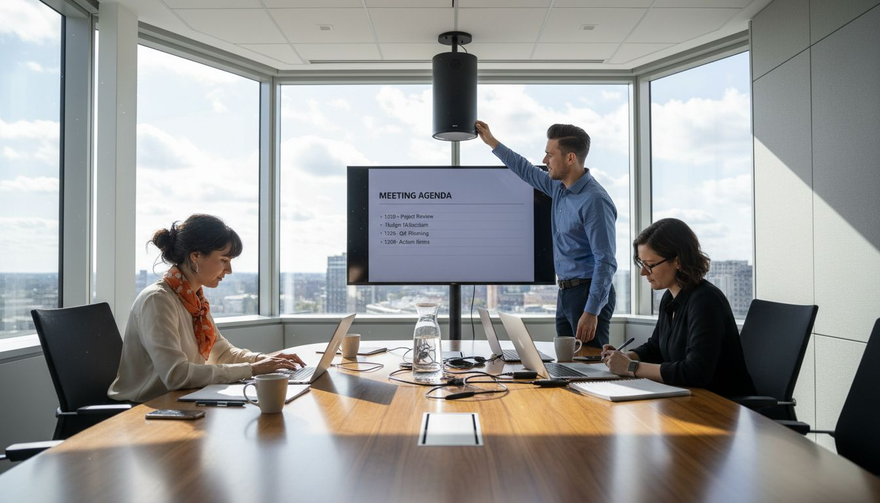
Conference Room Technology Trends: Maximising Impact
Every organiser knows the frustration when outdated technology disrupts a crucial conference. For corporate event planners across cities like London and Manchester, modern meeting spaces are expected to deliver more than reliable equipment. The latest trends focus on smart connectivity, hybrid work integration, and immersive tools that help teams collaborate seamlessly, whether they are in the room or joining remotely. Discover how embracing intelligent, user-friendly conference room technology can create engaging, effective meetings that leave a lasting impression.
Table of Contents
- Defining Conference Room Technology Trends
- AI, Hybrid Platforms, And Immersive Tools
- Smart Meeting Spaces And Data Security
- Sustainability And Eco-Friendly Tech Adoption
- Cost, ROI, And Implementation Challenges
Key Takeaways
| Point | Details |
|---|---|
| Hybrid Work Integration | Incorporating seamless technology for both in-person and remote participants enhances collaboration and productivity. |
| Advanced Security Measures | Implementing robust cybersecurity protocols is essential for protecting sensitive data in smart meeting environments. |
| Sustainability Initiatives | Adopting eco-friendly technologies is crucial for reducing environmental impact and aligning with modern corporate responsibility. |
| Comprehensive ROI Evaluation | Organisations should assess both financial and productivity gains when investing in conference room technologies for long-term success. |
Defining Conference Room Technology Trends
Conference room technology is rapidly transforming corporate communication landscapes, driven by evolving workplace dynamics and technological innovations. The modern meeting space is no longer just a physical location, but a sophisticated ecosystem designed to enhance collaboration, productivity, and engagement.
According to the Meeting Room of the Future Report , contemporary conference room technology trends emphasise several critical dimensions:
- Hybrid Work Integration : Seamless technology supporting both in-person and remote participants
- Flexible Space Configurations : Adaptable room layouts enabling multiple meeting styles
- Advanced Audiovisual Systems : High-definition video conferencing and interactive display technologies
- Smart Connectivity : Wireless presentation and real-time collaboration tools
- Immersive Experience Design : Creating engaging environments that transcend traditional meeting boundaries
The technological transformation goes beyond mere equipment installation. It represents a strategic approach to reimagining workplace interactions, where physical and digital realms converge to create more dynamic, inclusive communication platforms.
Technological Ecosystem Components :
- Interactive touchscreen displays
- Advanced camera and microphone systems
- Cloud-based collaboration platforms
- AI-powered room booking and management systems
- Integrated wireless connectivity solutions
These technologies aim to break down geographical barriers, enhance participant engagement, and provide intuitive, seamless communication experiences. The goal is not just technological implementation, but creating intelligent, responsive environments that adapt to diverse meeting requirements.
Here is a summary of how key conference room technologies enhance business outcomes:
| Technology Type | Primary Function | Business Impact |
|---|---|---|
| Interactive Touchscreen Displays | Enable engaging, real-time collaboration | Boost meeting interactivity and focus |
| AI-Powered Meeting Assistants | Automate scheduling and note-taking | Save staff time, improve accuracy |
| Cloud-Based Collaboration | Support remote teamwork across locations | Allow seamless global collaboration |
| Smart Connectivity Solutions | Provide wireless, integrated access | Reduce setup time and technical issues |
| Immersive Reality Tools | Simulate in-person experiences remotely | Increase participant engagement levels |
Conference room technology is no longer about hardware, but about creating connected, intelligent collaboration spaces that transform how teams communicate and innovate.
Conference room technology is no longer about hardware, but about creating connected, intelligent collaboration spaces that transform how teams communicate and innovate.
Pro tip: Invest in technology solutions that prioritise user experience and seamless integration, rather than focusing solely on technical specifications.
AI, Hybrid Platforms, And Immersive Tools
The landscape of conference room technology is undergoing a revolutionary transformation, driven by advanced hybrid collaboration platforms that seamlessly blend digital and physical meeting experiences. These innovative solutions are redefining how teams communicate, collaborate, and connect across diverse geographical locations.
Key Technological Innovations :
- AI-Powered Meeting Assistants : Intelligent systems automating administrative tasks
- Virtual Collaboration Tools : Real-time digital whiteboards and shared workspaces
- Immersive Reality Experiences : Virtual and augmented reality meeting environments
- Smart Voice Recognition : Advanced audio technologies enabling natural interactions
- Cloud-Based Integration : Seamless connectivity across multiple devices and platforms
The emergence of AI-enhanced technologies is particularly transformative. Modern conference room systems now incorporate intelligent voice recognition software and virtual assistants capable of managing complex meeting logistics, transcribing discussions, and providing real-time language translation services.
Hybrid platforms have become increasingly sophisticated, offering unprecedented collaboration capabilities :
- Digital whiteboard synchronisation
- Seamless remote participant integration
- Interactive presentation sharing
- Contextual collaboration tools
- Advanced participant engagement metrics
Immersive technologies are not just tools, but gateways to creating more inclusive, dynamic, and engaging meeting experiences that transcend traditional communication boundaries.
Immersive technologies are not just tools, but gateways to creating more inclusive, dynamic, and engaging meeting experiences that transcend traditional communication boundaries.
These technological advancements represent more than incremental improvements; they signify a fundamental reimagining of workplace interaction, where geographical constraints become increasingly irrelevant and collaborative potential becomes truly limitless.
Pro tip: Prioritise technologies that offer scalable, user-friendly interfaces and robust integration capabilities to maximise your team’s collaborative potential.
Smart Meeting Spaces And Data Security
The evolution of conference room technology has brought sophisticated security frameworks to the forefront of organisational communication strategies. Modern smart meeting spaces are no longer simply about technological capability, but about creating secure, intelligent environments that protect sensitive corporate information while enabling seamless collaboration.
Key Security Components :
- Network Encryption : Advanced protocols protecting data transmission
- Access Control Systems : Biometric and multi-factor authentication mechanisms
- Secure Wireless Connectivity : Isolated networks for meeting platforms
- Real-time Threat Monitoring : Automated security surveillance systems
- Comprehensive Data Protection : Intelligent privacy controls and anonymisation techniques
Corporate organisations are increasingly recognising that data security represents a critical infrastructure investment. Intelligent meeting room technologies now integrate robust cybersecurity measures that go beyond traditional perimeter defences, implementing sophisticated multilayered protection strategies.
The technological landscape demands comprehensive security approaches:
- Implement end-to-end encryption
- Establish strict user authentication protocols
- Regularly update security software
- Create isolated network environments
- Develop comprehensive incident response plans
Smart meeting spaces represent the convergence of technological innovation and rigorous security engineering, transforming workplace communication into a protected, efficient ecosystem.
Smart meeting spaces represent the convergence of technological innovation and rigorous security engineering, transforming workplace communication into a protected, efficient ecosystem.
Advanced meeting room systems now incorporate intelligent design principles that balance usability with stringent security requirements, ensuring that collaborative technologies remain both accessible and protected against emerging digital threats.
Pro tip: Conduct regular security audits and invest in continuous staff training to maintain robust digital defence mechanisms in your smart meeting environments.
Sustainability And Eco-Friendly Tech Adoption
Conference room technologies are experiencing a significant transformation, driven by comprehensive sustainability initiatives that prioritise environmental responsibility alongside technological innovation. Modern organisations are recognising that eco-friendly practices are no longer optional, but a critical component of corporate strategy and technological design.
Sustainable Technology Features :
- Energy-Efficient Systems : Smart power management solutions
- Carbon Footprint Tracking : Real-time environmental impact measurement
- Renewable Energy Integration : Solar and low-carbon technology adoption
- Waste Reduction Technologies : Minimal resource consumption designs
- Green Connectivity Solutions : Low-energy network infrastructure
The technological landscape is evolving to embrace environmentally conscious design principles. Cutting-edge conference room technologies now incorporate sophisticated mechanisms that minimise energy consumption while maximising operational efficiency.
Strategic sustainability approaches include:
- Implement intelligent power management systems
- Select modular, recyclable technology infrastructure
- Utilise energy-efficient LED display technologies
- Develop comprehensive carbon measurement protocols
- Invest in renewable energy-compatible equipment
Sustainability in conference room technology represents a holistic approach to environmental stewardship, transforming workplace infrastructure into a platform for meaningful ecological responsibility.
Sustainability in conference room technology represents a holistic approach to environmental stewardship, transforming workplace infrastructure into a platform for meaningful ecological responsibility.
By integrating smart design principles with technological innovation, organisations can create meeting environments that significantly reduce their environmental footprint while maintaining high-performance collaborative capabilities.
Pro tip: Conduct regular environmental audits of your conference room technologies to identify and implement progressive sustainability strategies.
Cost, ROI, And Implementation Challenges
Organisations are increasingly confronting the complex landscape of conference room technology investments, balancing sophisticated technological capabilities against financial constraints and strategic implementation challenges. The financial decision-making process requires a nuanced understanding of both immediate costs and long-term value propositions.
Key Financial Considerations :
- Initial Capital Investment : Hardware and software procurement costs
- Training and Implementation Expenses : Staff education and system integration
- Ongoing Maintenance : Software updates and technical support
- Potential Productivity Gains : Efficiency improvements and reduced travel expenses
- Technology Obsolescence Risk : Potential future upgrade requirements
The return on investment (ROI) calculation for conference room technologies extends far beyond simple monetary metrics. Modern organisations must evaluate technological investments through a multifaceted lens that considers productivity enhancements, collaboration effectiveness, and competitive positioning.
Strategic implementation approaches include:
- Conduct comprehensive technology needs assessment
- Develop phased implementation strategy
- Create robust staff training programmes
- Establish clear performance measurement metrics
- Build flexible technology infrastructure
Successful conference room technology investments transcend pure financial calculations, representing strategic commitments to organisational innovation and operational excellence.
Successful conference room technology investments transcend pure financial calculations, representing strategic commitments to organisational innovation and operational excellence.
Navigating implementation challenges requires a holistic approach that balances technological capabilities, budgetary constraints, and organisational cultural readiness. Successful deployments demand meticulous planning, stakeholder engagement, and continuous adaptation.
The table below compares major conference room technology challenges and recommended solutions:
| Challenge | Solution Approach | Long-Term Benefit |
|---|---|---|
| Data Security Risks | Encrypted networks and access controls | Prevents data breaches and leaks |
| Environmental Sustainability | Deploy energy-efficient technology | Reduced operational costs and emissions |
| High Upfront Investment | Phased rollouts and ROI tracking | Improved value capture over time |
| Technology Obsolescence | Modular, upgradeable systems | Future-proofs technology investments |
Pro tip: Develop a comprehensive technology roadmap that aligns conference room technology investments with broader organisational strategic objectives.
Enhance Your Conference Room Experience with Expert Venue Solutions
Navigating the fast-evolving landscape of conference room technology presents challenges from seamless hybrid integration to maintaining data security and sustainability. Organisations strive to create smart meeting spaces that foster true collaboration while managing costs and ensuring a seamless user experience. Jigsaw Conferences understands these complexities and offers tailored venue-finding and event management services designed to complement your technology investments and maximise meeting impact.
Whether you need cutting-edge venues equipped for hybrid collaboration or spaces prioritising sustainable and secure environments, our extensive network across UK major cities supports your goals. Unlock time-saving solutions with professional venue sourcing that guarantee competitive rates and expert guidance. Start planning your next impactful event with confidence by exploring our corporate event and meeting services and secure your ideal location that matches your conference technology ambitions. Take action now and experience seamless event coordination that powers your organisation’s innovation and productivity.
Frequently Asked Questions
What are the key trends in conference room technology?
The key trends in conference room technology include hybrid work integration, flexible space configurations, advanced audiovisual systems, smart connectivity, and immersive experience design. These elements focus on enhancing collaboration and engagement in modern workplaces.
How do AI-powered meeting assistants improve productivity in meetings?
AI-powered meeting assistants automate administrative tasks such as scheduling, note-taking, and real-time language translation, allowing participants to focus on discussions rather than logistics, ultimately driving productivity.
What are some security measures to consider for conference room technology?
Important security measures include network encryption, access control systems like biometric authentication, secure wireless connectivity, real-time threat monitoring, and comprehensive data protection strategies to safeguard sensitive information.
How can organisations ensure their conference room technology is environmentally sustainable?
Organisations can ensure sustainability by using energy-efficient systems, tracking carbon footprints, integrating renewable energy, employing waste reduction technologies, and selecting green connectivity solutions, thereby reducing their overall environmental impact.
Jigsaw Conferences Editorial Team
Verified AuthorThe Jigsaw Conferences Editorial Team comprises venue finding experts with over 20 years of combined experience in the events and hospitality industry. Our team includes certified meeting professionals (CMP), venue sourcing specialists, and industry analysts who provide authoritative insights on venue selection, event planning, and corporate accommodation.