
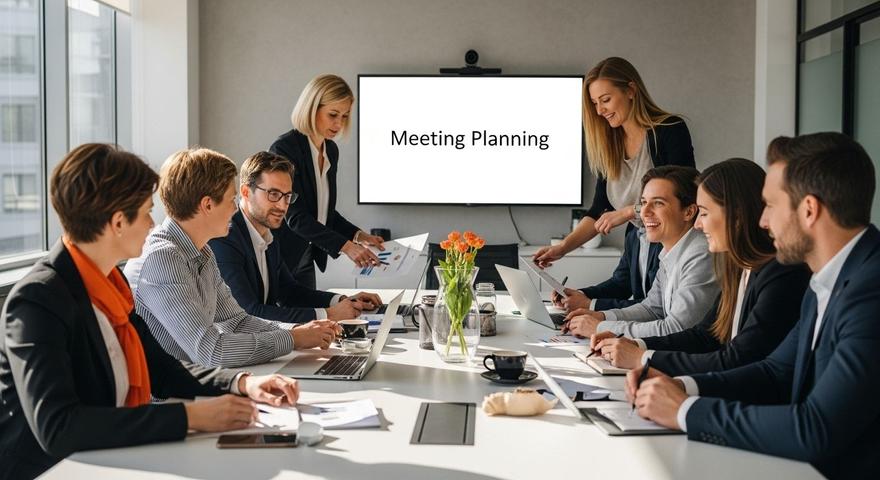
Corporate Meeting Planning: Essential Steps for Success
Corporate meeting planning sits at the heart of every successful organisation and yet a staggering 67% of meetings are described as unproductive by professionals . That number might sound shocking considering how much time and money is poured into these events. Still, the real surprise is that the solution is rarely about bigger budgets or flashier venues. It all comes down to simple planning decisions that make even the smallest meetings deliver serious results.
Table of Contents
- Understanding Corporate Meeting Objectives Defining The Core Purpose Of Corporate MeetingsCrafting Measurable Meeting OutcomesStrategic Alignment And Meeting Design
- Key Steps In Corporate Meeting Planning Initial Planning And PreparationVenue Selection And Logistics ManagementCommunication And Participant Engagement Strategies
- Selecting Venues And Managing Logistics Strategic Venue AssessmentLogistical Coordination And Technical RequirementsAccessibility And Participant Comfort
- Maximising Engagement And Measuring Outcomes Designing Interactive Meeting ExperiencesQuantifying Meeting Performance And ImpactCreating A Culture Of Continuous Improvement
- Defining The Core Purpose Of Corporate Meetings
- Crafting Measurable Meeting Outcomes
- Strategic Alignment And Meeting Design
- Initial Planning And Preparation
- Venue Selection And Logistics Management
- Communication And Participant Engagement Strategies
- Strategic Venue Assessment
- Logistical Coordination And Technical Requirements
- Accessibility And Participant Comfort
- Designing Interactive Meeting Experiences
- Quantifying Meeting Performance And Impact
- Creating A Culture Of Continuous Improvement
Quick Summary
| Takeaway | Explanation |
|---|---|
| Define Clear Meeting Objectives | Establish specific goals to guide discussions and outcomes, preventing wasted time and resources. |
| Select the Right Venue and Resources | Choose venues based on accessibility, technological needs, and alignment with meeting goals for optimal productivity. |
| Engage Participants with Interactive Elements | Create opportunities for dialogue and contribution to boost engagement and ensure meaningful participation. |
| Measure Meeting Outcomes | Implement clear metrics such as action item completion rates and participant satisfaction to evaluate meeting effectiveness. |
| Foster Continuous Improvement | Utilize feedback and post-meeting reviews to systematically enhance planning and execution of future meetings. |
Understanding Corporate Meeting Objectives
Corporate meeting planning starts with crystal clear objectives that transform ordinary gatherings into strategic business opportunities. Successful meetings are not accidental occurrences but carefully orchestrated events designed to achieve specific organisational goals.
Defining the Core Purpose of Corporate Meetings
Every corporate meeting must have a precise rationale that goes beyond mere conversation. Whether you are convening for strategic planning, problem solving, decision making, or team alignment, the meeting’s fundamental purpose determines its entire structure and potential success. Business leaders recognise that undefined objectives lead to unfocused discussions that waste valuable professional time and organisational resources.
Meeting objectives typically fall into several critical categories. Strategy sessions might focus on long term business planning, quarterly performance reviews aim to assess organisational progress, while team meetings could concentrate on collaborative problem solving and communication. Each meeting type demands a tailored approach that aligns with specific organisational needs.
Crafting Measurable Meeting Outcomes
Transforming abstract meeting goals into concrete, measurable outcomes requires strategic thinking. Effective corporate meeting planning demands that organisational leaders establish clear, actionable expectations before the event. This approach ensures participants understand their roles, responsibilities, and the specific contributions expected.
Measurable outcomes might include generating specific action items, making definitive decisions, developing implementation strategies, or creating collaborative frameworks. By establishing quantifiable metrics in advance, organisations can evaluate meeting effectiveness and track progress towards broader business objectives. This systematic approach prevents meetings from becoming unproductive talk sessions and transforms them into meaningful strategic interventions.
Strategic Alignment and Meeting Design
Successful corporate meetings are not standalone events but integral components of broader organisational strategy. Meeting design must align with overall business goals, ensuring that every discussion contributes meaningfully to the company’s mission and vision. This requires careful consideration of participant selection, agenda development, and expected deliverables.
Professional meeting planners understand that strategic alignment involves more than logistical coordination. It demands a comprehensive understanding of organisational culture, communication dynamics, and the specific challenges facing the business. By integrating these elements into meeting design, companies can create powerful collaborative environments that drive innovation, productivity, and sustainable growth.
A strategic meeting planning approach transforms corporate gatherings from routine administrative tasks into powerful strategic tools. The difference lies not in complexity but in purposeful, intentional design that respects participants’ time and organisational resources.
Frequently Asked Questions
What makes a corporate meeting successful?
- Clear, defined objectives
- Focused agenda
- Appropriate participant selection
- Measurable outcomes
- Efficient time management
How long should a typical corporate meeting last?
- 30-60 minutes for most meetings
- Depends on complexity and objectives
- Shorter is often more productive
Who should be invited to corporate meetings?
- Key decision makers
- Relevant subject matter experts
- Directly impacted team members
- Individuals with actionable responsibilities
Key Steps in Corporate Meeting Planning
Corporate meeting planning requires a systematic approach that transforms complex logistics into seamless, productive events. Professional event organisers understand that successful meetings demand meticulous preparation and strategic execution across multiple critical stages.
Initial Planning and Preparation
The foundation of effective corporate meeting planning begins with comprehensive initial preparation. This crucial stage involves defining precise meeting objectives, establishing a clear scope, and identifying key stakeholders who will contribute to and participate in the event. Organisational leaders must conduct an initial assessment that evaluates the meeting’s strategic importance, potential impact, and required resources.
Key preliminary considerations include determining the meeting’s format whether it will be in person, hybrid, or fully virtual. Each format presents unique planning challenges and requires specific technological and logistical support. Budget allocation becomes critical at this stage, with careful consideration of venue costs, technological requirements, participant expenses, and potential additional support services.
To help planners understand the best meeting format for their needs, the following table compares key aspects of in-person, hybrid, and virtual corporate meetings as described in the article.
| Meeting Format | Benefits | Challenges | Key Considerations |
|---|---|---|---|
| In-person | Strong engagement, face-to-face interaction | Venue & logistics, travel costs | Accessibility, physical resources |
| Hybrid | Flexibility, wider participation | Tech coordination, equal engagement | Robust AV & connectivity needed |
| Virtual | Cost-efficient, no travel required | Tech issues, potential low engagement | Reliable platforms, clear instructions |
Venue Selection and Logistics Management
Venue selection represents a pivotal moment in corporate meeting planning. The chosen location must align perfectly with the meeting’s objectives, participant requirements, and organisational standards. Professional planners evaluate multiple factors including accessibility, technological capabilities, spatial configuration, and overall professional atmosphere.
Logistics management extends far beyond simple location selection. It encompasses comprehensive planning for participant transportation, accommodation, technological infrastructure, catering requirements, and potential accessibility needs. Meticulous attention to detail ensures that every participant can focus entirely on the meeting’s objectives without being distracted by logistical challenges.
Communication and Participant Engagement Strategies
Effective communication serves as the backbone of successful corporate meeting planning. This involves developing a comprehensive communication strategy that begins well before the actual meeting date. Pre meeting communications should provide participants with clear expectations, detailed agendas, background materials, and specific preparation instructions.
Engagement strategies must consider diverse participant needs, potential communication barriers, and methods to maximise interactive participation. This might include preparing pre meeting surveys, creating collaborative digital platforms, or developing interactive session designs that encourage meaningful dialogue and contribution.
A comprehensive meeting planning approach transforms complex organisational gatherings into streamlined, productive experiences. The most successful corporate meetings are those where every logistical element has been carefully considered and expertly executed.
Frequently Asked Questions
What are the most critical steps in meeting planning?
- Define clear objectives
- Select appropriate venue
- Develop detailed agenda
- Manage participant communications
- Prepare necessary resources
How far in advance should corporate meetings be planned?
- Complex meetings: 3-6 months preparation
- Standard meetings: 4-8 weeks preparation
- Emergency meetings: Minimum 1-2 weeks
What technology is essential for modern corporate meetings?
- Video conferencing platforms
- Collaborative digital workspaces
- Presentation and screen sharing tools
- Real time translation services
- Interactive polling and feedback systems
Selecting Venues and Managing Logistics
Selecting the right venue and managing complex logistics represent critical components of successful corporate meeting planning. Professional event organisers understand that venue selection goes far beyond simply finding a space large enough to accommodate participants.
Strategic Venue Assessment
Comprehensive venue selection requires a multifaceted evaluation process that considers numerous interconnected factors. Corporate meeting planners must assess potential locations through a strategic lens that examines technological capabilities, spatial configuration, accessibility, and alignment with organisational objectives.
Key considerations include room capacity, technological infrastructure, natural lighting, acoustic properties, and overall professional atmosphere. Modern corporate meetings demand flexible spaces that can seamlessly transition between presentation formats, breakout sessions, and collaborative interactions. Venue selection becomes a strategic decision that directly impacts meeting productivity and participant engagement.
Logistical Coordination and Technical Requirements
Successful logistics management extends far beyond venue selection. It encompasses a comprehensive approach to participant experience, technological support, and operational efficiency. Professional planners must coordinate multiple complex elements including transportation arrangements, accommodation options, catering requirements, and accessibility considerations.
Technological infrastructure represents a critical component of modern meeting logistics. This involves ensuring robust wireless connectivity, comprehensive audio visual support, reliable presentation equipment, and seamless digital collaboration platforms. Professional venues must provide state of the art technological solutions that enable smooth communication and interactive engagement.
Accessibility and Participant Comfort
Meeting logistics must prioritise participant comfort and accessibility. This involves careful consideration of diverse participant needs, including mobility requirements, dietary restrictions, and potential communication barriers. Professional event planners develop comprehensive strategies that ensure every participant can fully engage with the meeting’s objectives.
Accessibility considerations include wheelchair friendly venues, multiple language support, appropriate seating arrangements, and thoughtful spatial design that facilitates comfortable interaction. The most successful corporate meetings create environments that feel inclusive, professional, and conducive to meaningful collaboration.
Learn more about finding the perfect corporate venue through comprehensive planning and strategic assessment. The right venue transforms a standard meeting into an extraordinary professional experience.
Frequently Asked Questions
What are the most important venue selection criteria?
- Technological capabilities
- Spatial flexibility
- Accessibility features
- Professional atmosphere
- Location convenience
How can organisations minimise venue selection risks?
- Conduct thorough site visits
- Request detailed venue specifications
- Check multiple references
- Verify technological infrastructure
- Understand cancellation policies
What additional logistical elements should be considered?
- Transportation arrangements
- Accommodation options
- Catering requirements
- Accessibility support
- Emergency preparedness plans
Maximising Engagement and Measuring Outcomes
Corporate meetings represent significant investments of time, resources, and organisational energy. Transforming these gatherings from passive information exchanges into dynamic, productive experiences requires strategic approaches to participant engagement and rigorous outcome measurement.
Designing Interactive Meeting Experiences
Engagement begins with intentional meeting design that moves beyond traditional presentation formats. Modern corporate meetings must incorporate interactive elements that encourage active participation, knowledge sharing, and collaborative problem solving. This involves creating structured opportunities for dialogue, real time feedback, and meaningful contribution from all participants.
Effective engagement strategies might include digital polling tools, collaborative brainstorming sessions, breakout discussion groups, and interactive technology platforms that enable simultaneous contributions. Professional meeting planners understand that engagement is not about entertainment but about creating environments where participants feel genuinely motivated to contribute and learn.
Quantifying Meeting Performance and Impact
Measuring meeting outcomes requires a systematic approach that goes beyond subjective impressions. Organisations need robust methodologies to evaluate meeting effectiveness, participant satisfaction, and tangible business impact. This involves establishing clear, measurable key performance indicators before the meeting and implementing comprehensive assessment strategies.
Outcome measurement might include tracking action item completion rates, evaluating participant feedback through structured surveys, assessing knowledge transfer, and monitoring subsequent organisational performance metrics. Advanced organisations develop sophisticated tracking systems that connect meeting outcomes to broader strategic objectives, transforming meetings from isolated events into strategic development opportunities.
Below is a summary table capturing the measurable meeting outcomes and metrics organisations can use to evaluate meeting effectiveness, as covered in the article.
| Outcome/Metric | Description |
|---|---|
| Action item completion rates | Percentage of assigned tasks completed post-meeting |
| Decision-making | Number of definitive decisions achieved |
| Participant satisfaction | Feedback and satisfaction scores from attendees |
| Knowledge transfer | Degree to which knowledge is shared and retained |
| Strategic alignment | Alignment of outcomes with organisational goals |
| Tangible business impact | Observable benefits to overall business performance |
Creating a Culture of Continuous Improvement
Successful corporate meetings are part of a broader organisational learning ecosystem. Continuous improvement requires developing feedback mechanisms that capture insights from each meeting, identify potential enhancements, and systematically refine meeting design and execution strategies. This involves creating a culture that views meetings as dynamic learning opportunities rather than static administrative requirements.
Professional meeting planners implement comprehensive post meeting review processes that solicit candid feedback, analyse performance data, and develop actionable recommendations for future gatherings. By treating each meeting as a learning experience, organisations can progressively enhance their collaborative capabilities and meeting effectiveness.
Explore advanced strategies for meeting engagement and unlock your organisation’s collaborative potential. Effective meetings are not accidents but carefully designed experiences.
Frequently Asked Questions
How can organisations improve meeting engagement?
- Use interactive technology
- Create structured participation opportunities
- Design diverse discussion formats
- Encourage open communication
- Provide clear meeting objectives
What metrics matter most in meeting evaluation?
- Action item completion rates
- Participant satisfaction scores
- Knowledge transfer effectiveness
- Strategic alignment
- Tangible business outcomes
What tools support meeting engagement?
- Digital polling platforms
- Collaborative workspace software
- Real time feedback systems
- Interactive presentation tools
- Virtual breakout room technologies
Frequently Asked Questions
What makes a corporate meeting successful?
Clear, defined objectives, a focused agenda, appropriate participant selection, measurable outcomes, and efficient time management significantly contribute to meeting success.
How can I improve participant engagement in my meetings?
Utilising interactive technology, creating structured opportunities for participation, designing diverse discussion formats, encouraging open communication, and providing clear meeting objectives can enhance engagement.
How long should a typical corporate meeting last?
Most corporate meetings ideally last between 30 to 60 minutes, though this can vary based on the complexity and objectives of the meeting.
What technology is essential for modern corporate meetings?
Key technologies include video conferencing platforms, collaborative digital workspaces, presentation and screen sharing tools, real-time translation services, and interactive polling and feedback systems.
Transform Corporate Meeting Plans into Seamless Success
Is your team tired of unproductive meetings that waste time and never deliver real business results? The article highlights common pain points such as unclear objectives, ineffective venue choices, logistical stress, and the challenge of keeping participants engaged. When even a single detail slips through the cracks, meetings lose their impact and fail to drive lasting value.
Let Jigsaw Conferences take the pressure off your shoulders. Our free venue-finding and event management service ensures every detail aligns with your business goals. We handle venue sourcing, technical requirements, logistics, and participant comfort, letting you focus entirely on what matters most. Explore our comprehensive meeting planning solutions and see how our expertise since 2003 can transform your next event. Ready to experience professional support that saves you time and delivers measurable results? Contact Jigsaw Conferences now and secure the perfect venue for your next corporate meeting.
Recommended
- Event Venues: Key Differences for Corporate Events | Jigsaw Conferences
- Event Accommodation Explained: Essential Solutions for Corporates | Jigsaw Conferences
- Event Accommodation Policies – Safeguarding Corporate Success | Jigsaw Conferences
- Venue Capacity Planning: Optimising Events Safely | Jigsaw Conferences
- What to Do if You Need Emergency Housing: A Step-by-Step Guide | Jigsaw Conferences
Jigsaw Conferences Editorial Team
Verified AuthorThe Jigsaw Conferences Editorial Team comprises venue finding experts with over 20 years of combined experience in the events and hospitality industry. Our team includes certified meeting professionals (CMP), venue sourcing specialists, and industry analysts who provide authoritative insights on venue selection, event planning, and corporate accommodation.