
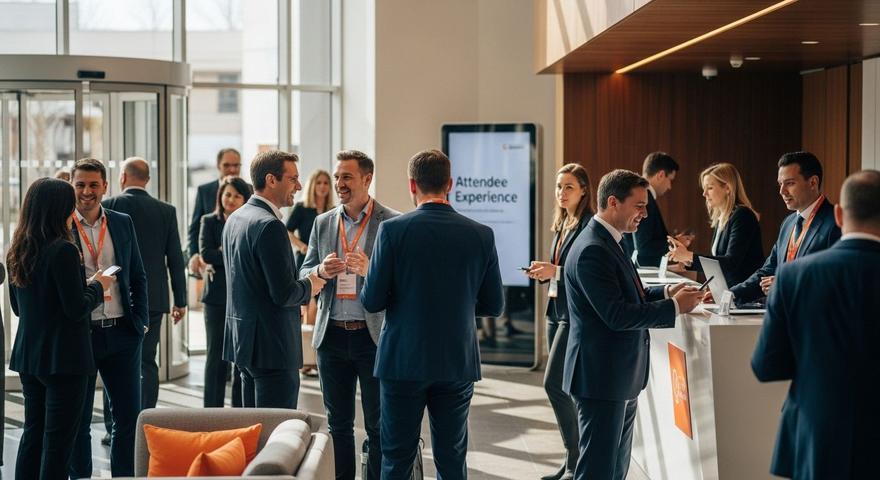
How to Elevate Event Attendee Experience for Corporate Success
Corporate events might seem all about schedules and presentations but the real magic happens in the minds of your guests. Nearly 80 percent of attendees say that personal development and networking are their top priorities at professional gatherings . Most event organisers still focus on logistics while overlooking the deeper experience. The real opportunity lies in designing events that feel truly memorable and personally rewarding for everyone in the room.
Table of Contents
- Understanding The Event Attendee Experience Psychological Dimensions Of Event ParticipationKey Components Of Attendee ExperienceDesigning Memorable Attendee Journeys
- Key Elements Shaping Attendee Satisfaction Psychological And Emotional EngagementTechnological And Experiential InfrastructureHolistic Experience Design
- Strategies To Personalise Corporate Events Data-Driven Personalisation TechniquesInteractive Customisation MechanismsHolistic Personalisation Approaches
- Measuring And Improving Attendee Experience Comprehensive Evaluation FrameworksAnalytical Strategies For Experience OptimizationContinuous Improvement And Adaptation
- Psychological Dimensions Of Event Participation
- Key Components Of Attendee Experience
- Designing Memorable Attendee Journeys
- Psychological And Emotional Engagement
- Technological And Experiential Infrastructure
- Holistic Experience Design
- Data-Driven Personalisation Techniques
- Interactive Customisation Mechanisms
- Holistic Personalisation Approaches
- Comprehensive Evaluation Frameworks
- Analytical Strategies For Experience Optimization
- Continuous Improvement And Adaptation
Quick Summary
| Takeaway | Explanation |
|---|---|
| Understand the attendee’s journey | The attendee experience is a complex emotional and professional journey from registration to post-event engagement. |
| Prioritise emotional engagement | Attendees seek meaningful connections and personal development; creating emotional resonance is key to satisfaction. |
| Leverage technology effectively | Use advanced technology for seamless registration, networking, and content delivery to enhance participant experience. |
| Personalise experiences strategically | Tailor content and interactions based on individual attendee profiles and preferences to create meaningful engagement. |
| Establish a culture of continuous improvement | Continuously gather feedback and adapt event designs to meet evolving attendee needs and expectations. |
Understanding the Event Attendee Experience
Event attendee experience represents the holistic emotional and professional journey participants undergo during corporate gatherings. This complex interaction encompasses everything from initial registration through post-event engagement, determining the overall success and impact of professional conferences and corporate meetings.
Psychological Dimensions of Event Participation
Professional events are far more than mere information exchange platforms. They are intricate social ecosystems where attendees seek meaningful connections, knowledge acquisition, and personal development. Modern corporate event participants evaluate their experiences through multifaceted lenses that extend beyond traditional metrics.
Psychological research reveals that attendees prioritize emotional resonance and perceived value. They are not passive recipients but active participants seeking transformative experiences. The emotional journey includes anticipation before the event, engagement during proceedings, and reflective learning afterward. Successful events create environments that stimulate intellectual curiosity while simultaneously providing comfortable, inclusive spaces for interaction.
Key Components of Attendee Experience
Several critical components collectively shape the event attendee experience. Professional development represents the foundational element, where participants expect high-quality educational content and opportunities for skill enhancement. Networking emerges as an equally significant factor, with attendees valuing meaningful professional connections that potentially catalyse future collaborations.
Technological integration has become paramount in contemporary event experiences. Attendees now anticipate seamless digital interactions, including user-friendly registration processes, interactive mobile applications, and sophisticated event management platforms. These technological touchpoints significantly influence overall satisfaction and perception of event quality.
To help readers quickly compare the key components shaping the event attendee experience, the following table summarises the main elements discussed in this section, highlighting their specific contributions to overall satisfaction.
| Component | Description | Impact on Attendee Experience |
|---|---|---|
| Professional Development | Quality educational content and skill enhancement opportunities | Drives learning and career growth |
| Networking | Meaningful professional connections and future collaborations | Enables relationship building |
| Technological Integration | Seamless digital processes, mobile apps, and event platforms | Improves convenience and efficiency |
| Emotional Engagement | Creating emotional resonance and a sense of value | Increases satisfaction and loyalty |
| Personalised Communication | Tailored interactions based on attendee profiles | Fosters relevance and meaning |
| Adaptive Scheduling | Flexible, responsive event timetables | Supports diverse learning preferences |
| Post-Event Engagement | Continued interaction and follow-up after the event | Extends event impact and relationships |
Designing Memorable Attendee Journeys
Crafting exceptional event attendee experiences requires strategic, intentional design. Event organisers must adopt a holistic approach that considers every interaction point. This involves meticulous planning of physical environments, session structures, technological interfaces, and interpersonal dynamics.
Successful events balance structured learning with organic networking opportunities. They create spaces that encourage spontaneous interactions, facilitate knowledge sharing, and provide platforms for meaningful professional connections. The most impactful experiences feel simultaneously professional and personally enriching.
Key strategies include personalised communication, adaptive scheduling, interactive session formats, and post-event engagement mechanisms. By treating attendees as valued participants rather than passive consumers, organisations can transform standard corporate events into extraordinary professional development experiences.
Ultimately, understanding and elevating event attendee experience is not a one-time effort but a continuous process of listening, adapting, and innovating. Successful corporate events are those that recognize the profound human elements underlying professional gatherings.
Key Elements Shaping Attendee Satisfaction
Attendee satisfaction represents a complex ecosystem of interconnected experiences that transform corporate events from routine gatherings into memorable professional journeys. Understanding the nuanced factors that contribute to positive participant perceptions requires a sophisticated approach to event design and management.
Psychological and Emotional Engagement
Beyond logistical considerations, attendee satisfaction deeply roots in psychological and emotional engagement. Participants seek experiences that validate their professional aspirations, stimulate intellectual curiosity, and provide meaningful connections. Emotional resonance emerges as a critical determinant of event success, transcending traditional metrics of content delivery.
Events that create environments of psychological safety enable participants to explore, learn, and interact without fear of judgment. This approach involves crafting spaces that encourage authentic interactions, support diverse learning styles, and recognize individual professional development needs. The most impactful events understand that satisfaction stems from feeling valued, understood, and professionally empowered.
Technological and Experiential Infrastructure
Modern attendees expect sophisticated technological integration that enhances their event experience. Seamless digital platforms, interactive mobile applications, and intelligent networking tools have become fundamental expectations rather than optional extras. Technological infrastructure must support intuitive navigation, provide real-time information, and create opportunities for meaningful digital interactions.
The quality of technological experience directly influences overall event perception. Participants assess event sophistication through the smoothness of registration processes, availability of personalised schedules, accessibility of session materials, and efficiency of communication channels. Cutting-edge technological solutions signal organisational professionalism and commitment to participant experience.
Holistic Experience Design
Crafting exceptional attendee satisfaction requires a holistic approach that considers every interaction point. This comprehensive strategy encompasses physical environment design, session content quality, networking opportunities, and post-event engagement mechanisms. Successful events view participant experience as a complete journey rather than isolated moments.
Key design considerations include creating flexible learning environments, offering diverse session formats, ensuring comfortable physical spaces, and providing multiple interaction opportunities. Personalisation emerges as a critical strategy, allowing participants to curate their event experience according to individual professional interests and learning preferences.
Networking represents a pivotal element of satisfaction. Innovative events design intentional interaction spaces that facilitate meaningful professional connections. These spaces go beyond traditional networking breaks, incorporating structured yet organic opportunities for knowledge exchange and relationship building.
Attendee satisfaction is not a static concept but a dynamic, evolving construct. Successful event organisers adopt a continuous improvement mindset, consistently gathering feedback, analysing participant data, and adapting their approaches. The most remarkable events are those that view participant experience as an ongoing dialogue, not a one-time transaction.
Ultimately, elevating attendee satisfaction requires a deep understanding of human professional needs. It demands empathy, strategic thinking, and a commitment to creating transformative experiences that extend far beyond traditional event boundaries.
Strategies to Personalise Corporate Events
Personalisation has emerged as a transformative approach in corporate event design, moving beyond generic experiences to create targeted, meaningful interactions that resonate with individual participant needs and preferences. Modern corporate events demand sophisticated strategies that recognise each attendee as a unique professional with distinct learning objectives and networking goals.
The table below distils and compares the three main personalisation strategies for corporate events described in the article, outlining their methods and primary benefits to event participants.
| Personalisation Strategy | Main Method | Benefits to Attendees |
|---|---|---|
| Data-Driven Techniques | Analysing registration data and professional profiles | Tailored content and recommended networking |
| Interactive Customisation | Real-time schedule and session selection | Flexible, participant-led experiences |
| Holistic Approaches | Considering emotional, professional, and learning dimensions | Inclusive, supportive, and valued experience |
Data-Driven Personalisation Techniques
Advanced data analytics provide powerful tools for crafting personalised event experiences. By leveraging registration information, professional profiles, and historical participation data, event organisers can develop nuanced understanding of attendee expectations. Intelligent profiling enables creation of customised event journeys that align with individual professional development trajectories.
Professional networking platforms and sophisticated event management technologies now offer granular insights into participant preferences. These systems can recommend sessions, suggest potential networking connections, and create tailored schedules that match individual learning styles and career interests. By transforming raw data into actionable insights, organisations can design hyper-personalised event experiences.
Interactive Customisation Mechanisms
Interactive personalisation represents a critical strategy for modern corporate events. Participants increasingly expect opportunities to shape their own event experience through flexible session selection, modular learning formats, and dynamic networking platforms. Technology enables real-time customisation, allowing attendees to modify their schedules, engage with specific content tracks, and connect with relevant professionals.
Sophisticated event platforms now incorporate artificial intelligence to recommend personalised content pathways. These intelligent systems analyse participant interactions, learning histories, and professional goals to suggest optimal session combinations. Such approaches transform events from standardised gatherings into dynamic, participant-driven experiences that adapt to individual needs in real time.
Holistic Personalisation Approaches
True personalisation extends beyond technological solutions to encompass comprehensive attendee experience design. This approach considers emotional, professional, and learning dimensions of participant engagement. Successful events create environments that feel simultaneously structured and flexible, providing clear professional development frameworks while allowing individual exploration.
Emotional intelligence plays a crucial role in personalisation strategies. Recognising diverse participant backgrounds, learning preferences, and professional contexts enables more nuanced event design. This might involve offering multiple session formats, providing quiet spaces for introverted participants, or creating targeted networking opportunities that respect individual comfort levels.
Effective personalisation requires ongoing dialogue with participants. Pre-event surveys, real-time feedback mechanisms, and post-event analysis provide continuous insights into attendee expectations. By treating personalisation as an iterative process, organisations can progressively refine their approach, creating increasingly sophisticated and meaningful event experiences.
Ultimately, personalising corporate events is about recognising professional diversity. It demands empathy, technological sophistication, and a commitment to understanding individual participant needs. The most successful events are those that transform standardised gatherings into tailored professional development journeys, where each participant feels uniquely valued and supported.
Measuring and Improving Attendee Experience
Measuring and improving attendee experience represents a sophisticated, multidimensional process that goes beyond traditional feedback collection. It requires a comprehensive approach that captures both quantitative metrics and qualitative insights, transforming raw data into actionable strategies for continuous event enhancement.
Comprehensive Evaluation Frameworks
Effective attendee experience measurement demands robust, holistic evaluation frameworks that capture multiple dimensions of participant engagement. These frameworks extend beyond simple satisfaction scores, incorporating nuanced metrics that reflect the complex emotional and professional landscape of corporate events.
Modern evaluation approaches integrate multiple data collection methods, including pre-event surveys, real-time digital feedback mechanisms, post-event questionnaires, and sophisticated sentiment analysis. By triangulating different data sources, event organisers can develop a more comprehensive understanding of participant experiences, uncovering subtle insights that traditional measurement techniques might overlook.
Technological platforms now enable granular tracking of participant interactions, providing unprecedented visibility into event engagement. These systems can monitor session attendance, track networking connections, analyse content interaction times, and generate detailed participant journey maps. Such comprehensive data collection allows for more sophisticated understanding of attendee behaviour and preferences.
Analytical Strategies for Experience Optimization
Transforming collected data into meaningful improvements requires advanced analytical strategies. Machine learning algorithms and predictive analytics can identify patterns, predict future participant behaviours, and recommend targeted interventions to enhance event experiences.
Key performance indicators for attendee experience now encompass a broader range of metrics. Beyond traditional satisfaction ratings, organisations are tracking professional development outcomes, networking effectiveness, knowledge retention, and long-term career impact. These more holistic metrics provide deeper insights into the true value of corporate events.
Emotional intelligence metrics are emerging as crucial indicators of event success. Advanced sentiment analysis tools can now decode participant emotional responses, helping organisers understand the psychological impact of different event elements. This approach moves beyond surface-level feedback to explore the deeper emotional resonance of professional gatherings.
Continuous Improvement and Adaptation
Successful attendee experience management is fundamentally about creating a culture of continuous improvement. This requires developing adaptive event design processes that can quickly incorporate participant feedback and emerging technological capabilities.
Organisations are increasingly adopting agile methodologies in event planning, treating each event as a learning opportunity. This approach involves creating flexible event frameworks that can be rapidly modified based on real-time participant insights. Feedback loops are becoming shorter and more responsive, enabling near-instantaneous adjustments during events.
Technology plays a critical role in this continuous improvement process. Artificial intelligence and machine learning enable predictive modelling of participant preferences, allowing event organisers to anticipate needs before they are explicitly expressed. These technologies transform event design from a reactive to a proactive discipline.
Ultimately, measuring and improving attendee experience is about recognising the profound human elements underlying professional gatherings. It demands a commitment to empathy, technological sophistication, and a genuine desire to create transformative professional experiences that extend far beyond traditional event boundaries.
Frequently Asked Questions
How can I enhance emotional engagement during corporate events?
Emotional engagement can be enhanced by creating environments that foster authentic interactions, support diverse learning styles, and acknowledge individual professional development needs.
What are the key components of a successful attendee experience?
The key components include professional development opportunities, meaningful networking, technological integration, emotional engagement, personalised communication, adaptive scheduling, and post-event engagement.
How can data be used to personalise corporate events?
Data can be used to personalise events by analysing registration information, professional profiles, and historical participation data to create customised event journeys aligned with individual professional development goals.
What are effective methods for measuring attendee satisfaction at events?
Effective methods include pre-event surveys, real-time digital feedback, post-event questionnaires, and sentiment analysis to gather a comprehensive understanding of participant experiences.
Transform Every Attendee’s Journey With Expert Event Solutions
Crafting memorable attendee experiences, as explored in this article, takes more than good intentions. Real challenges such as seamless technology integration, personalised communication and creating inspiring networking spaces can overwhelm even seasoned organisers. Attendees crave professional growth, emotional engagement and relevant content. Yet, many find their corporate events fall short because logistics eat up precious planning time and limit the ability to focus on strategic experience design.
Let our team at Jigsaw Conferences take the complexity out of your next event. With over two decades of industry expertise, we offer free venue searches, tailored event management support and personalised accommodation for every business need. From finding unique venues to managing end-to-end attendee experiences, we ensure your delegates enjoy meaningful, lasting value at every touchpoint. Ready to elevate your next event and meet growing expectations with ease? Visit our booking inquiry page to start designing an event that exceeds attendee satisfaction goals today.
Recommended
- Event Venues: Key Differences for Corporate Events | Jigsaw Conferences
- Event Accommodation Explained: Essential Solutions for Corporates | Jigsaw Conferences
- Event Accommodation Policies – Safeguarding Corporate Success | Jigsaw Conferences
- Venue Capacity Planning: Optimising Events Safely | Jigsaw Conferences
- What to Do if You Need Emergency Housing: A Step-by-Step Guide | Jigsaw Conferences
Jigsaw Conferences Editorial Team
Verified AuthorThe Jigsaw Conferences Editorial Team comprises venue finding experts with over 20 years of combined experience in the events and hospitality industry. Our team includes certified meeting professionals (CMP), venue sourcing specialists, and industry analysts who provide authoritative insights on venue selection, event planning, and corporate accommodation.