
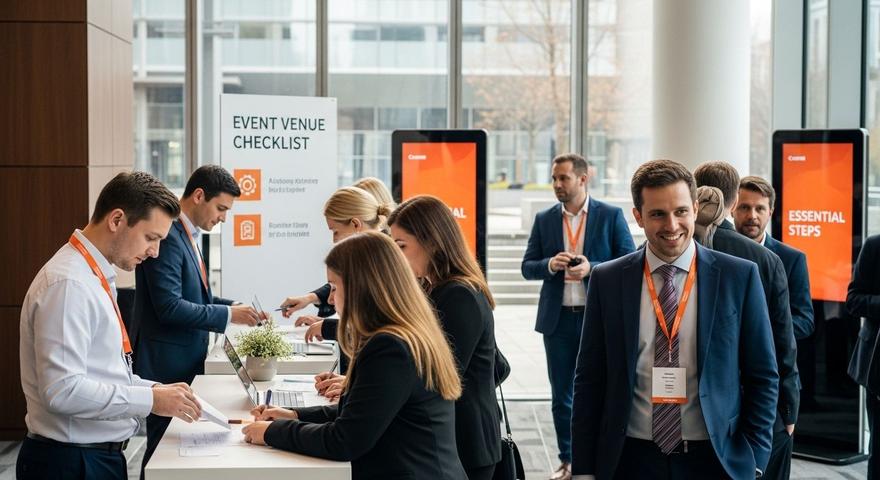
Event Venue Checklist: Essential Steps for Corporate Success
Choosing a venue might seem straightforward, but the decisions you make can shape the entire outcome of your corporate event. Many planners focus on looks or basic costs. Yet hidden charges can inflate your budget by up to 35 percent if overlooked . The real value comes from venues offering not just space, but flexibility, top tier technology, and comprehensive support that most never even consider.
Table of Contents
- Key Criteria For Selecting An Event Venue Capacity And Spatial ConfigurationTechnological And Logistical InfrastructureCost Effectiveness And Hidden Expenses
- Logistics And Accessibility Considerations Physical Accessibility And Venue NavigationTransportation And External AccessibilityTechnology And Communication Accessibility
- Facilities, Technology, And Support Services Technological Infrastructure And ConnectivityComprehensive Support ServicesSpecialised Facilities And Flexible Spaces
- Negotiating Contracts And Managing Budgets Contract Negotiation StrategiesBudget Management And Financial PlanningRisk Mitigation And Financial Flexibility
- Capacity And Spatial Configuration
- Technological And Logistical Infrastructure
- Cost Effectiveness And Hidden Expenses
- Physical Accessibility And Venue Navigation
- Transportation And External Accessibility
- Technology And Communication Accessibility
- Technological Infrastructure And Connectivity
- Comprehensive Support Services
- Specialised Facilities And Flexible Spaces
- Contract Negotiation Strategies
- Budget Management And Financial Planning
- Risk Mitigation And Financial Flexibility
Quick Summary
| Takeaway | Explanation |
|---|---|
| Evaluate venue capacity and layout | Assess specific needs for space, including breakout and networking areas to ensure functionality. |
| Prioritise technological infrastructure | Seek venues with high-speed internet and AV capabilities to support hybrid events seamlessly. |
| Identify hidden costs in pricing | Recognise potential additional fees like equipment rental or staffing that may affect your budget. |
| Ensure physical and communication accessibility | Evaluate venues for mobility accommodations and communication support to create an inclusive environment. |
| Adopt strategic contract negotiation | Prepare detailed RFPs and clarify all potential expenses to negotiate better terms and conditions. |
Key Criteria for Selecting an Event Venue
Selecting the right event venue is a critical decision that can make or break your corporate event. Your chosen location sets the foundation for attendee experience, logistical success, and overall event outcomes. A comprehensive event venue checklist requires careful evaluation of multiple interconnected factors that go far beyond simple aesthetics.
Capacity and Spatial Configuration
Understanding your precise spatial requirements is fundamental to venue selection. Corporate events demand meticulous planning around participant numbers, desired room layouts, and functional zones. A venue that appears spacious might become restrictive when considering specific requirements like breakout session areas, networking spaces, presentation zones, and technological infrastructure.
Consider not just total capacity but the flexibility of space configurations. Ideal venues offer modular room designs that can be adapted to different session types. For instance, a conference requiring plenary sessions, workshop spaces, and dining areas needs versatile rooms that can transform seamlessly. Look for venues with movable partitions, adjustable lighting, and multiple room sizes that can accommodate your event’s evolving needs.
Technological and Logistical Infrastructure
In the modern corporate landscape, technological capabilities are non negotiable. Your event venue checklist must prioritize robust technological infrastructure that supports seamless communication, presentation, and connectivity. High speed internet with sufficient bandwidth, integrated audiovisual systems, reliable power outlets, and advanced presentation equipment are minimum expectations.
Beyond basic tech requirements, assess the venue’s capacity for hybrid or virtual participation. Modern corporate events increasingly blend physical and digital experiences, requiring sophisticated streaming capabilities, multiple camera setups, and professional sound systems. Venues with built in technical support and experienced AV teams can significantly reduce potential operational challenges.
Additionally, evaluate logistical factors such as accessibility, parking facilities, proximity to transportation hubs, and on site accommodation options. Explore our comprehensive venue sourcing guide for deeper insights into selecting the perfect corporate event space.
Cost Effectiveness and Hidden Expenses
Budget considerations extend far beyond the initial venue rental price. A comprehensive event venue checklist must account for potential hidden expenses that can dramatically impact overall event economics. These might include additional charges for technical equipment, staffing, catering, setup and teardown times, and supplementary services.
Careful negotiation and transparent communication with venue management can help uncover potential cost saving opportunities. Some venues offer package deals that include multiple services, while others might provide flexible pricing structures for corporate clients. Always request detailed quotes that break down every potential expense, enabling accurate budget forecasting and preventing unexpected financial surprises.
Remember that the cheapest option is not always the most cost effective. Prioritize venues that offer the best value proposition balanced between quality, amenities, and price point. A slightly more expensive venue with comprehensive services and superior infrastructure might ultimately prove more economical than a seemingly cheaper alternative requiring significant additional investments.
By systematically evaluating these key criteria space capacity, technological infrastructure, and comprehensive cost analysis you can transform your venue selection from a simple booking process into a strategic decision that enhances your corporate event’s success. Each venue represents a unique ecosystem of possibilities waiting to be explored and optimised for your specific event objectives.
To help you compare important venue features, here is a summary of key criteria to consider when selecting an event venue:
| Criterion | Description |
|---|---|
| Capacity & Spatial Configuration | Flexible layouts, breakout spaces, adaptability for various session types |
| Technological Infrastructure | High-speed internet, AV equipment, support for hybrid/virtual participation |
| Logistical Factors | Accessibility, parking, proximity to transport, on-site accommodation |
| Cost Effectiveness & Hidden Expenses | Transparent quotes, check for extra fees (equipment, setup, staffing), value over lowest price |
| Support Services | Event coordination, technical support, catering, security, and event staff |
Logistics and Accessibility Considerations
Accessibility and logistical planning are crucial components of a successful corporate event. A truly professional approach goes beyond basic venue selection and requires comprehensive consideration of diverse attendee needs, transportation requirements, and inclusive design principles.
Physical Accessibility and Venue Navigation
Ensuring complete physical accessibility transforms an event from a standard gathering to an inclusive professional experience. This means meticulously evaluating venue pathways, entry points, and internal configurations to support attendees with varying mobility requirements. Look for venues with multiple entry options, wide doorways, ramped entrances, and level flooring that eliminates potential mobility barriers.
Consider the entire journey through the venue. Corridors should accommodate wheelchairs and mobility devices comfortably, with clear signage indicating accessible routes. Restroom facilities must include dedicated accessible options with appropriate grab bars, adequate turning spaces, and height adjustments for different user needs. Elevator access between floors should be smooth, with clear control panels and sufficient space for assistive devices.
Special attention must be given to presentation and seating areas. Arrange spaces to provide unobstructed views, with designated areas for individuals using wheelchairs or mobility aids. Ensure sufficient space between chairs, clear sightlines to presentation screens, and options for companions or assistive personnel to sit nearby.
Below is a checklist table summarising essential accessibility features to consider when evaluating venues for inclusivity:
| Accessibility Feature | Description | Status/Consideration |
|---|---|---|
| Wheelchair Access | Ramps, wide doorways, level flooring throughout | Ensure presence |
| Accessible Toilets | Grab bars, turning space, height adjustments | Confirm for all main areas |
| Lift/Elevator Availability | Access to all event floors, clear controls | Required if multi-level venue |
| Accessible Parking | Disabled parking close to venue entrance | Assess capacity |
| Visual & Hearing Support | Captioning, hearing loop, sign language interpreters | Request if needed |
| Accessible Signage | Clearly marked, large print, Braille if possible | Review for all routes |
| Companion Seating | Spaces for assistants next to accessible seating | Plan in seating arrangement |
Transportation and External Accessibility
Transportation logistics form a critical aspect of event planning that can significantly impact attendee experience. Evaluate venues based on their proximity to public transportation networks, availability of parking facilities, and connections to major transport hubs. Learn more about our venue accessibility solutions to streamline your event planning process.
Consider multiple transportation scenarios. This includes assessing parking capacity, availability of disabled parking spaces, proximity to train or bus stations, and potential shuttle services. For corporate events expecting international or out of town attendees, proximity to airports and ease of airport transfers become paramount considerations.
Additional transportation factors include the availability of rideshare drop off points, bicycle parking facilities, and potential walking routes from nearby accommodations. Some venues offer comprehensive transportation management services that can simplify these complex logistical challenges.
Technology and Communication Accessibility
Modern corporate events require sophisticated technological accessibility beyond physical infrastructure. This encompasses providing comprehensive communication support for attendees with sensory or cognitive differences. Implement real time captioning for presentations, sign language interpretation services, and hearing loop systems for individuals with hearing impairments.
Technological accessibility also means ensuring digital materials are compatible with screen readers, providing alternative text for visual presentations, and creating documents in formats easily adaptable for assistive technologies. Consider offering multiple communication channels during the event, including digital interfaces, printed materials, and verbal instructions to accommodate different learning and communication preferences.
Event communication should include clear, advance information about accessibility features. Provide detailed venue maps, accessibility guides, and contact information for specific accommodation requests. This proactive approach demonstrates organisational commitment to inclusivity and helps potential attendees make informed decisions about event participation.
By approaching logistics and accessibility as interconnected systems rather than isolated considerations, corporate event planners can create environments that welcome and support all participants. The goal is not just compliance but creating genuinely inclusive experiences that reflect modern professional standards of respect and consideration.
Facilities, Technology, and Support Services
Comprehensive event planning requires a holistic approach to facilities, technology, and support services. These interconnected elements form the backbone of a successful corporate event, ensuring smooth operations, participant engagement, and professional execution.
Technological Infrastructure and Connectivity
Modern corporate events demand sophisticated technological capabilities that go beyond basic internet connectivity. A robust technological infrastructure is crucial for seamless communication, presentation delivery, and participant interaction. High speed internet with multiple redundant connections ensures uninterrupted digital experiences, supporting both in person and virtual participants.
Advanced audiovisual systems represent a critical component of technological readiness. Look for venues equipped with professional grade projection systems, multiple display screens, integrated sound systems, and flexible connectivity options. Wireless presentation technologies that allow seamless screen sharing from multiple devices enable more dynamic and interactive presentation formats. Consider venues offering dedicated technical support teams who can quickly resolve potential connectivity or equipment issues.
Cloud based collaboration tools and real time communication platforms should be readily supported. This includes compatibility with popular video conferencing software, robust wifi networks that can handle multiple simultaneous connections, and integrated charging stations for participant devices. Discover our advanced venue technology solutions to elevate your event’s technological capabilities.
Comprehensive Support Services
Support services transform a standard venue into an exceptional event environment. Professional venues should offer comprehensive support that extends far beyond basic infrastructure. This includes dedicated event coordination teams, on site technical support, catering management, and logistical assistance.
Look for venues with experienced event managers who can provide end to end support. These professionals should offer assistance with room configuration, technical setup, catering coordination, and potential last minute adjustments. On site security personnel, reception services, and dedicated support staff ensure smooth event operations and participant safety.
Additional support considerations include accessibility services, multilingual support, and flexible accommodation for specific corporate requirements. Some venues offer comprehensive packages that include event planning consultation, technical rehearsals, and post event support, providing a holistic approach to event management.
Specialised Facilities and Flexible Spaces
Venue facilities should offer maximum flexibility to accommodate diverse corporate event requirements. Modular spaces that can be quickly reconfigured for different session types plenary presentations, breakout workshops, networking areas provide significant operational advantages. Look for venues with movable partitions, adaptable lighting systems, and versatile room layouts.
Specialised facilities can significantly enhance event experiences. This might include dedicated networking areas, quiet zones for focused work, breakout rooms with integrated technological capabilities, and spaces designed for different interaction styles. Consider venues offering soundproofed meeting rooms, private consultation areas, and spaces that support both formal presentations and informal interactions.
Additional facility considerations include climate control systems, natural lighting options, acoustic design, and ergonomic furniture. The physical environment plays a crucial role in participant comfort and engagement, directly impacting the overall event experience.
By meticulously evaluating facilities, technology, and support services, corporate event planners can create environments that not only meet but exceed participant expectations. The right combination of technological infrastructure, comprehensive support, and flexible facilities transforms an ordinary venue into an extraordinary event space that facilitates meaningful professional interactions and achievements.
Negotiating Contracts and Managing Budgets
Negotiating venue contracts and managing event budgets represent critical skills that can significantly impact the financial success and operational effectiveness of corporate events. A strategic approach to contract negotiations and budget management goes far beyond simple cost cutting and requires comprehensive financial planning and careful risk assessment.
Contract Negotiation Strategies
Successful contract negotiations begin with thorough preparation and a deep understanding of your specific event requirements. Develop a comprehensive request for proposal (RFP) that clearly outlines your event specifications, technological needs, spatial requirements, and expected service levels. This document serves as your primary negotiation tool, enabling venues to provide accurate and detailed proposals.
Prioritize transparency and flexibility in contract discussions. Request comprehensive breakdowns of all potential expenses, including hidden costs like setup fees, equipment rental, staffing charges, and potential overtime rates. Negotiate clauses that provide financial protection, such as cancellation provisions, performance guarantees, and contingency options for unexpected changes.
Carefully review contract terms related to liability, insurance requirements, and potential financial penalties. Some venues offer more favorable terms for corporate clients with established relationships or those booking multiple events. Explore our contract negotiation resources to enhance your venue selection strategy.
Budget Management and Financial Planning
Effective budget management requires a holistic approach that considers direct and indirect event expenses. Create a comprehensive budget spreadsheet that categorizes expenses into clear segments such as venue rental, technological infrastructure, catering, staff support, marketing, and contingency reserves.
Implement a multi stage budgeting approach that allows for dynamic financial adjustments. Start with a baseline budget that covers essential requirements, then develop tiered financial scenarios that account for potential cost variations. This strategy enables quick adaptations to changing financial constraints without compromising event quality.
Consider innovative cost management techniques like bulk booking discounts, off peak scheduling, package negotiations, and bundled service agreements. Some venues offer significant financial incentives for corporate clients willing to commit to long term relationships or multiple event bookings.
Risk Mitigation and Financial Flexibility
Financial risk management is a crucial aspect of contract negotiations and budget planning. Develop robust contingency plans that provide financial flexibility in uncertain scenarios. This includes negotiating contract terms that allow for partial refunds, event rescheduling, or service modifications without excessive penalties.
Establish clear communication channels with venue management to discuss potential financial adjustments proactively. Some venues offer more flexible terms for corporate clients demonstrating professional planning and transparent communication. Consider purchasing comprehensive event insurance that covers potential financial losses from cancellations, interruptions, or unexpected challenges.
Utilize technology and professional financial planning tools to track budget performance in real time. Advanced budgeting software can provide instant insights into spending patterns, potential cost overruns, and opportunities for financial optimization.
By approaching contract negotiations and budget management as strategic processes rather than transactional interactions, corporate event planners can create financial frameworks that support exceptional event experiences while maintaining fiscal responsibility. The goal is not simply to minimize costs but to maximize value, flexibility, and overall event success through intelligent financial planning.
Frequently Asked Questions
What criteria should I consider when selecting a corporate event venue?
Selecting a corporate event venue involves evaluating criteria such as capacity and spatial configuration, technological and logistical infrastructure, cost-effectiveness, and hidden expenses. It’s essential to ensure the venue can accommodate your specific needs and provide necessary support services.
How can I identify hidden costs associated with event venues?
To identify hidden costs, request detailed quotes from venues that outline all potential expenses, including equipment rental, staffing, setup, and teardown fees. Transparency in communication with venue management is crucial to uncover any additional charges that may affect your budget.
What accessibility features should I look for in an event venue?
When assessing accessibility features, consider aspects such as wheelchair access, accessible toilets, availability of lifts, and clear signage. Additionally, evaluate the venue’s proximity to public transport and parking facilities for individuals with mobility challenges.
How can I effectively negotiate venue contracts for corporate events?
Effective contract negotiation begins with a comprehensive request for proposal (RFP) that outlines your event’s specific needs. Prioritise transparency by requesting detailed breakdowns of all potential expenses, and negotiate favourable terms regarding cancellation, liability, and service provisions to safeguard your financial interests.
Make Your Event Venue Checklist Work for You – Without the Headaches
You have seen how hidden costs, venue limitations, and complex logistics can threaten your event goals. The pressure to find a venue that ticks every box for capacity, technology, and accessibility is relentless, and missing a single detail can derail your plans or inflate your budget. Your team deserves flawless execution, and that starts with expert venue sourcing and precise event management.
With Jigsaw Conferences, you can turn your checklist into a blueprint for success. Our team will save you time and stress by handling every step, from sourcing innovative venues with reliable technology to negotiating the best rates and ensuring accessibility for all attendees. Our service is completely free, and you benefit from our industry relationships and specialist knowledge gained since 2003. Ready to guarantee every event box is ticked and your next corporate function is not only trouble-free but outstanding? Start your journey with our free, tailored venue search at Jigsaw Conferences or send a quick booking enquiry today.
Recommended
- Event Venues: Key Differences for Corporate Events | Jigsaw Conferences
- Event Accommodation Explained: Essential Solutions for Corporates | Jigsaw Conferences
- Event Accommodation Policies – Safeguarding Corporate Success | Jigsaw Conferences
- Venue Capacity Planning: Optimising Events Safely | Jigsaw Conferences
- What to Do if You Need Emergency Housing: A Step-by-Step Guide | Jigsaw Conferences
Jigsaw Conferences Editorial Team
Verified AuthorThe Jigsaw Conferences Editorial Team comprises venue finding experts with over 20 years of combined experience in the events and hospitality industry. Our team includes certified meeting professionals (CMP), venue sourcing specialists, and industry analysts who provide authoritative insights on venue selection, event planning, and corporate accommodation.