
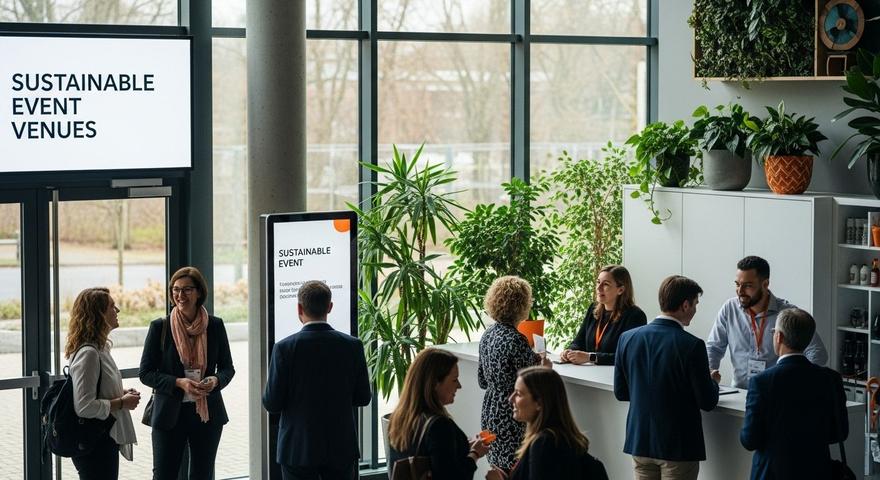
How to Choose Sustainable Event Venues for Corporate Success
Sustainable event venues are getting serious attention as companies rethink their impact. Surprisingly though, the drive is not just about cutting emissions. In fact, businesses using venues with proper energy certifications have reported up to 20 percent lower operational costs . The true advantage is how these venue choices signal leadership and shape your brand’s reputation long after the event ends.
Table of Contents
- Key Features Of Sustainable Event Venues Environmental Infrastructure And Energy EfficiencyWaste Management And Resource ConservationHolistic Sustainability And Corporate Alignment
- How Green Venues Support Corporate Goals Strategic Brand Positioning And Reputation ManagementFinancial And Operational EfficiencyLong-Term Environmental Impact And Corporate Governance
- Tips For Selecting The Right Eco-Friendly Venue Evaluating Sustainability Certifications And CredentialsAssessing Comprehensive Environmental PracticesPractical Implementation And Strategic Alignment
- Leading Sustainable Venues And Industry Practices Pioneering Sustainable Design And InfrastructureComprehensive Environmental Management StrategiesGlobal Best Practices And Industry Standards
- Environmental Infrastructure And Energy Efficiency
- Waste Management And Resource Conservation
- Holistic Sustainability And Corporate Alignment
- Strategic Brand Positioning And Reputation Management
- Financial And Operational Efficiency
- Long-Term Environmental Impact And Corporate Governance
- Evaluating Sustainability Certifications And Credentials
- Assessing Comprehensive Environmental Practices
- Practical Implementation And Strategic Alignment
- Pioneering Sustainable Design And Infrastructure
- Comprehensive Environmental Management Strategies
- Global Best Practices And Industry Standards
Quick Summary
| Takeaway | Explanation |
|---|---|
| Select venues with strong energy efficiency | Assess venues based on renewable energy use and energy performance ratings to ensure minimal ecological impact. |
| Evaluate comprehensive waste management strategies | Choose venues that implement recycling, composting, and waste minimisation measures to support circular economy practices. |
| Align venue choices with corporate values | Ensure chosen venues reflect your organisation’s environmental, social, and governance commitments for cohesive branding. |
| Seek venues with recognised sustainability certifications | Look for internationally accepted certifications like LEED or BREEAM that validate venues’ environmental achievements. |
| Implement strategic sustainability measures for events | Negotiate greener practices like plant-based catering and digital registrations to enhance your event’s eco-friendliness. |
Key Features of Sustainable Event Venues
Selecting sustainable event venues represents a strategic approach for corporations committed to environmental responsibility and demonstrating meaningful corporate social commitment. Modern businesses increasingly recognize that venue selection goes far beyond aesthetic appeal or logistical convenience.
Environmental Infrastructure and Energy Efficiency
Sustainable event venues distinguish themselves through comprehensive environmental infrastructure designed to minimise ecological impact. Key indicators include renewable energy integration, such as solar panel installations, wind energy systems, and advanced energy management technologies. These venues prioritize efficient electrical systems, intelligent lighting controls, and temperature regulation mechanisms that significantly reduce overall energy consumption.
Corporate event planners should evaluate venues based on their measurable energy performance. Look for venues with documented energy efficiency ratings, transparent carbon footprint measurements, and verifiable sustainability credentials. High-performance venues often feature smart building technologies that automatically adjust lighting, heating, and cooling based on occupancy and environmental conditions.
Here is a summary of key environmental infrastructure features and waste management strategies that distinguish sustainable event venues. Use this table to compare and prioritise venue features during selection.
| Feature Category | Key Elements/Practices |
|---|---|
| Renewable Energy Integration | Solar panels, wind energy, advanced energy management systems |
| Smart Energy Efficiency | Intelligent lighting controls, smart heating/cooling, energy performance ratings |
| Waste Management Programmes | Robust recycling, composting, waste tracking, single-use reduction |
| Water Conservation | Water-efficient fixtures, rainwater harvesting, greywater recycling |
| Resource Conservation | Local procurement, circular economy initiatives, sustainable materials |
| Sustainability Credentials | LEED, BREEAM, ISO 14001, transparent carbon footprint reporting |
Waste Management and Resource Conservation
Responsible waste management represents another critical dimension of sustainable event venues. Top-tier locations implement robust recycling programmes, comprehensive waste segregation systems, and strategies to minimize single-use materials. Advanced venues offer composting facilities, partner with local recycling centres, and provide detailed waste tracking reports demonstrating their commitment to circular economy principles.
Water conservation represents an equally important consideration. Sustainable venues incorporate water-efficient fixtures, rainwater harvesting systems, and greywater recycling technologies. These approaches dramatically reduce water consumption while maintaining high-quality facilities for corporate events. Event planners should request specific data about a venue’s water management strategies, including consumption metrics and conservation initiatives.
Holistic Sustainability and Corporate Alignment
Beyond physical infrastructure, sustainable event venues demonstrate a holistic approach to environmental stewardship. This includes ethical procurement practices, supporting local ecosystems, prioritizing sustainable catering with locally sourced ingredients, and maintaining fair labour practices. Corporate clients increasingly seek venues that align with broader environmental, social, and governance (ESG) frameworks.
Consider venues that provide comprehensive sustainability reports, showcase transparent environmental commitments, and actively engage in community development programmes. explore venue sustainability options can help corporate event planners identify venues that meet rigorous environmental standards.
Ultimately, choosing sustainable event venues represents more than an environmental decision. It communicates a powerful message about corporate values, demonstrates genuine commitment to global sustainability, and positions organizations as responsible, forward-thinking entities committed to meaningful environmental stewardship.
How Green Venues Support Corporate Goals
Green venues have emerged as powerful strategic assets for corporations seeking to align their event strategies with broader environmental and social responsibility objectives. By selecting sustainable event spaces, businesses can transform their corporate gatherings from mere logistical exercises into meaningful statements of environmental commitment.
Strategic Brand Positioning and Reputation Management
Choosing green venues directly contributes to enhanced corporate reputation and brand perception. Modern stakeholders including investors, employees, clients, and partners increasingly evaluate organisations based on their environmental credentials. Sustainable venue selection signals a proactive approach to corporate social responsibility, demonstrating that an organisation views environmental stewardship as a fundamental business strategy rather than a peripheral concern.
Companies that consistently select green venues communicate a sophisticated understanding of sustainability. This approach goes beyond simple marketing rhetoric, embedding environmental consciousness into core business practices. By making intentional venue choices, corporations can differentiate themselves in competitive markets, attracting environmentally aware talent and building trust with progressive stakeholders.
Financial and Operational Efficiency
Contrary to popular misconceptions, green venues often provide significant financial advantages. Energy-efficient facilities with smart infrastructure typically result in lower operational costs. Advanced venues incorporate technologies that optimise resource consumption, translating into measurable cost savings for event organisers. Intelligent lighting systems, efficient heating and cooling mechanisms, and waste reduction strategies contribute to reduced expenditure.
Moreover, many sustainable venues offer comprehensive reporting on resource consumption, enabling corporations to track and demonstrate their environmental impact. These detailed insights support more informed decision-making and can contribute to achieving broader corporate sustainability targets. discover sustainable event solutions provides additional resources for organisations seeking to optimize their event planning approaches.
Long-Term Environmental Impact and Corporate Governance
Green venues represent more than immediate event requirements. They are critical components of a holistic approach to corporate environmental governance. By consistently selecting venues with robust sustainability credentials, organisations contribute to broader ecological preservation efforts. This approach supports global initiatives addressing climate change, resource conservation, and sustainable development.
Corporate event planners can leverage green venues to support specific environmental goals, such as reducing carbon emissions, minimising waste generation, and promoting circular economy principles. Venues with comprehensive sustainability programmes often provide detailed impact assessments, allowing corporations to quantify their environmental contributions precisely.
The strategic selection of sustainable event venues transcends traditional event planning. It represents a sophisticated approach to corporate responsibility, where every organisational decision becomes an opportunity to demonstrate environmental leadership. By viewing venue selection through this lens, corporations can transform routine business gatherings into powerful statements of commitment to global sustainability.
Tips for Selecting the Right Eco-Friendly Venue
Selecting an eco-friendly venue requires a strategic and comprehensive approach that goes beyond superficial environmental claims. Corporate event planners must develop a nuanced understanding of sustainability credentials and conduct thorough assessments to ensure genuine environmental commitment.
Evaluating Sustainability Certifications and Credentials
Comprehensive venue selection begins with rigorous assessment of environmental certifications. Look for internationally recognized standards like LEED, BREEAM, and ISO 14001, which provide robust frameworks for evaluating a venue’s environmental performance. These certifications demonstrate systematic approaches to energy efficiency, waste management, and resource conservation.
The table below highlights internationally recognised sustainability certifications mentioned in the article and their primary focus areas, helping planners assess venue credentials more effectively.
| Certification | Main Areas of Assessment |
|---|---|
| LEED | Energy efficiency, building design, water conservation |
| BREEAM | Sustainable infrastructure, resource management |
| ISO 14001 | Environmental management systems, continuous improvement |
Corporate event planners should request detailed documentation about a venue’s sustainability credentials. This includes energy consumption records, waste reduction strategies, and transparent reporting on environmental initiatives. Venues committed to sustainability will readily provide comprehensive evidence of their ecological practices, allowing for informed decision-making.
Assessing Comprehensive Environmental Practices
Beyond formal certifications, evaluate venues through a holistic lens of environmental practices. Key indicators include renewable energy usage, water conservation technologies, comprehensive recycling programmes, and sustainable procurement policies. Consider venues that demonstrate a commitment to local ecosystems, support community development, and prioritize ethical supply chain management.
Pay attention to specific environmental features such as solar panel installations, intelligent building management systems, efficient waste segregation facilities, and innovative water recycling technologies. Advanced venues often provide detailed impact assessments that quantify their environmental contributions, enabling corporations to make data-driven venue selections.
Practical Implementation and Strategic Alignment
Successful eco-friendly venue selection requires aligning environmental considerations with specific event requirements. Consider factors like location accessibility, public transportation options, and potential for reducing overall carbon footprint. Venues that offer comprehensive sustainability reporting and support carbon offset programmes provide additional value for environmentally conscious corporations.
Negotiate with venues about potential sustainability enhancements specific to your event. This might include minimizing single-use materials, implementing digital registration systems, offering plant-based catering options, or developing custom waste reduction strategies. explore sustainable venue planning can provide additional guidance for corporations seeking comprehensive environmental solutions.
Ultimately, selecting an eco-friendly venue is not merely a checklist exercise but a strategic decision that reflects an organisation’s commitment to environmental stewardship. By approaching venue selection with diligence, creativity, and a genuine commitment to sustainability, corporations can transform their events into powerful demonstrations of environmental responsibility.
Leading Sustainable Venues and Industry Practices
The evolving landscape of sustainable event venues reflects a profound transformation in corporate environmental responsibility. Leading venues are no longer merely spaces for gatherings but sophisticated ecosystems demonstrating exceptional environmental stewardship and innovative sustainable practices.
Pioneering Sustainable Design and Infrastructure
Top-tier sustainable venues are characterised by comprehensive environmental design that integrates cutting-edge technologies and ecological principles. These venues implement advanced renewable energy systems, featuring extensive solar panel installations, geothermal heating and cooling mechanisms, and intelligent building management technologies that dynamically optimize energy consumption.
Innovative venues prioritize circular design principles, incorporating recycled materials in construction, implementing green roofs that support local biodiversity, and creating spaces that seamlessly blend technological efficiency with natural ecosystem preservation. Advanced infrastructure includes rainwater harvesting systems, greywater recycling technologies, and energy storage solutions that reduce overall environmental impact.
Comprehensive Environmental Management Strategies
Leading sustainable venues demonstrate holistic approaches to environmental management that extend far beyond basic infrastructure. These venues implement comprehensive waste reduction programmes, offering sophisticated recycling systems, composting facilities, and strategies to minimize single-use materials. Comprehensive tracking and reporting mechanisms allow corporations to understand their precise environmental footprint during events.
Moreover, progressive venues integrate sustainable catering practices, partnering with local organic producers, offering plant-based menu options, and implementing zero-waste food management strategies. These approaches support local agricultural ecosystems while dramatically reducing the environmental impact of corporate events. explore innovative venue solutions can provide deeper insights into these advanced sustainable practices.
Global Best Practices and Industry Standards
The most advanced sustainable venues are adopting internationally recognized environmental certifications and standards. These include LEED Platinum ratings, BREEAM Outstanding classifications, and ISO 14001 environmental management certifications. Such credentials represent rigorous, independently verified commitments to environmental excellence.
Industry leaders are also developing collaborative frameworks to share best practices, create standardized sustainability metrics, and drive continuous innovation in environmental event management. These initiatives support knowledge exchange, develop more sophisticated environmental assessment tools, and create industry-wide standards that push the boundaries of sustainable event infrastructure.
The evolution of sustainable venues represents more than technological innovation. It signifies a fundamental reimagining of corporate spaces as platforms for environmental leadership, demonstrating that strategic ecological consciousness can be seamlessly integrated into professional infrastructure. By supporting and selecting these forward-thinking venues, corporations become active participants in global sustainability transformation.
Frequently Asked Questions
What are the key features to look for in sustainable event venues?
When choosing a sustainable event venue, consider key features such as renewable energy integration, energy efficiency ratings, comprehensive waste management practices, and water conservation technologies. Venues with sustainability certifications like LEED or BREEAM also signify a commitment to environmental stewardship.
How can sustainable event venues positively impact corporate branding?
Selecting sustainable event venues enhances corporate branding by demonstrating a commitment to environmental responsibility and social governance. This choice can attract environmentally aware clients and stakeholders, improving brand reputation and aligning with corporate values.
How do I assess the waste management practices of an event venue?
To assess the waste management practices of an event venue, inquire about their recycling programmes, composting initiatives, and strategies to minimise single-use materials. Look for venues that provide detailed reports on their waste management efforts and their impact on sustainable practices.
Why are sustainability certifications important for event venues?
Sustainability certifications, such as LEED and BREEAM, are important as they provide independent validation of a venue’s environmental performance. These certifications indicate that a venue adheres to stringent standards for energy efficiency, resource conservation, and waste management, ensuring it aligns with corporate sustainability goals.
Take the Stress Out of Sustainable Venue Sourcing
Finding a venue that truly reflects your corporate sustainability ambitions can be overwhelming. The article highlights how critical it is to balance environmental certifications , waste management credentials , and operational efficiency when choosing a sustainable event venue. Many corporate event planners struggle with knowing which venues genuinely meet sustainability standards and how to ensure the location fits both practical needs and brand values. Missing these key elements can lead to higher costs and missed opportunities to reinforce your organisation’s environmental reputation.
Let Jigsaw Conferences handle the complexity for you. Our expert team specialises in matching your specific requirements to meticulously vetted venues that uphold the highest sustainability standards. We combine years of experience with exclusive access to verified green venues and negotiation skills that secure you the best rates . Ready to make your next event a statement of corporate leadership? Explore our free venue search and booking service to find eco-friendly spaces that align with your brand commitments. Act now by submitting your requirements for tailored, sustainable event solutions that impress both your stakeholders and your bottom line. For inspiration and detailed sustainable options, you can also explore venue sustainability solutions .
Recommended
- Event Venues: Key Differences for Corporate Events | Jigsaw Conferences
- Event Accommodation Explained: Essential Solutions for Corporates | Jigsaw Conferences
- Event Accommodation Policies – Safeguarding Corporate Success | Jigsaw Conferences
- Venue Capacity Planning: Optimising Events Safely | Jigsaw Conferences
- What to Do if You Need Emergency Housing: A Step-by-Step Guide | Jigsaw Conferences
Jigsaw Conferences Editorial Team
Verified AuthorThe Jigsaw Conferences Editorial Team comprises venue finding experts with over 20 years of combined experience in the events and hospitality industry. Our team includes certified meeting professionals (CMP), venue sourcing specialists, and industry analysts who provide authoritative insights on venue selection, event planning, and corporate accommodation.