
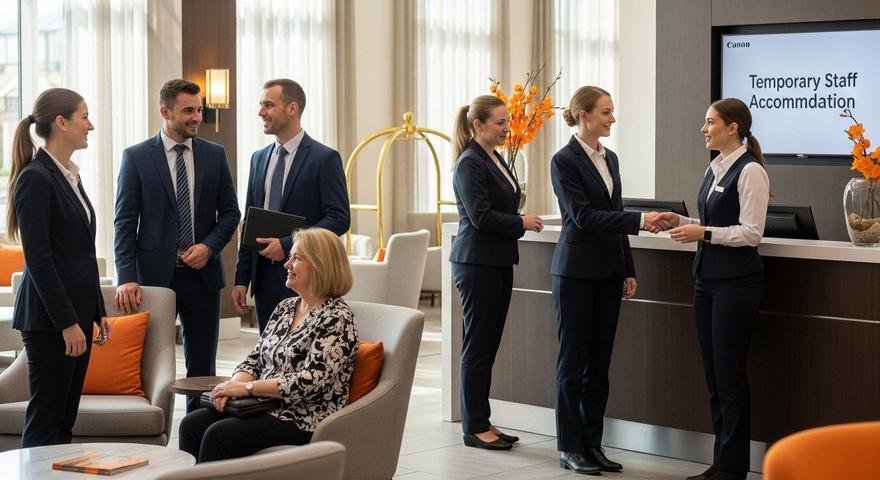
Temporary Staff Accommodation Solutions for Corporate Events
Every detail counts when planning accommodation for staff during a big corporate event. Yet while most companies focus on cost and simple logistics, the real surprise is how much quality accommodation can affect your success. Companies that invest in strong staff housing see up to a 20 percent increase in productivity and staff morale during critical events . The right choice can actually make or break your entire event outcome.
Table of Contents
- Understanding Temporary Staff Accommodation Needs Strategic Accommodation Requirements For Corporate PersonnelComprehensive Accommodation Assessment CriteriaFinancial And Operational ConsiderationsFrequently Asked Questions
- Types Of Accommodation For Corporate Teams Professional Serviced ApartmentsCorporate Hotel Blocks And Extended Stay FacilitiesAlternative Accommodation SolutionsFrequently Asked Questions
- Key Factors When Choosing Staff Lodging Location And Accessibility StrategiesTechnical And Functional InfrastructureCost-Effectiveness And Strategic BudgetingFrequently Asked Questions
- How To Streamline Booking And Logistics Digital Booking Platform IntegrationStandardised Booking ProtocolsNegotiation And Contract ManagementFrequently Asked Questions
- Strategic Accommodation Requirements For Corporate Personnel
- Comprehensive Accommodation Assessment Criteria
- Financial And Operational Considerations
- Frequently Asked Questions
- Professional Serviced Apartments
- Corporate Hotel Blocks And Extended Stay Facilities
- Alternative Accommodation Solutions
- Frequently Asked Questions
- Location And Accessibility Strategies
- Technical And Functional Infrastructure
- Cost-Effectiveness And Strategic Budgeting
- Frequently Asked Questions
- Digital Booking Platform Integration
- Standardised Booking Protocols
- Negotiation And Contract Management
- Frequently Asked Questions
Quick Summary
| Takeaway | Explanation |
|---|---|
| Strategic accommodation impacts employee performance. | Quality lodging boosts staff morale and productivity during high-pressure events. Selecting the right type can facilitate better outcomes. |
| Proximity to event venue is critical. | Ensuring accommodation is close to the venue reduces travel time, allowing staff to focus on their tasks and participate more fully. |
| Evaluate accommodation based on key criteria. | Assessment factors should include location accessibility, technical infrastructure, comfort standards, and safety protocols to suit all staff preferences. |
| Invest in value, not just cost savings. | Choosing budget options can compromise productivity; a strategic approach prioritises quality lodging over merely lowering expenses. |
| Implement streamlined booking processes. | Use digital platforms and establish standard protocols for booking, ensuring efficiency and transparency in managing accommodation logistics. |
Understanding Temporary Staff Accommodation Needs
Corporate events demand strategic planning for temporary staff accommodation that goes beyond basic lodging. The right accommodation solution directly impacts event success, staff productivity, and overall organisational efficiency. Event managers and corporate leaders must carefully evaluate multiple factors when selecting appropriate temporary housing options for their team members.
Strategic Accommodation Requirements for Corporate Personnel
Temporary staff accommodation represents more than just a place to sleep. It serves as a critical support infrastructure that enables professionals to perform at their best during high-pressure corporate events. Modern organisations recognise that quality accommodation significantly influences staff morale, performance, and wellbeing.
Effective temporary accommodation solutions must address several key considerations. First, proximity to the event venue remains paramount. Staff members require convenient access that minimises travel time and reduces logistical complications. Proximity ensures team members can quickly respond to event requirements, participate in preparatory meetings, and maintain peak performance levels.
Secondly, accommodation must provide appropriate amenities that support professional functionality. This includes reliable high-speed internet connectivity, workspace areas, charging stations for electronic devices, and quiet environments conducive to potential work preparation or post-event documentation. Privacy and comfort become essential elements that contribute to staff readiness and mental sharpness.
Comprehensive Accommodation Assessment Criteria
Companies must develop robust assessment frameworks when evaluating temporary staff accommodation options. Key evaluation parameters include:
The following table provides a checklist of the essential criteria to assess when selecting temporary staff accommodation for corporate events, based on the article’s recommendations.
| Assessment Criteria | Example Details | Requirement Met (Yes/No) |
|---|---|---|
| Location Accessibility | Proximity to venue, transport, urban infrastructure | |
| Technical Infrastructure | Internet, workspace, device charging | |
| Comfort Standards | Ergonomic beds, temperature control, noise reduction | |
| Safety Protocols | Secure entry, 24hr security, emergency response | |
| Personal Preferences | Private/communal needs, working styles |
- Location Accessibility : Proximity to event venue, transportation links, and essential urban infrastructure
- Technical Infrastructure : Reliable internet, workspace facilities, adequate electrical outlets
- Comfort Standards : Ergonomic sleeping arrangements, temperature control, noise reduction capabilities
- Safety Protocols : Secure entry systems, 24-hour security, emergency response mechanisms
Beyond physical infrastructure, cultural and personal comfort factors play significant roles. Different staff members might have varying accommodation preferences based on their professional roles, personal requirements, and individual working styles. Some professionals might prefer compact, efficient spaces, while others require more expansive environments that support extended work sessions.
Financial and Operational Considerations
Temporary staff accommodation represents a strategic investment for corporations. While cost-effectiveness remains important, organisations should prioritise value over mere price reduction. Cheaper alternatives might compromise staff productivity, comfort, and overall event performance.
Additionally, accommodation selection should align with broader corporate policies regarding employee welfare, sustainability goals, and technological integration. Forward-thinking companies increasingly seek accommodation providers who demonstrate environmental consciousness, offer flexible booking options, and provide transparent communication channels.
Navigating temporary staff accommodation requires a holistic approach that balances practical requirements with human-centric design principles. By understanding these multifaceted needs, corporations can create supportive environments that enhance staff performance and contribute to successful corporate events.
Frequently Asked Questions
What factors determine temporary staff accommodation quality? Key factors include location, amenities, technical infrastructure, safety standards, and alignment with staff professional requirements.
How far in advance should accommodation be booked? Ideal booking timeframes range between 3-6 months prior to the event, allowing optimal selection and potentially securing more competitive rates.
What budget allocation is recommended for staff accommodation? Typically, organisations allocate between 15-25% of total event budget towards staff accommodation, depending on event complexity and duration.
Types of Accommodation for Corporate Teams
Corporate events demand sophisticated accommodation solutions that cater to diverse professional needs and organisational requirements. Understanding the range of temporary staff accommodation options enables event planners to make strategic choices that balance comfort, functionality, and cost-effectiveness.
To help readers compare the main temporary staff accommodation options for corporate events, the following table summarises their key features, advantages, and suitability as discussed in the article.
| Accommodation Type | Key Features | Main Advantages | Best Suited For |
|---|---|---|---|
| Serviced Apartments | Furnished, kitchen, workspace, privacy, tailored services | Home-like comfort, professional amenities, flexibility | Teams needing longer stays, privacy, and functionality |
| Hotel Blocks/Extended Stay | Multiple rooms, business centres, flexible stays | Centralised, professionally managed, special corporate rates | Large teams, short- to mid-term events, convenience |
| Alternative Solutions | Private rentals, eco-friendly, customisable | Unique environments, sustainability, scalable | Specialist needs, sustainability-focused organisations |
Professional Serviced Apartments
Serviced apartments represent a premier accommodation solution for corporate teams, offering a sophisticated blend of residential comfort and professional amenities. These fully furnished living spaces provide significantly more flexibility compared to traditional hotel rooms. Typically ranging from studio to multi-bedroom configurations, serviced apartments deliver a home-like environment that supports both professional and personal requirements.
Key advantages of serviced apartments include dedicated workspace areas, full kitchen facilities, separate living and sleeping zones, and enhanced privacy. Corporate teams appreciate the ability to maintain professional routines while enjoying residential-style accommodations. These apartments often include essential services such as housekeeping, linen replacement, and utilities, reducing logistical complexities for event organisers.
Modern serviced apartments increasingly incorporate smart technology features. High-speed internet, integrated workstations, secure business communication zones, and advanced connectivity options transform these spaces into productive environments. Many providers now offer customisable solutions that can be tailored to specific team requirements, allowing organisations to create bespoke accommodation experiences.
Corporate Hotel Blocks and Extended Stay Facilities
Hotel accommodations remain a traditional yet reliable option for corporate team housing. Strategic hotel block bookings enable organisations to secure multiple rooms with negotiated rates, providing a centralised and professionally managed solution. Extended stay hotels specialise in accommodating teams requiring longer-term lodging, offering comprehensive amenities designed for business travellers.
Extended stay facilities typically provide additional benefits beyond standard hotel rooms. These include kitchenette facilities, laundry services, dedicated business centres, meeting spaces, and flexible check-in/check-out arrangements. Such features make them particularly attractive for corporate teams participating in multi-day events or intensive training programmes.
Organisations can leverage corporate partnerships and volume booking strategies to optimise accommodation costs. Many hotel chains offer corporate rates, loyalty programme benefits, and customised service packages specifically designed for business clientele. These arrangements can significantly reduce overall accommodation expenses while maintaining high-quality standards.
Alternative Accommodation Solutions
Beyond traditional options, innovative accommodation solutions are emerging to meet evolving corporate needs. Short-term rental platforms and specialised corporate housing providers offer increasingly sophisticated alternatives. These options can include private residential properties, purpose-built corporate living complexes, and hybrid accommodation models that combine residential comfort with professional infrastructure.
Considerations for alternative accommodation include location proximity, technological infrastructure, privacy levels, and scalability. Some organisations are exploring sustainable accommodation options that align with corporate social responsibility objectives. These might include eco-friendly buildings, properties with reduced environmental footprints, or accommodations that support local community development.
Flexibility becomes a critical factor when selecting accommodation. Teams require solutions that can adapt to changing event requirements, accommodate varying group sizes, and provide seamless logistical support. The most effective accommodation strategies integrate multiple options, allowing dynamic responses to unique team compositions and event specifications.
Frequently Asked Questions
What accommodation type works best for large corporate teams? Serviced apartments and extended stay hotels typically offer the most comprehensive solutions for large groups, providing flexibility, amenities, and cost-effectiveness.
How far in advance should corporate accommodation be booked? Ideal booking timelines range between 3-6 months prior to the event, enabling better negotiation and availability.
What budget considerations matter most for team accommodation? Key factors include per-person costs, included amenities, location proximity, and alignment with overall event budget constraints.
Key Factors When Choosing Staff Lodging
Selecting appropriate staff lodging represents a critical strategic decision for corporate events. The right accommodation can significantly enhance team performance, morale, and overall event success. Corporate leaders must navigate a complex landscape of considerations to ensure optimal lodging solutions that meet both organisational objectives and individual staff requirements.
Location and Accessibility Strategies
Location emerges as the most fundamental factor when evaluating staff accommodation options. Proximity to the event venue remains paramount, directly impacting team efficiency and logistical coordination. Event planners must calculate precise travel times, assess transportation infrastructure, and consider multiple accessibility criteria.
Effective location assessment involves comprehensive mapping of potential accommodation sites relative to event venues. Organisations should analyse transportation networks, including public transit routes, parking availability, and potential shuttle services. Walking distance becomes an essential metric for urban event locations, enabling staff to move quickly between accommodation and event spaces without additional transportation complexities.
Beyond physical proximity, location quality encompasses broader environmental considerations. Safety ratings, neighbourhood infrastructure, nearby amenities, and local support services contribute to the overall accommodation evaluation. Professional teams require environments that provide both functional convenience and personal comfort.
Technical and Functional Infrastructure
Modern corporate accommodation demands sophisticated technological capabilities. High-speed internet connectivity, robust electrical infrastructure, workspace facilities, and secure communication zones represent non-negotiable requirements for professional lodging.
Technical infrastructure assessment should include comprehensive connectivity evaluations. This involves measuring internet bandwidth, assessing network stability, ensuring multiple charging points, and verifying compatibility with corporate communication platforms. Staff members increasingly require seamless digital environments that support hybrid working models and real-time collaboration.
Furthermore, functional infrastructure extends beyond technological considerations. Ergonomic workspace design, soundproofing capabilities, temperature control systems, and adaptable living spaces become critical elements. Accommodation solutions must support both individual work requirements and potential team collaboration scenarios.
Cost-Effectiveness and Strategic Budgeting
Financial considerations play a pivotal role in accommodation selection. While cost remains important, organisations must adopt a value-driven approach that balances expense management with quality requirements. Cheaper options might compromise staff productivity and event performance, making comprehensive cost-benefit analysis essential.
Strategic budgeting involves more than simple price comparisons. Organisations should evaluate total cost of ownership, including indirect expenses such as transportation, potential productivity losses, and staff wellbeing factors. Negotiated corporate rates, volume booking discounts, and long-term partnership arrangements can provide significant financial advantages.
Additionally, forward-thinking companies increasingly consider sustainability and social responsibility when selecting accommodation. Providers demonstrating environmental consciousness, supporting local communities, and offering transparent pricing models can provide added strategic value beyond immediate financial considerations.
Frequently Asked Questions
What percentage of event budget should be allocated to staff accommodation? Typically, organisations allocate between 15-25% of total event budget towards staff accommodation, depending on event complexity and duration.
How far in advance should accommodation be confirmed? Ideal booking timelines range between 3-6 months prior to the event, enabling better negotiation and ensuring availability.
What are the most critical accommodation selection criteria? Key criteria include location proximity, technological infrastructure, safety standards, amenity quality, and alignment with organisational objectives.
How to Streamline Booking and Logistics
Efficient booking and logistics management represent critical components of successful temporary staff accommodation strategies. Corporate event planners must develop comprehensive approaches that minimise administrative complexity while maximising operational effectiveness. Strategic streamlining can significantly reduce time investment, control costs, and enhance overall team experience.
Digital Booking Platform Integration
Modern technology offers sophisticated solutions for simplifying accommodation booking processes. Advanced digital platforms enable comprehensive management of staff lodging requirements through centralised systems that provide real-time availability, comparative pricing, and instant confirmation mechanisms.
Comprehensive digital booking platforms typically offer multiple sophisticated features. These include customisable filtering options, detailed property information, transparent pricing structures, and integrated payment systems. Corporate teams can rapidly compare accommodation options, assess specific requirements, and make informed decisions without extensive manual research.
Integration capabilities become crucial when selecting digital booking solutions. Platforms that seamlessly connect with existing corporate travel management systems, expense tracking software, and enterprise resource planning tools provide substantial operational advantages. Such integrations enable automatic data synchronisation, simplified reporting, and enhanced financial tracking.
Standardised Booking Protocols
Developing standardised booking protocols ensures consistency and efficiency across corporate accommodation arrangements. These protocols should establish clear guidelines regarding booking timelines, budget parameters, approval processes, and specific organisational requirements.
Effective protocols typically include predefined accommodation selection criteria. These might encompass maximum per-night rates, preferred property amenities, location proximity requirements, and technological infrastructure standards. By establishing clear parameters, organisations can significantly reduce decision-making time and minimise potential variations in booking quality.
Centralised approval workflows represent another critical component of streamlined booking processes. Implementing a structured review mechanism where designated personnel can quickly assess and approve accommodation recommendations reduces administrative bottlenecks. Automated notification systems can further enhance efficiency by providing real-time updates to relevant stakeholders.
Negotiation and Contract Management
Strategic negotiation with accommodation providers can unlock significant cost savings and operational benefits. Corporate teams should develop robust negotiation strategies that leverage volume bookings, establish long-term partnerships, and secure preferential rates for recurring events.
Contract management becomes increasingly important for organisations with frequent corporate events. Developing framework agreements with preferred accommodation providers enables more predictable pricing, guaranteed availability, and standardised service levels. These agreements can include flexible booking conditions, cancellation provisions, and potential volume-based discounts.
Additionally, organisations should implement comprehensive tracking mechanisms to monitor accommodation expenses, service quality, and overall vendor performance. Regular performance reviews enable continuous improvement of booking strategies and support data-driven decision-making processes.
Frequently Asked Questions
What technology features matter most for booking platforms? Key features include real-time availability, transparent pricing, integration capabilities, customisable filtering, and seamless payment processing.
How far in advance should accommodation be booked? Ideal booking timelines range between 3-6 months prior to the event, enabling better negotiation and ensuring availability.
What negotiation strategies work best for corporate accommodation? Effective strategies include volume booking leverage, long-term partnership development, standardised service level agreements, and comprehensive performance tracking.
Frequently Asked Questions
What factors determine temporary staff accommodation quality?
Key factors include location, amenities, technical infrastructure, safety standards, and alignment with staff professional requirements.
How far in advance should accommodation be booked for corporate events?
Ideal booking timeframes range between 3-6 months prior to the event, allowing optimal selection and potentially securing more competitive rates.
What are the key advantages of using serviced apartments for corporate accommodation?
Serviced apartments provide home-like comfort, professional amenities, and flexibility, making them ideal for teams needing longer stays and functional spaces.
Elevate Your Corporate Event with Seamless Staff Accommodation
When it comes to organising corporate events, one overlooked challenge is ensuring your team has suitable, stress-free accommodation that actually supports productivity. As highlighted in the article, poor lodging can hinder staff morale, efficiency, and ultimately the success of your event. Many organisations struggle with finding well-located, comfortable, and technically-equipped accommodation while maintaining cost control and satisfying individual staff preferences. Dealing with logistics, differing needs, and securing competitive rates can quickly turn into a headache for any event manager.
You do not have to navigate these complexities alone. Jigsaw Conferences makes it easy to solve every accommodation headache with our specialist venue finding and staff housing solutions. Our free, tailored service gives you instant access to vetted options in all UK cities, combining comfort, convenience, and value. Visit Jigsaw Conferences to request a personalised venue shortlist or start your staff accommodation inquiry . Let our experts secure the right space for your next event so you get peace of mind and your staff perform at their best. Get in touch today and secure the accommodation edge your team deserves.
Recommended
- Free Venue Finder | UK Event Venues & B2b Accommodation
- Free Venue Finder | UK Event Venues & B2b Accommodation
- Free Venue Finder | UK Event Venues & B2b Accommodation
- Free Venue Finder | UK Event Venues & B2b Accommodation
- What is Event Management? - team.i
- Conference Seating Layouts: Top Choices for 2025 Offices - Bum Seating
Recommended
- Event Venues: Key Differences for Corporate Events | Jigsaw Conferences
- Event Accommodation Explained: Essential Solutions for Corporates | Jigsaw Conferences
- Event Accommodation Policies – Safeguarding Corporate Success | Jigsaw Conferences
- Venue Capacity Planning: Optimising Events Safely | Jigsaw Conferences
- What to Do if You Need Emergency Housing: A Step-by-Step Guide | Jigsaw Conferences
Jigsaw Conferences Editorial Team
Verified AuthorThe Jigsaw Conferences Editorial Team comprises venue finding experts with over 20 years of combined experience in the events and hospitality industry. Our team includes certified meeting professionals (CMP), venue sourcing specialists, and industry analysts who provide authoritative insights on venue selection, event planning, and corporate accommodation.