
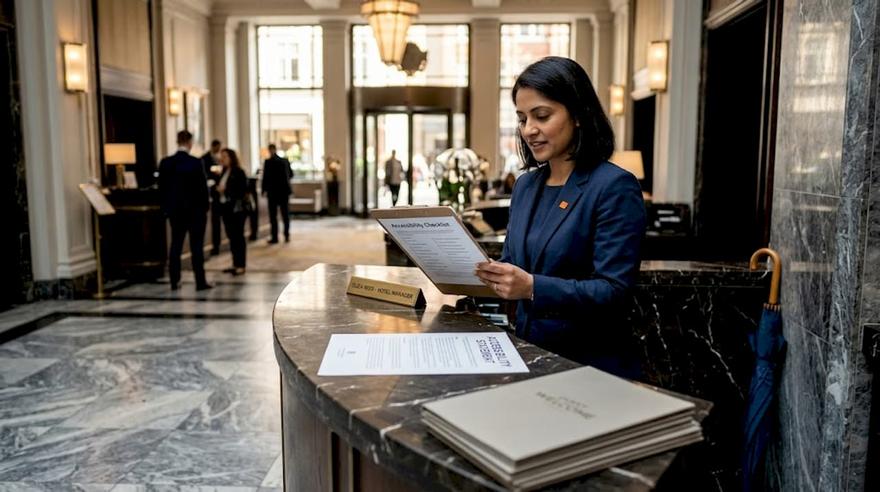
Your guide to VIP event accommodation for UK corporate events
TL;DR: Selecting the right VIP accommodation depends on location, reputation, flexibility, and accessibility standards.The choice of property type should align with guest profiles, from luxury hotels to boutique or corporate apartments.Proactive planning, clear communication, and service management are key to ensuring a memorable VIP stay and smooth event experience.
TL;DR:
- Selecting the right VIP accommodation depends on location, reputation, flexibility, and accessibility standards.
- The choice of property type should align with guest profiles, from luxury hotels to boutique or corporate apartments.
- Proactive planning, clear communication, and service management are key to ensuring a memorable VIP stay and smooth event experience.
Getting VIP accommodation right is one of the most underestimated challenges in corporate event planning. It is not simply a matter of booking a premium room and expecting guests to be impressed. The wrong property, a rigid contract, or a missed accessibility requirement can unravel months of careful planning in hours. From securing flexible room blocks to negotiating upgrade pathways for senior executives, the decisions you make during accommodation sourcing directly shape how your VIPs experience the entire event. This guide sets out the criteria, options, cost benchmarks, and service standards that UK corporate planners need to deliver genuinely exceptional stays.
Table of Contents
- Key criteria for VIP accommodation selection
- Top VIP accommodation types for UK events
- Cost benchmarks and booking strategies for VIP stays
- Best practices for VIP service, accessibility, and post-event needs
- What most VIP event planners miss about premium accommodation
- Find your perfect VIP event accommodation partner
- frequently asked questions
Key Takeaways
| Point | Details |
|---|---|
| Book early and negotiate | Securing blocks months ahead ensures the best rates and contract flexibility for VIP needs. |
| Align accommodation with event goals | Choose properties that balance location, prestige and essential VIP services for seamless events. |
| Understand UK cost dynamics | Budget for higher rates during peak periods and leverage group deals to maximise value. |
| Prioritise accessibility | Compliance with legal standards and inclusive practices is vital for VIP reputation and satisfaction. |
| Insist on guest-focused service | Attention to arrival, flexibility, and post-event touches distinguish a true VIP experience. |
Key criteria for VIP accommodation selection
Not every four or five-star hotel is suited to hosting corporate VIPs. The difference between a property that genuinely supports your event and one that simply looks the part often comes down to operational detail rather than prestige alone.
Here are the factors that should sit at the top of your shortlist assessment:
- Location and proximity to venue: VIPs should not be navigating complex transfers. Walking distance or a short, reliable car journey is the standard to aim for.
- Brand reputation and preferred partnerships: Known brands carry reassurance for both planners and guests, and preferred partnerships often unlock pre-negotiated rates.
- Room block flexibility: Look closely at cut-off dates and attrition clauses. Room block reservations with preferential rates (such as the £199 single occupancy benchmark at Clayton Hotel Cambridge) are a proven methodology, but only if the attrition terms protect you from paying for no-shows.
- VIP upgrade opportunities: Suite access and executive floor arrangements should be confirmed in writing, not promised verbally.
- Online booking portals: Event-branded portals allow delegates to self-book within your approved room block, reducing admin and errors significantly.
- Post-event services: Late check-out, luggage storage, and account settlement procedures should be confirmed before you sign.
Accessibility is non-negotiable. Your accommodation policy essentials must reflect step-free access and BSL interpreter provision under the accessible event venues standard required by the interpreter services that UK law mandates through the step-free access compliance obligations of the UK equality legislation .
Your property should be able to confirm in writing that it meets the UK equality legislation requirements under the step-free and BSL compliance standard before you issue any guest invitations.
Pro tip: Ask the hotel for a walk-through of their VIP check-in process before you commit. If they cannot describe it clearly, that is your answer.
Top VIP accommodation types for UK events
With clear criteria established, the next decision is choosing the accommodation format that genuinely fits your event profile. There is no single correct answer, and the best planners match accommodation type to guest profile rather than defaulting to whatever carries the highest room rate.
- London and major city luxury hotels: These offer prestige, 24-hour service, and the full range of amenities that senior executives expect. London luxury hotel rates in 2026 sit between £180 and £350+ per night, running 45 to 55% above the national average. They are best suited to flagship conferences, investor summits, and board-level events.
- Independent boutique hotels: Often overlooked, boutique properties offer genuine privacy, more discreet service, and a character that resonates with creative or media-sector VIPs. They also tend to be more flexible on contract terms.
- Corporate apartments: For VIPs staying several nights or those who require privacy above all else, a corporate apartment removes the fishbowl feel of a hotel lobby entirely. Security is higher and space is considerably greater.
- Event accommodation optionsin serviced residences: These work well for family-accompanied executives or long-format programmes spanning a week or more.
| Type | Best for | Rate range (2026) | Key strength]( https://www.kenresearch.com/uk-luxury-hotels-resorts-market ) | Main consideration| |—|—|—|—| | London luxury hotel | Board events, investor days | £180–£350+/night | Full service, prestige | Price and availability| | Regional luxury hotel | UK conferences outside London | £100–£180/night | Value, local knowledge | Transport links| | Corporate apartment | Extended stays, privacy | £130–£280/night | Space, security | Self-service element| | Independent boutique | Creative sectors, media | Variable | Character, flexibility | Limited room blocks|
Pro tip: When booking boutique properties, confirm in advance that they have a named event liaison rather than relying on general reception. This single contact makes a measurable difference on event day.
Cost benchmarks and booking strategies for VIP stays
Once you know which property type you need, you must evaluate the true cost and lock in terms that protect your budget. The headline room rate is rarely the full picture.
In 2026, London luxury ADR sits at £180–£350+/night, and event-driven price spikes push rates considerably higher. Cardiff, for example, has seen ADR increases of 35% during major events. Conference day delegate rates (DDRs) range from £20 to £65 per person depending on the property tier and inclusions.
Key figure:A single major sporting fixture or concert in a UK city can drive hotel rates up by a third overnight. Always cross-reference your event dates against the local events calendar before agreeing any room rate.
Key figure: A single major sporting fixture or concert in a UK city can drive hotel rates up by a third overnight. Always cross-reference your event dates against the local events calendar before agreeing any room rate.
When negotiating your room block, the following points should be on your list:
- Cut-off dates: The date by which unbooked rooms are released back to the hotel. Push for as late a cut-off as the property will accept.
- Room release and attrition clauses: These allow you to reduce your block commitment before cut-off with minimal financial penalty. Essential for variable VIP attendance.
- No-show policies: Define in the contract exactly what you will and will not pay for if guests cancel at short notice.
- Value-adds over discounts: Hotels are often more willing to provide complimentary upgrades, late check-out, or welcome amenity packages than to reduce the headline room rate. Ask for these.
- Online booking portal access: An event-branded portal allows delegates to self-book and track their own reservations, reducing your admin considerably. Many properties now offer this as standard for groups of 10 or more.
Review the cost benchmarks for corporate events when building your initial budget, and use the event accommodation booking guide to structure your negotiation timeline.
Book early. Early room block reservations with negotiated preferential rates consistently outperform last-minute approaches both on price and room quality.
Best practices for VIP service, accessibility, and post-event needs
Booking is just the start. The difference between a forgettable stay and a genuinely memorable VIP experience is almost entirely determined by the service layer, and that requires active management from your side, not just the hotel’s.
On arrival:
- Pre-arrange express or private check-in so VIPs are not queuing at the front desk alongside leisure guests.
- Co-ordinate with the hotel on welcome gifts or personalised in-room amenity packages. A small gesture, correctly timed, carries disproportionate weight.
- Share VIP arrival times with a named hotel contact 24 hours in advance.
During the stay:
- VIP upgrade supplements typically range from £30 to £160 per night, but budgeted correctly these can be the best money you spend. Suite placement communicates seniority and privacy without you needing to say a word.
- Brief the hotel on in-room technology expectations. A speaker who cannot connect their device to the room system at midnight before a keynote is not a trivial problem.
- Have a clear no-show and late arrival plan documented with the hotel before your first guest arrives.
On accessibility:
“Plan for VIP upgrades, no-show charges, and post-event luggage storage; ensure step-free access and BSL compliance under the UK equality legislation obligations of thecertified interpretersstandard.”
“Plan for VIP upgrades, no-show charges, and post-event luggage storage; ensure step-free access and BSL compliance under the UK equality legislation obligations of the certified interpreters standard.”
The guest accommodation management process should include a dedicated post-event phase covering luggage handling, transport co-ordination, and consolidated account settlement, all agreed in writing before the event begins.
What most VIP event planners miss about premium accommodation
Here is an uncomfortable truth most venue guides will not tell you: the majority of VIP accommodation complaints have nothing to do with room quality or brand tier. They are about friction. A delayed check-in. A welcome gift that arrived after the guest checked out. A transfer that was not arranged because someone assumed someone else had handled it.
Seasoned planners sometimes fall into the trap of treating accommodation as a procurement exercise rather than a guest experience exercise. They focus on rate negotiation and room count, then delegate the service detail to the hotel and hope for the best. This is where things go wrong.
Attendee feedback consistently rewards smooth logistics and genuine flexibility. When post-event surveys mention accommodation positively, it is rarely because of thread counts. It is because something went unexpectedly right at exactly the moment it mattered.
Invest in pre-event communication with each VIP. Find out their dietary preferences, accessibility requirements, and expected arrival time before the event week arrives. That information, shared with the hotel in advance, is worth more than any room upgrade.
Accessibility and inclusivity are also reputationally critical in 2026. An event that does not proactively address the needs of disabled or neurodivergent guests will face justified criticism. Review the tailored accommodation solutions available and build compliance in from the start, not as an afterthought.
Find your perfect VIP event accommodation partner
Ready to save time, budget, and stress on your next VIP event? At free UK venue finder , we have been supporting corporate event planners since 2003, sourcing premium accommodation across the UK with the buying power and supplier relationships that individual organisations simply cannot replicate. From contract negotiation and room block management to accessible venue sourcing and on-site liaison, our team handles the complexity so you can focus on the event itself. We work with luxury hotels, boutique properties, and serviced residences across all major UK cities, ensuring your VIPs receive a stay that reflects the quality of your organisation. Our service is free to use, with no hidden fees.
frequently asked questions
How far in advance should I book VIP event accommodation?
It is wise to secure room blocks at least 6 to 12 months ahead, particularly for large events or peak dates, to guarantee availability and take advantage of preferential room block rates.
What are standard cost ranges for luxury group bookings in the UK?
Expect to pay £180–£350+ per night in London for top-tier hotels, with regional rates generally lower unless affected by major local events.
How can I ensure compliance with accessibility regulations for VIP guests?
Check for step-free access, accessible rooms, and BSL interpreter provision in line with the requirements of the UK equality legislation at the point of booking, not after contracts are signed.
What is an attrition clause and why does it matter?
An attrition clause lets you reduce block bookings before a cut-off date with minimal penalty, which is essential when room release arrangements need to flex around unpredictable VIP attendance numbers.
Jigsaw Conferences Editorial Team
Verified AuthorThe Jigsaw Conferences Editorial Team comprises venue finding experts with over 20 years of combined experience in the events and hospitality industry. Our team includes certified meeting professionals (CMP), venue sourcing specialists, and industry analysts who provide authoritative insights on venue selection, event planning, and corporate accommodation.