
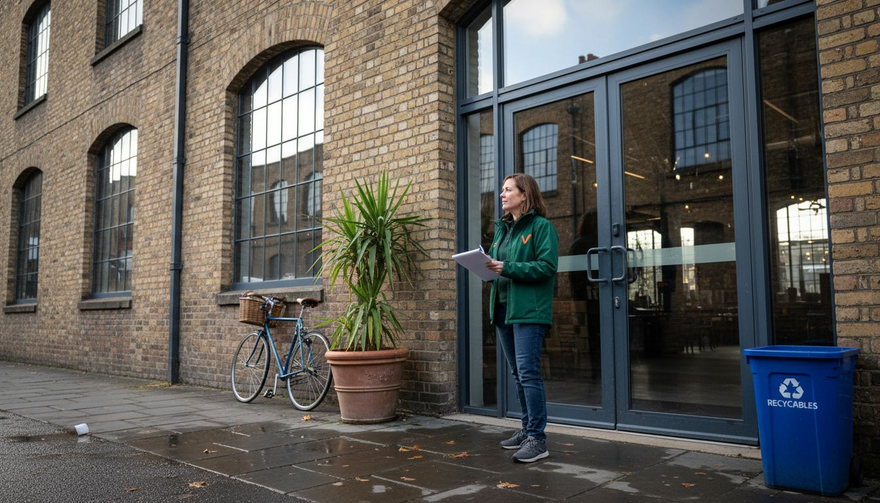
6 Tips for Choosing Sustainable Venues in London
Finding a truly sustainable venue in London can feel overwhelming for corporate event planners. You face complicated certification processes, unclear energy policies, and variable recycling standards. With so many claims and eco-labels, it’s hard to know which venues actually deliver measurable environmental benefits and which are only marketing their green credentials.
This guide brings you actionable steps to make your venue choice genuinely eco-friendly. You will learn how to identify verified certifications, assess energy efficiency backed by London’s pioneering building policies, and uncover practical waste reduction programmes practiced by leading venues. Each insight is drawn from clear, documented standards and initiatives, ensuring your event aligns with your company’s sustainability goals.
Get ready to discover specific methods for verifying environmental claims, boosting your event’s credibility, and supporting real sustainability in London. The list ahead will give you practical tools to evaluate venues confidently and avoid common pitfalls.
Table of Contents
- 1. Identify Green Certifications and Standards
- 2. Evaluate Energy Efficiency and Renewable Policies
- 3. Assess Waste Reduction and Recycling Programmes
- 4. Check Sustainable Catering and Local Sourcing
- 5. Review Venue Accessibility and Transport Links
- 6. Request Transparent Sustainability Reporting
Quick Summary
| Takeaway | Explanation |
|---|---|
| 1. Ask for venue certifications | Inquire about specific green certifications to ensure venues meet environmental standards. This verification supports corporate sustainability goals. |
| 2. Evaluate energy efficiency measures | Request details on energy sources and efficiency strategies to assess a venue’s commitment to reducing carbon emissions. This affects your corporate sustainability footprint. |
| 3. Investigate waste management practices | Examine a venue’s waste reduction and recycling programs to understand their operational excellence and environmental impact during your event. |
| 4. Consider sustainable catering options | Ensure venues source food locally and practice waste reduction to lower event emissions and enhance overall sustainability. This affects attendee perception and experience. |
| 5. Demand transparent sustainability reporting | Require venues to provide documented sustainability performance data to verify their environmental claims, improving accountability and credibility in venue selection. |
1. Identify Green Certifications and Standards
Choosing a sustainable venue starts with understanding what makes it genuinely eco-friendly. Green certifications act as your shorthand for verified environmental performance.
When you’re evaluating London venues for corporate events, you’re likely juggling multiple sustainability criteria. Certifications remove the guesswork by providing third-party validation that a venue meets specific environmental standards.
What certifications matter most?
Three major certifications dominate the UK venue landscape:
- LEED (Leadership in Energy and Environmental Design) focuses on energy efficiency, water management, and overall environmental impact across venue operations
- BREEAM (Building Research Establishment Environmental Assessment Method) is the most common British standard, assessing everything from energy use to waste management and social responsibility
- ISO 20121 specifically targets sustainable event management, covering the entire event lifecycle from planning through execution
Sustainability certifications for venues provide benchmarks that align with your corporate sustainability goals. The certification process requires venues to document and measure their environmental practices over time, which means certified venues take sustainability seriously.
Beyond these, the EIC Sustainable Event Standards assess venues across eight specific criteria, including environmental responsibility, water management, materials circularity, and diversity initiatives. This multi-dimensional approach means you’re getting a complete picture of a venue’s commitment to sustainability.
Why this matters for your team: A certified venue removes liability concerns and demonstrates corporate accountability. Your stakeholders can see documented proof of environmental management rather than relying on marketing claims.
Here’s what to do when researching venues:
- Ask specifically which certifications a venue holds
- Verify the certification date and check if it’s current
- Request copies of their certification documentation
- Cross-reference multiple certifications for comprehensive sustainability coverage
- Understand what each certification covers to match your priorities
Venues with multiple certifications demonstrate deeper commitment to sustainability across different operational areas, not just energy efficiency.
Venues with multiple certifications demonstrate deeper commitment to sustainability across different operational areas, not just energy efficiency.
Don’t assume one certification covers everything. A venue might have BREEAM certification for building efficiency but lack ISO 20121 event management standards. Your conference needs both building sustainability and event-specific practices.
Pro tip: Request the specific certification reports from venues, not just the logo—these documents show exactly where they excel and where they’re still developing, giving you realistic expectations for your event.
2. Evaluate Energy Efficiency and Renewable Policies
Energy consumption represents one of the largest environmental impacts of any venue. Understanding a venue’s energy efficiency strategies and renewable energy commitments directly affects your corporate sustainability footprint.
London venues increasingly adopt modern energy solutions to reduce operational carbon. When you’re selecting a space for your conference or retreat, energy policies matter more than you might think. A venue’s approach to heating, lighting, and power generation can either support or undermine your organisation’s sustainability goals.
What should you look for?
Start by asking venues about their specific energy sources and efficiency measures. Don’t settle for vague answers like “we’re trying to be green.” Request concrete details about their infrastructure.
- Solar panels or other on-site renewable generation capacity
- Heat pump systems for low-carbon heating
- LED lighting throughout the facility with motion sensors
- Energy management systems that monitor and optimise consumption
- Building insulation and retrofitting improvements
London’s planning policies now require buildings to exceed national standards with 57% higher carbon savings through energy efficiency and renewable technologies. This means newer or recently retrofitted London venues should meet higher environmental benchmarks than older properties.
The key distinction is between venues that have made genuine infrastructure investments versus those making superficial changes. A venue with solar panels and heat pumps shows serious commitment. A venue that only switched to LED bulbs is taking smaller steps.
Here’s how to evaluate a venue’s energy credentials:
- Ask for their energy consumption data from the past three years
- Enquire about their renewable energy percentage and sources
- Request details on their retrofitting timeline and improvements
- Check whether they have energy audits or certifications
- Compare their claims against their actual utility bills if possible
Venues with documented renewable energy use and efficiency retrofits demonstrate measurable commitment, not just marketing-friendly language.
Venues with documented renewable energy use and efficiency retrofits demonstrate measurable commitment, not just marketing-friendly language.
Your event size matters here too. A venue powering your 500-person conference with renewable energy has a different impact than one relying on grid electricity. Confirm whether renewable capacity scales with event demands.
Pro tip: Ask venues for their energy performance certificate and recent utility bills—these documents reveal actual consumption patterns far better than promotional materials, helping you identify venues with authentic efficiency improvements.
3. Assess Waste Reduction and Recycling Programmes
Waste management at your venue directly reflects your organisation’s environmental commitment. A venue with robust recycling programmes and waste reduction strategies can dramatically lower your event’s ecological impact.
Most corporate events generate significant waste through catering, printed materials, and packaging. The venue you choose either minimises this waste or sends it straight to landfill. This single factor can shift your event’s sustainability profile considerably.
Why waste practices matter for your conference:
London’s waste initiatives are setting ambitious targets. ReLondon supports circular economy practices across businesses and boroughs, encouraging reuse, repair, and recycling to make waste reduction standard practice. When you select a venue aligned with these principles, you’re supporting London’s broader sustainability goals.
Beyond environmental responsibility, robust waste management demonstrates operational excellence. Venues that track and minimise waste typically have better cost control and more organised operations overall.
What to ask about waste programmes:
- Separate collection systems for different waste streams (food, paper, plastics, glass)
- Partnerships with recycling companies or composting facilities
- Documentation of actual recycling rates, not just policies
- Single-use plastic elimination or significant reduction targets
- Staff training on proper waste sorting and contamination prevention
- Zero-waste-to-landfill commitments or timelines
The City of London Corporation operates zero-waste-to-landfill policies with comprehensive sorting and recycling programmes, showing what’s achievable in London. Progressive venues follow similar models.
Don’t assume recycling bins equal effective recycling. Many venues have the infrastructure but lack proper staff training or sorting discipline, resulting in contaminated waste streams that end up in landfill anyway.
Here’s how to evaluate a venue’s waste credentials:
- Request their waste audit reports and recycling rate percentages
- Ask about catering waste specifically, including food and packaging
- Enquire whether they track waste data and measure improvement over time
- Confirm they have composting services for organic waste
- Check if they can accommodate your printing and material needs with recycled options
Venues that measure and report their actual recycling rates demonstrate genuine commitment; those that only mention “recycling available” often lack meaningful programmes.
Venues that measure and report their actual recycling rates demonstrate genuine commitment; those that only mention “recycling available” often lack meaningful programmes.
Pro tip: Ask venues for their waste audit reports from the past year, not just their recycling policy statement—actual data reveals whether their waste programmes work in practice or exist only on paper.
4. Check Sustainable Catering and Local Sourcing
Catering represents one of the largest environmental impacts of any corporate event. The food choices and sourcing practices your venue uses can either amplify or significantly reduce your conference’s overall sustainability footprint.
When attendees gather for a multi-day event, catering decisions compound quickly. A 200-person conference generates substantial food waste, packaging, and transportation emissions. Venues that partner with sustainable caterers transform this potential environmental burden into a competitive advantage.
Why local sourcing matters:
Food transported long distances accumulates carbon through logistics. Local and seasonal sourcing cuts transportation emissions dramatically whilst supporting London’s food economy. Sustainable caterers understand this connection and build menus around what’s available nearby and in season.
Beyond environmental impact, local sourcing often delivers superior flavour and fresher ingredients. Your attendees notice the quality difference, which reflects positively on your organisation’s values.
What sustainable catering looks like:
Sustainable caterers typically offer these practices:
- Locally sourced and seasonal produce to minimise transportation
- Plant-based and vegan menu options that reduce meat consumption
- Compostable or reusable serving materials instead of single-use plastics
- Food waste minimisation through careful planning and donation programmes
- Efficient logistics using low-emission delivery vehicles
Companies like those offering sustainable catering approaches in London demonstrate how smaller, specialised caterers can outperform larger operations on sustainability. They prioritise organic ingredients, reduce packaging waste, and actively donate surplus food to charities rather than discarding it.
When evaluating catering options, move beyond menu variety. Ask specific questions about sourcing, waste management, and supply chain transparency. A venue’s catering partner should be able to document where ingredients come from and how they handle food waste.
Consider these assessment questions:
- What percentage of ingredients are sourced within 50 miles of London?
- Do they offer substantial plant-based menu options?
- How do they handle food waste and uneaten portions?
- What packaging materials do they use for serving and takeaways?
- Can they provide documentation of their sourcing practices?
Sustainable caterers measure and improve their practices; those merely offering “local options” without commitment to systematic sourcing rarely deliver genuine environmental benefits.
Sustainable caterers measure and improve their practices; those merely offering “local options” without commitment to systematic sourcing rarely deliver genuine environmental benefits.
Your catering choice influences attendee behaviour too. When your organisation demonstrates commitment to sustainable food through local sourcing and waste reduction, attendees recognise and respect that consistency. It becomes part of your event’s narrative.
Pro tip: Request sample menus and waste reports from potential caterers, not just their sustainability statements—actual documentation shows whether their practices genuinely prioritise local sourcing and waste reduction or merely market them.
5. Review Venue Accessibility and Transport Links
Accessibility and transport connectivity directly influence both your attendees’ experience and your event’s carbon footprint. A venue with excellent public transport links and accessible facilities reduces the environmental cost of your conference whilst ensuring all participants can attend comfortably.
Many corporate planners overlook transport when evaluating venues, focusing instead on meeting spaces and catering. This oversight creates hidden sustainability costs. Attendees driving individually to a poorly connected venue generates far more emissions than public transport alternatives.
Why transport matters for sustainability:
London’s extensive public transport network makes venue location a critical sustainability factor. A venue near major Underground, bus, or rail stations dramatically reduces attendee reliance on private vehicles. This single factor can lower your event’s carbon footprint by 40% or more compared to car-dependent locations.
Accessibility also reflects your organisation’s values. Venues accommodating disabled attendees, parents with young children, and those using mobility aids demonstrate genuine inclusivity rather than performative commitment.
Transport connectivity to assess:
- Proximity to London Underground stations and frequency of services
- Bus route access and reliability to the venue location
- National rail connections for out-of-town attendees
- Cycle facilities including secure bike storage and changing facilities
- Parking availability and cost, which should be secondary to public transport
- Information resources helping attendees plan sustainable journeys
When reviewing venues, use Transport for London journey planners to test actual travel times from major London locations. A venue claiming “good transport links” should be reachable within 30-40 minutes from Central London via public transport.
Accessibility extends beyond mobility. Consider whether venues offer:
- Level access or lifts to all meeting spaces and facilities
- Accessible toilets meeting British Standards
- Quiet spaces for attendees with sensory sensitivities
- Parking for disabled badge holders near entrances
- Clear wayfinding signage throughout the building
Venues with genuine accessibility infrastructure demonstrate they’ve planned for diverse attendee needs; those without visible provisions often lack the support systems your attendees require.
Venues with genuine accessibility infrastructure demonstrate they’ve planned for diverse attendee needs; those without visible provisions often lack the support systems your attendees require.
When assessing venue inspection details, understanding accessibility standards for UK events helps you identify which venues meet meaningful accessibility benchmarks rather than minimum legal requirements.
Transport choice affects attendee behaviour throughout your event. When venues are easily accessible, attendees arrive less stressed, more engaged, and better able to participate fully.
Pro tip: Visit potential venues during your target event time and actually use public transport to get there—travel guides don’t reveal crowding patterns, service delays, or walking distances from stations that real attendees experience.
6. Request Transparent Sustainability Reporting
Sustainability claims mean nothing without evidence. Demanding transparent sustainability reporting from venues separates genuine environmental commitment from marketing rhetoric. This final assessment reveals whether a venue actually walks the walk or merely talks the talk.
Many venues claim sustainability without documenting results. They mention recycling programmes, energy efficiency, and green certifications but provide no measurable data. As a corporate planner, you need concrete evidence, not vague promises.
Why reporting transparency matters:
Transparency reveals whether venues understand their environmental impact and actively work to reduce it. Venues measuring and reporting their performance demonstrate accountability. They track what matters, identify weaknesses, and continuously improve. Venues avoiding documentation often lack genuine systems altogether.
Your organisation’s reputation depends on venue selection. If you choose a venue making unsubstantiated green claims, you’re implicitly endorsing greenwashing. Transparent reporting protects your corporate credibility.
What genuine sustainability reporting includes:
- Annual energy consumption data with year-on-year comparisons
- Documented waste diversion rates and recycling percentages
- Carbon footprint calculations for venue operations
- Water usage figures and conservation measures
- Supply chain transparency showing vendor sustainability credentials
- Third-party verification of reported data
- Clear goals with timelines for future improvements
When venues provide these metrics, they’re demonstrating real commitment. Annual reports, sustainability certifications, and environmental audits reveal substance. Marketing brochures claiming “green values” without supporting data reveal nothing.
Request reporting in these forms:
- Ask for the past three years of energy bills and carbon emissions data
- Request documented waste audit reports and recycling percentages
- Enquire about third-party certifications and verification dates
- Ask whether they publicly disclose sustainability goals and progress
- Request copies of environmental policies and implementation plans
Venues willing to share detailed sustainability data demonstrate confidence in their practices; those offering only vague statements likely have little substance to report.
Venues willing to share detailed sustainability data demonstrate confidence in their practices; those offering only vague statements likely have little substance to report.
Transparency creates accountability. When venues know you’re evaluating their actual performance against documented targets, they take sustainability seriously. This transforms your venue selection into a driver of genuine environmental improvement across London’s event sector.
Your questioning also signals market demand. Venues recognising that corporate clients expect transparent reporting invest in measurement systems and genuine improvements. Every time you request documentation, you’re pushing the entire industry toward better practices.
Pro tip: Ask venues for their most recent sustainability report or environmental audit, then compare their actual performance figures against their marketing claims—discrepancies between promotional language and documented results reveal where greenwashing begins.
The following table provides a summary of the critical aspects and considerations for evaluating venues based on sustainability criteria as discussed in the article.
| Aspect | Description | Key Considerations |
|---|---|---|
| Green Certifications | Verified standards that ensure a venue meets environmental benchmarks. | Examples include LEED, BREEAM, ISO 20121, and EIC Sustainability Standards. Request documentation of compliance and cross-reference certifications. |
| Energy Efficiency | Measures venues take to minimise carbon emissions and optimise power use. | Evaluate renewable energy sources, energy audits, and improvements such as LED lighting and insulation. |
| Waste Reduction | Effective management practices to reduce, reuse, and recycle waste materials. | Check recycling rates, waste audit reports, food waste diversion, and composting options. |
| Sustainable Catering | Collaborations with caterers who prioritise environmental responsibility in food sourcing and service. | Focus on local and seasonal sourcing, plant-based options, food waste solutions, and transparent logistics. |
| Accessibility and Transport | Provision of accessible facilities and support for eco-friendly transportation. | Assess proximity to public transport, cycle facilities, level access, and inclusion of diverse attendee needs. |
| Transparency | Availability of documented data regarding sustainability initiatives and results. | Request energy bills, recycling percentages, carbon calculations, and supply chain documentation to verify claims. |
Make Your Next Corporate Event Truly Sustainable with Expert Support
Choosing a sustainable venue in London involves challenges like verifying green certifications, assessing energy efficiency, ensuring robust waste management, and confirming accessible transport links. If you want to avoid uncertainty when evaluating these critical factors and ensure your event reflects genuine environmental commitment, expert guidance is essential. Your corporate goals deserve more than vague green claims — they demand venues with transparent sustainability reporting and proven solutions.
At Jigsaw Conferences , we understand how complex sustainable event planning can be. Our free venue-finding and event management services help you navigate essential considerations such as renewable energy policies, local catering sourcing, and comprehensive accessibility. With extensive industry experience since 2003, we connect you to London’s most trusted venues that demonstrate real, measurable environmental performance. Save time and streamline your event planning by using our personalised support and powerful search tools designed for corporate clients prioritising sustainability.
Ready to secure a venue that meets your exacting sustainability standards and enhances your organisation’s reputation? Visit Jigsaw Conferences today to explore venues with verified green credentials and benefit from our expert negotiation skills. Let us help you create a corporate event that truly reflects your commitment to a greener future.
Frequently Asked Questions
What green certifications should I look for in London venues?
Choose venues that hold recognised green certifications like LEED, BREEAM, and ISO 20121, which indicate their commitment to sustainability. Verify the certifications by requesting documentation directly from the venue to ensure they genuinely adhere to environmental standards.
How can I evaluate a venue’s energy efficiency policies?
Assess a venue’s energy efficiency by inquiring about their renewable energy sources and energy management systems. Request specific details, such as whether they utilise solar panels or energy-saving technologies, to ensure they contribute positively to sustainability.
What waste reduction practices should sustainable venues have?
Look for venues that implement comprehensive waste reduction strategies, including separate recycling streams and organic waste programmes. Ask for documentation of their recycling rates to confirm their commitment to managing waste effectively.
How important is catering sustainability for my event?
Catering sustainability is crucial, as it significantly impacts both food waste and transportation emissions. Ensure the venue partners with caterers who focus on locally sourced ingredients and have robust food waste management practices.
What transportation factors should I consider when choosing a venue?
Prioritise venues with good public transport connections and accessibility for all attendees. Evaluate the venue’s proximity to transport links and confirm that they offer facilities for disabled attendees, making your event more inclusive and reducing its carbon footprint.
How do I ensure a venue provides transparent sustainability reporting?
Request specific sustainability reports from venues that include energy consumption data and recycling percentages. This will help you assess their actual environmental impact, ensuring you select a venue that genuinely commits to sustainability practices.
Jigsaw Conferences Editorial Team
Verified AuthorThe Jigsaw Conferences Editorial Team comprises venue finding experts with over 20 years of combined experience in the events and hospitality industry. Our team includes certified meeting professionals (CMP), venue sourcing specialists, and industry analysts who provide authoritative insights on venue selection, event planning, and corporate accommodation.