
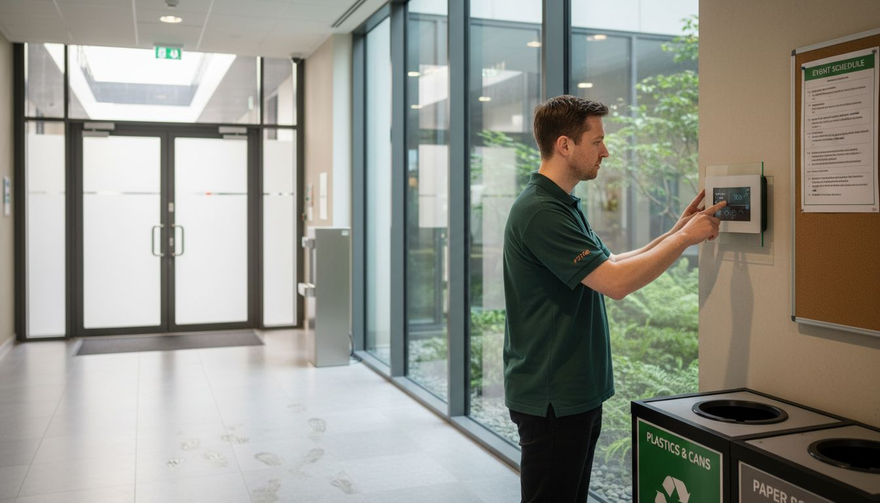
Sustainable Conference Venue: Enhancing Corporate Responsibility
More than 60 percent of british companies now prioritise sustainability when planning corporate events. For event managers in major UK cities, the need to find venues that reflect genuine environmental and social responsibility is more urgent than ever. Modern sustainable conference spaces offer an opportunity to minimise ecological impact while strengthening your organisation’s CSR credentials and reputation among stakeholders.
Table of Contents
- What Makes A Conference Venue Sustainable
- Types Of Sustainable Venues And Green Standards
- Key Features And Certifications Explained
- How To Choose The Right Green Venue
- Common Pitfalls And How To Avoid Them
Key Takeaways
| Point | Details |
|---|---|
| Sustainable Venues Reduce Impact | Sustainable conference venues minimise environmental impacts through green practices and resource management while enhancing corporate event experiences. |
| Importance of Certification | Obtaining certifications like LEED and BREEAM signals a venue’s commitment to sustainability, influencing selection credibility. |
| Holistic Approach Necessary | A comprehensive evaluation of both environmental and social practices is essential for genuine sustainability in venue selection. |
| Advancements in Technology | The use of smart technologies and renewable energy sources is key in establishing venues that foster sustainability and efficiency. |
What Makes a Conference Venue Sustainable
Sustainable conference venues represent a strategic approach to reducing environmental impact while delivering exceptional corporate event experiences. These venues go beyond traditional event spaces by integrating green infrastructure , responsible resource management, and comprehensive sustainability practices that align with modern corporate social responsibility objectives.
Key characteristics of a sustainable conference venue include sophisticated energy efficiency systems, waste reduction strategies, and commitment to minimising carbon footprints. Conference facilities across the United Kingdom are increasingly adopting innovative approaches such as:
- Renewable energy sources like solar and wind power
- Efficient LED lighting and smart building management systems
- Water conservation technologies
- Locally sourced and plant-based catering options
- Robust recycling and composting programmes
- Electric vehicle charging stations
- Digital registration and reduced paper consumption
Moreover, sustainable venues prioritise social responsibility by ensuring accessibility, supporting local communities, and creating inclusive environments that accommodate diverse participant needs. This holistic approach means considering not just environmental metrics, but also social impact, worker welfare, and transparent sustainability reporting.
Pro Tip for Sustainable Event Planning: Conduct a comprehensive sustainability audit before selecting your conference venue, focusing on measurable environmental credentials, carbon offset programmes, and the venue’s commitment to ongoing ecological improvements.
This summary highlights how sustainable conference venue features create organisational value:
| Feature | Environmental Benefit | Business Impact |
|---|---|---|
| Renewable energy sources | Lower emissions and resource use | Reduced operational costs |
| Local and plant-based food | Lower food miles, supports region | Positive brand and attendee well-being |
| Digital event solutions | Less paper waste | Enhanced efficiency and innovation |
| Social responsibility | Inclusive, fair environment | Strengthened organisational reputation |
Types of Sustainable Venues and Green Standards
Sustainable venues represent a critical evolution in corporate event planning, offering sophisticated approaches that transcend traditional environmental considerations. These venues are categorised by their comprehensive commitment to ecological and social responsibility, incorporating advanced standards that address multiple dimensions of sustainability.
Green certification standards play a pivotal role in defining sustainable venues, with internationally recognised frameworks like Corporate Venue Finding providing comprehensive guidelines. Key classifications include:
- LEED Certification : Focuses on energy efficiency, water conservation, and reduced carbon emissions
- BREEAM Standards : Evaluates building sustainability across environmental, social, and economic metrics
- Green Globe Certification : Assesses venues’ commitment to sustainable tourism and operational practices
- ISO 20121 : Specialises in sustainable event management systems
Venues achieving these certifications demonstrate sophisticated strategies such as renewable energy integration, waste reduction programmes, and innovative design principles that minimise environmental impact. These approaches extend beyond physical infrastructure to include social responsibility, worker welfare, and community engagement.
Modern sustainable venues incorporate advanced technologies like smart building management systems, solar panel installations, and intelligent energy monitoring. These venues prioritise not just environmental metrics, but holistic sustainability that balances ecological preservation with exceptional event experiences.
The table below compares key sustainability certifications for conference venues and their distinct focus areas:
| Certification | Main Focus | Typical Applicants |
|---|---|---|
| LEED | Energy efficiency, carbon reduction | Office buildings, large venues |
| BREEAM | Holistic building sustainability | New and existing structures |
| Green Globe | Sustainable tourism and practices | Hotels, conference centres |
| ISO 20121 | Sustainable event management systems | Event organisers, all venues |
Pro Tip for Green Venue Selection: Request comprehensive sustainability documentation from potential venues, examining their specific green credentials, carbon offset programmes, and measurable environmental impact reduction strategies.
Key Features and Certifications Explained
Sustainability certifications for conference venues represent a sophisticated framework of rigorous standards designed to measure and validate environmental and social responsibility. These comprehensive assessments go far beyond simple checklists, providing a holistic evaluation of a venue’s commitment to ecological preservation and ethical operational practices.
Corporate Venue Finding strategies highlight the critical components that define top-tier sustainable venues. The key certification features typically encompass:
- Energy Performance : Detailed analysis of renewable energy usage, carbon emissions reduction, and efficiency metrics
- Water Management : Comprehensive assessment of conservation techniques, recycling systems, and sustainable water consumption
- Waste Reduction : Evaluation of circular economy practices, recycling programmes, and minimal waste generation strategies
- Social Responsibility : Examination of workplace conditions, community engagement, and inclusive design principles
- Material Sourcing : Analysis of sustainable procurement, local supply chains, and environmentally conscious purchasing
Certification bodies like LEED, BREEAM, and ISO 20121 employ sophisticated scoring systems that quantify a venue’s sustainability performance. These frameworks provide nuanced assessments that consider not just environmental impact, but also broader social and economic implications of venue operations.
Advanced certifications now incorporate emerging technologies and innovative approaches, including digital carbon tracking, intelligent building management systems, and real-time sustainability performance monitoring. This evolution reflects a growing understanding that sustainable venues are dynamic ecosystems rather than static physical spaces.
Pro Tip for Certification Understanding: Request a detailed breakdown of a venue’s sustainability certification, paying close attention to specific scoring categories and their relative weightings to gain a comprehensive view of their environmental commitment.
How to Choose the Right Green Venue
Selecting a sustainable conference venue requires a strategic approach that balances environmental responsibility with practical event requirements. Corporate event managers must look beyond surface-level green claims and conduct thorough evaluations to ensure genuine sustainability commitments that align with their organisational values and carbon reduction goals.
How to Book a Venue for an Event becomes significantly more nuanced when sustainability is a priority. Key considerations for choosing a green venue include:
- Certification Verification : Confirm legitimate sustainability credentials from recognised bodies like LEED, BREEAM, or ISO 20121
- Energy Infrastructure : Assess renewable energy sources, smart building technologies, and carbon reduction strategies
- Location Accessibility : Evaluate public transport connectivity, electric vehicle charging facilities, and reduced travel requirements
- Waste Management : Review comprehensive recycling programmes, minimal single-use plastic policies, and circular economy practices
- Local Sourcing : Examine catering approaches, prioritising locally produced, plant-based, and seasonal food options
Comprehensive venue selection demands a holistic approach that considers not just environmental metrics, but broader social responsibility indicators. Advanced green venues demonstrate commitment through transparent reporting, community engagement, and continuous improvement in sustainable practices.
Modern sustainable venues leverage cutting-edge technologies like intelligent energy management systems, real-time carbon tracking, and innovative waste reduction techniques. These venues transform environmental responsibility from a compliance exercise into a strategic competitive advantage for forward-thinking organisations.
Pro Tip for Green Venue Assessment: Request a detailed sustainability impact report from potential venues, focusing on specific, measurable environmental performance metrics rather than generic green marketing statements.
Common Pitfalls and How to Avoid Them
Navigating sustainable conference venue selection requires a strategic approach that anticipates potential challenges and proactively addresses complex sustainability considerations. Corporate event managers must develop a sophisticated understanding of potential missteps that can compromise their environmental responsibility objectives.
How to Find Venues for Events becomes significantly more complex when sustainability is a priority. Common pitfalls in sustainable venue selection include:
- Greenwashing Recognition : Distinguish between genuine sustainability credentials and superficial marketing claims
- Comprehensive Evaluation : Avoid focusing solely on single environmental metrics while neglecting broader impact considerations
- Cost Misconception : Do not assume sustainable venues are inherently more expensive
- Certification Complexity : Understand that multiple certification standards require nuanced interpretation
- Technology Dependency : Balance technological solutions with fundamental sustainable practices
Successful sustainable venue selection demands a holistic approach that transcends simplistic environmental checklists. Event managers must develop critical assessment skills that penetrate beyond marketing rhetoric, examining venues’ authentic commitment to ecological and social responsibility.
Advanced sustainable venue selection requires understanding the interconnected nature of environmental strategies. This means recognising that true sustainability involves complex, multifaceted approaches that integrate technological innovation, operational efficiency, and genuine organisational commitment to reducing environmental impact.
Pro Tip for Sustainability Assessment: Develop a standardised sustainability evaluation framework that objectively scores potential venues across multiple environmental and social responsibility dimensions, ensuring comprehensive and unbiased venue selection.
Choose Truly Sustainable Conference Venues for Your Corporate Events
Choosing the right conference venue that aligns with your organisation’s sustainability goals is no longer optional but essential. The article highlights the challenges of navigating green certifications like LEED, BREEAM, and ISO 20121, as well as avoiding common pitfalls such as greenwashing or superficial eco claims. Corporate event managers often struggle to verify genuine sustainability credentials while balancing logistical needs like energy infrastructure and waste reduction programmes. With sustainability becoming a core part of corporate responsibility, finding venues that deliver measurable environmental benefits and social responsibility is critical.
At Jigsaw Conferences , we understand these complexities and offer expert venue-finding solutions tailored to help you access verified sustainable venues across the United Kingdom. Our extensive experience since 2003 means you save valuable time and secure competitive rates through trusted industry relationships. Whether you need assistance with detailed sustainability documentation or want to explore venues with smart energy management and carbon reduction strategies, our team provides free, personalised support that ensures your event aligns with your green values. Discover how to Book a Venue for an Event with confidence knowing your chosen location meets rigorous environmental standards. Start your journey to a responsible, impactful event today by visiting Jigsaw Conferences and turning your sustainable event vision into reality.
Frequently Asked Questions
What are the key features that make a conference venue sustainable?
Sustainable conference venues incorporate energy-efficient systems, waste reduction strategies, water conservation technologies, locally sourced catering, and digital registration to minimise paper consumption.
How can I verify the sustainability credentials of a conference venue?
You can verify sustainability credentials by checking for recognised certifications such as LEED, BREEAM, Green Globe, and ISO 20121. Request comprehensive sustainability documentation to assess their commitment to environmental responsibility.
What are the benefits of choosing a sustainable conference venue for my event?
Selecting a sustainable venue helps reduce your organisation’s carbon footprint, enhances your brand’s reputation, and improves attendee well-being by fostering a responsible and inclusive event environment.
How can I effectively assess the sustainability practices of potential conference venues?
Develop a standardised evaluation framework that objectively scores venues across various environmental and social responsibility dimensions. Focus on energy performance, waste management, local sourcing, and community engagement to ensure a comprehensive assessment.
Jigsaw Conferences Editorial Team
Verified AuthorThe Jigsaw Conferences Editorial Team comprises venue finding experts with over 20 years of combined experience in the events and hospitality industry. Our team includes certified meeting professionals (CMP), venue sourcing specialists, and industry analysts who provide authoritative insights on venue selection, event planning, and corporate accommodation.