
Planners: 30–90 Day Venue Brief for Women’s Networking Events Near Me
Start by commissioning a one-page venue brief and asking every shortlisted supplier for floorplans and capacity figures by layout, not just headline numbers. Three priorities decide whether the event works: room layouts that enable purposeful connection rather than passive rows, accessibility and safety provisions checked in advance, and reliable tech and AV support confirmed on paper. A venue-finding service can turn that brief into a fast shortlist if you need one.
TL;DR: Asking for detailed floorplans per layout and capacity breakdown prevents overselling space and ensures the venue supports your event format.Accessibility requirements, including step-free routes, accessible toilets, and quiet rooms, are now considered more critical in venue selection than ever before.Structured networking formats like mentor tables, speed sessions, and themed workshops produce more valuable contacts than passive mixers, requiring flexible, well-zoned spaces.Planning for venue sourcing should take at least 30 to 90 days, with clear specifications and careful comparison of costs, including hidden fees and cancellation clauses.Working with a venue-finding service can streamline the process, providing a shortlist matched to your specs and negotiated rates without the need for extensive outreach.
TL;DR:
- Asking for detailed floorplans per layout and capacity breakdown prevents overselling space and ensures the venue supports your event format.
- Accessibility requirements, including step-free routes, accessible toilets, and quiet rooms, are now considered more critical in venue selection than ever before.
- Structured networking formats like mentor tables, speed sessions, and themed workshops produce more valuable contacts than passive mixers, requiring flexible, well-zoned spaces.
- Planning for venue sourcing should take at least 30 to 90 days, with clear specifications and careful comparison of costs, including hidden fees and cancellation clauses.
- Working with a venue-finding service can streamline the process, providing a shortlist matched to your specs and negotiated rates without the need for extensive outreach.
Table of Contents
- Finding women’s networking events near me: what venues to shortlist
- What event formats work best for women-focused networking?
- How long does venue sourcing take for a networking event?
- Logistics, accessibility and sustainability checks that matter on the day
- What does a women’s networking event cost to run?
- Your 30-day venue and event action checklist
- A note from Jigsaw Conferences
- Book your venue search with Jigsaw Conferences
- Further reading
- FAQ
Finding women’s networking events near me: what venues to shortlist
Procurement teams searching for women’s networking events near me are usually hunting for a venue, not a definition of networking itself. The job is to compare suppliers on the same criteria, which means asking for identical data from each one before any site visit.
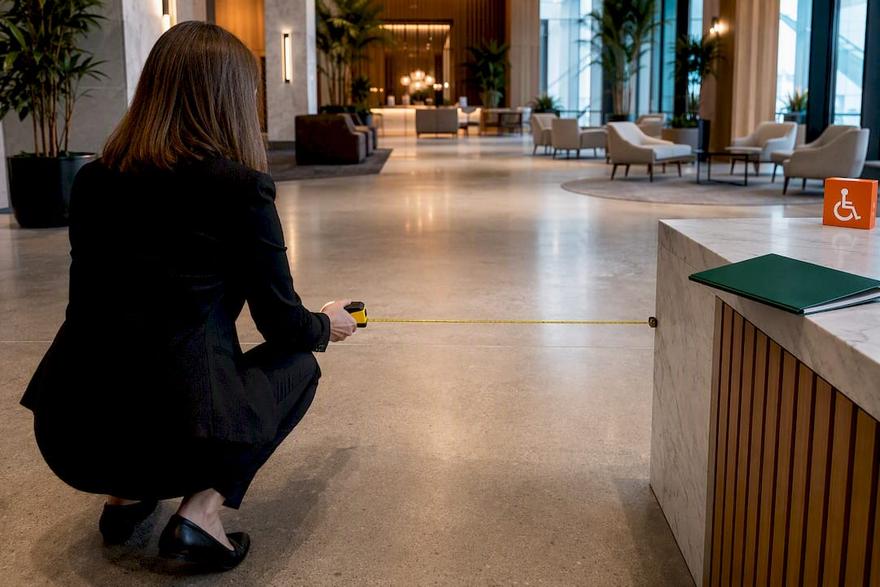
Request floorplans with usable capacity broken down per layout (theatre, cabaret, roundtable), plus breakout room dimensions and AV point locations. A venue that quotes “200 capacity” without specifying the layout is quoting a marketing number, not a working one.
Accessibility deserves the same rigour as capacity. Verify step-free routes from the main entrance to every space in use, accessible toilets on the same floor as the event, at least one quiet or private room, and an accessible route to public transport or drop-off points. Cvent’s planner data shows 74% now rate accessibility as more important than before, and suppliers who cannot answer these questions on request are behind that curve.
Safety and privacy checks matter for a female-focused audience specifically: controlled entry points, visible security presence for larger events, and a private space away from the main floor for anyone who needs it.
On technology, get numbers, not assurances. Ask for confirmed Wi-Fi upload and download speeds, wired LAN points for any live-streamed sessions, and a named contact for on-site technical support with defined response hours. Sustainability and catering standards belong in the request for proposals (RFP) too. Cvent reports that 78% of planners now weigh venue sustainability credentials into their decision, so build it into the brief rather than treating it as an afterthought.
| Check category | What to request | Why it matters |
|---|---|---|
| Capacity | Floorplans per layout type | Prevents oversell of usable space |
| Accessibility | Step-free routes, accessible toilets, quiet room | Confirms inclusive attendance |
| Tech | Wi-Fi speeds, LAN points, support hours | Avoids live failures during sessions |
| Sustainability | Carbon reporting, local catering options | Meets rising planner expectations |
Pro Tip: Ask for a written response to your specs, not a verbal yes on the site visit. Verbal assurances rarely survive contract negotiation.
What event formats work best for women-focused networking?
Define the outcome before you pick a format. Mentorship, skills-building and deal-making each need a different room, and choosing the venue first often forces the wrong format onto the day. Create & Cultivate’s leadership has been blunt about this: many events fail because they set up a passive room and hope conversation happens on its own, rather than designing structure into the session.
The Globe and Mail’s reporting on women’s networking backs this up. Many women describe generic mixers as ineffective, while structured formats such as mentor tables, small-group roundtables and themed workshops produce far more useful contacts.
- Mentor tables : seat one senior figure with four to six attendees, rotating groups every 15 to 20 minutes so more people get direct access.
- Structured speed networking : timed one-to-one slots, matched in advance where possible, remove the awkwardness of open mingling.
- Themed workshops : pair a skills session (negotiation, public speaking) with built-in discussion time so the content itself becomes the connection point.
- Small-group roundtables : six to eight attendees per table with a facilitator prompt sheet keeps conversation focused rather than dominated by one voice.
Room layout has to support whichever format you pick. Zone the space clearly, use modular seating that can shift between formats within the same day, and design the arrival and registration flow so nobody spends the first 15 minutes queuing instead of connecting.
Pre-event matchmaking pays off at scale. Create & Cultivate’s own CONNECT programme used double opt-in matchmaking to generate hundreds of mentor and hiring connections, well beyond what open networking typically produces. A short profiling form sent before the event, feeding a simple matchmaking sheet, does most of that work without needing custom software.
Track outcomes with clear KPIs: number of warm contacts made, session engagement rate, and follow-up connections logged a week later, as detailed in the importance of networking in marketing. Our guide to networking effectively at corporate events covers facilitation techniques that carry over well to female-focused formats.
Pro Tip: Give every attendee three specific conversation prompts on their name badge or table card. It sounds small, but it removes the “what do I even say” hesitation that kills first introductions.
How long does venue sourcing take for a networking event?
Budget several weeks to a few months from brief to signed contract, depending on venue availability and how firm your dates are. Compress the timeline further only if you’re prepared to accept a shorter shortlist.
Sourcing milestones:
- Days 1 to 10 : finalise the brief, define capacity and format, request quotes from at least three venues
- Days 10 to 30 : site visits, compare floorplans and accessibility checks against your spec
- Days 30 to 60 : negotiate terms, confirm AV and catering inclusions in writing
- Days 60 to 90 : sign contract, confirm final numbers and lock deposit schedule
Your RFP needs the attendee profile, the desired outcome (mentorship, deal-making, skills exchange), and your accessibility and AV specs stated as requirements, not preferences. Cvent’s data shows planners using structured sourcing workflows with clear specs report measurable time and cost savings compared with informal enquiries.
Read quotes carefully for hidden costs: service charges on catering, room minimum spends, and labour fees for AV technicians outside standard hours are the three most common surprises. Push back on cancellation and attrition clauses, and ask for a cap on any hidden-cost categories before signing.
If your timeline is tight or your team lacks bandwidth for supplier negotiation, Jigsaw Conferences can run the shortlist and negotiation stages in parallel, which is where most of the 90-day window gets compressed. See our venue-finding checklist for professional event planners for a fuller breakdown of RFP content.
Logistics, accessibility and sustainability checks that matter on the day
Registration flow, clear signage, a staffed cloakroom and secure storage for personal items all affect how quickly attendees settle into the actual networking. A slow queue at the door undoes weeks of format planning in the first ten minutes.
Accessibility specifics worth mandating in the contract:
- Live captioning for any panel or presentation segment
- A hearing loop for the main session space
- A lactation room, separate from the general quiet room
- Clear wayfinding signage between all spaces in use, including toilets and breakout rooms
Sustainability requests should sit in the same document: ask for carbon reporting where the venue offers it, locally sourced catering options, a stated waste management approach, and confirmation of the building’s energy standard. Sponsor placement needs the same scrutiny as attendee privacy. Keep sponsor stands away from quiet rooms and lactation spaces, and confirm attendee contact details aren’t shared with sponsors without explicit opt-in.
What does a women’s networking event cost to run?
Venue hire and catering typically consume the largest share of budget, followed by AV and staffing, then materials and matchmaking tools. Cvent’s planner data shows 48% are now sourcing non-hotel, unique venues specifically because they improve interaction while often reducing production costs, since distinctive spaces need less decorative spend to feel purposeful.
The best-returning investment is usually facilitation, not decor. Paying for a skilled facilitator or structured matchmaking tool costs less than most catering upgrades and does more for the actual outcome attendees came for.
Practical savings tactics:
- Choose a non-hotel venue with built-in character to cut production and styling costs
- Run matchmaking on a simple form rather than a bespoke app
- Negotiate AV as a package rather than itemised line by line
Statistic: Cvent’s survey of event planners found 63% now cite attendee engagement as their primary success metric, ahead of attendance numbers. Budget decisions should follow that priority, not fight it.
Your 30-day venue and event action checklist
- Finalise the event outcome and write a one-page venue brief
- Request quotes and floorplans from at least three shortlisted venues
- Book an AV test slot with your chosen supplier ahead of the event
- Confirm accessibility provisions and lactation room availability in writing
- Set up a matchmaking profile form for pre-event attendee pairing
- Confirm cancellation terms, attrition clauses and what’s included versus chargeable extras
A note from Jigsaw Conferences
Experienced venue sourcing services have offered support for corporate clients since 2003, and women-focused networking briefs follow the same discipline as any other event: clear specs, fast comparison, firm negotiation. Venue search services can shortlist suitable spaces and help secure competitive rates through supplier relationships. Get in touch for a brief template or a ready-made shortlist.
— Jigsaw
— Jigsaw
Book your venue search with Jigsaw Conferences
Venue finding services can be a practical alternative to running supplier outreach yourself: instead of chasing floorplans and quotes from a dozen venues, you send one brief and receive a shortlist matched against your capacity, accessibility and tech specs. These services search, compare, liaise directly with venues, and negotiate rates using established supplier relationships, including corporate housing and emergency accommodation if overnight stays are needed. Resources like a checklist for choosing networking event spaces pair well with the brief you’ve just built from this guide, and sustainable venue options can also be flagged where relevant. Ready to move? Submit a booking enquiry with your venue brief attached to receive a shortlist rather than a sales call.
Further reading
Cvent’s planner survey data on venue sourcing and engagement, Create & Cultivate’s guidance on intentional women-focused events, and practitioner pieces from WomenTech and The Globe and Mail all informed this guide.
FAQ
What makes a venue suitable for women’s networking events?
A suitable venue offers flexible layouts for small-group formats, verified accessibility features including quiet rooms and step-free routes, and confirmed AV support rather than assumed connectivity.
How far in advance should we book a venue?
Book 30 to 90 days ahead depending on venue availability and how firm your event date is; tighter timelines are possible with focused shortlisting support such as Jigsaw Conferences provides.
What room layout works best for structured networking?
Small-group roundtables or rotating mentor tables outperform theatre-style seating for connection-building, because they force conversation within a manageable group size.
How do we measure whether the event actually worked?
Track warm contacts made, session engagement rate and follow-up connections logged a week later rather than relying solely on attendance numbers.
Does Jigsaw Conferences charge for venue sourcing?
Jigsaw Conferences offers a free venue search and booking assistance service for corporate clients, earning its return through supplier relationships rather than fees charged to you.
Jigsaw Conferences Editorial Team
Verified AuthorThe Jigsaw Conferences Editorial Team comprises venue finding experts with over 20 years of combined experience in the events and hospitality industry. Our team includes certified meeting professionals (CMP), venue sourcing specialists, and industry analysts who provide authoritative insights on venue selection, event planning, and corporate accommodation.