
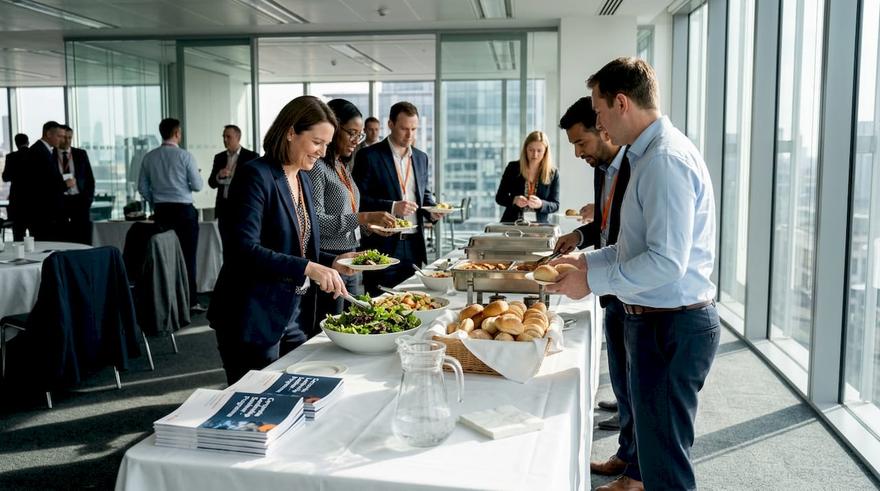
Event catering basics: unlock successful corporate events
TL;DR: Catering significantly influences attendance, engagement, and brand perception at corporate events.Choosing the right format and sustainable options enhances the event experience and aligns with company values.Investing in quality catering sends a strong cultural signal and improves overall event success.
TL;DR:
- Catering significantly influences attendance, engagement, and brand perception at corporate events.
- Choosing the right format and sustainable options enhances the event experience and aligns with company values.
- Investing in quality catering sends a strong cultural signal and improves overall event success.
Most corporate event planners treat catering as a line item to manage rather than a lever to pull. That mindset is costing you attendance, engagement, and return on investment. 80% of UK workers say free meals boost their likelihood of attending in-person office events, which means your buffet selection is directly influencing whether people show up. This guide covers everything you need to know about event catering basics, from choosing the right format to selecting a reliable caterer and integrating sustainability into your menu. By the end, you will have a clear framework to turn catering from an afterthought into one of your most powerful event tools.
Table of Contents
- Why catering matters for corporate events
- Understanding your catering options
- Key factors in selecting a caterer
- Maximising impact with sustainability and wellness
- A fresh perspective: catering as your event’s secret weapon
- Make your next event unforgettable with the right catering partner
- Frequently asked questions
Key Takeaways
| Point | Details |
|---|---|
| Catering drives event success | High-quality catering boosts attendance, engagement, and corporate image for UK events. |
| Match catering to event goals | Choose food formats that suit your event type, size, and attendee profiles for the best impact. |
| Focus on sustainability and wellness | Integrating sustainable, health-focused menus strengthens both attendee satisfaction and brand reputation. |
| Select your caterer wisely | Assess reliability, flexibility, and sustainability when shortlisting catering partners. |
Why catering matters for corporate events
Catering has quietly become one of the most strategic elements of any corporate event. It is no longer just about keeping people fed during a long afternoon session. The food and drink you provide signals something about your organisation, your values, and how much you respect the people in the room.
“The quality of your catering tells attendees exactly how much their time and comfort matter to your organisation.”
“The quality of your catering tells attendees exactly how much their time and comfort matter to your organisation.”
Think about the last event you attended where the food was genuinely impressive. You probably remembered it. Now think about the last event where the sandwiches were stale and the coffee ran out by 10am. That memory lingers too, and not in a good way.
For UK event planners navigating hybrid working models, the stakes are even higher. Getting people to leave their home offices and commute to a venue requires genuine incentive. Understanding the how catering fuels office return dynamic is essential for any planner trying to maximise in-person attendance in 2026.
Here is what quality catering actually delivers for your event:
- Higher attendance rates because people have a tangible reason to show up in person
- Improved engagement as well-fed attendees concentrate better and participate more actively
- Stronger brand perception when menus reflect company values around sustainability and wellbeing
- Better attendee retention throughout the day, reducing early departures after lunch
- Positive word of mouth that makes your next event easier to fill
The numbers back this up. The UK event catering segment is growing at 3.9% CAGR between 2025 and 2030, driven by rising expectations from corporate clients and their attendees. That growth reflects a market where organisations are investing more, not less, in the catering experience.
Pro Tip: Budget for catering early in the planning process, not after venue and AV costs are locked in. Catering is often the element attendees remember most, yet it is frequently the first budget to be cut.
For a broader look at the strategic decisions involved, reviewing key event catering considerations before you brief a caterer will save you significant time and prevent costly last-minute changes.
Now that we have established catering’s importance, let us detail the main types of corporate event catering you will encounter.
Understanding your catering options
Hybrid work models are driving demand for more flexible, high-quality catering solutions, which means the old default of a basic buffet no longer cuts it for most corporate audiences. Choosing the right format depends on your event type, your attendee profile, and the experience you want to create.
Here is a comparison of the most common corporate catering formats:
| Format | Best for | Cost level | Flexibility | Sustainability |
|---|---|---|---|---|
| Buffet | Large groups, networking | Medium | High | Medium |
| Plated meal | Formal dinners, awards | High | Low | Medium |
| Boxed lunch | Workshops, training days | Low | Medium | High |
| Food stations | Breakout sessions, drinks receptions | Medium/High | Very high | High |
| Working breakfast | Early morning meetings | Low/Medium | Medium | Medium |
Each format has a distinct role. Buffets work well when you want people to move around and interact. Plated meals signal formality and are suited to award ceremonies or client dinners. Boxed lunches are practical for tightly scheduled training days where you cannot afford a long break. Food stations are increasingly popular because they allow attendees to graze throughout an event rather than stopping everything for a formal meal.
When selecting a format, work through these decisions in order:
- Define the event purpose because a networking event has very different catering needs to a full-day conference
- Identify your attendee count as some formats become impractical at scale
- Assess the venue layout since plated meals require round tables and sufficient service space
- Set your per-head budget before approaching caterers so you have a realistic brief
- Confirm dietary requirements early, as this may influence which formats are most practical
Pro Tip: For events over 100 people, food stations and buffets are almost always more efficient than plated meals. They reduce service time, lower staffing costs, and give attendees more control over what they eat.
For a more detailed breakdown of formats suited to different corporate goals, exploring essential catering options will give you a stronger foundation before you brief suppliers.
Key factors in selecting a caterer
Once you have identified the right catering format, the next challenge is finding a supplier you can trust to deliver it. The UK catering market is large, and the difference between an average caterer and an excellent one is often invisible until the day itself.
UK event organisers are prioritising quality and sustainable, local sourcing when selecting catering partners, and rightly so. Your caterer reflects on your organisation, so the selection process deserves proper attention.
Key criteria to assess when shortlisting caterers:
- Proven track record with events of a similar size and format to yours
- Client references from corporate clients, not just private functions
- Dietary competence including robust processes for allergen management and special diets
- Sustainability credentials such as local sourcing policies, waste reduction targets, and packaging choices
- Food safety certifications including current Food Hygiene Ratings and staff training records
- Flexibility to adapt menus at short notice if attendance numbers change
- Transparency on pricing with no hidden charges for service staff or equipment hire
When you meet a potential caterer, ask them to walk you through a recent corporate event they delivered. How did they handle dietary requirements? What happened when something went wrong? A confident, detailed answer tells you far more than a polished brochure.
| Question to ask | What a strong answer looks like |
|---|---|
| How do you manage allergens? | Clear written process, separate preparation areas |
| What is your waste policy? | Specific targets, food donation partnerships |
| Can you provide local sourcing evidence? | Named suppliers, seasonal menus |
| What is your contingency if staff are ill? | Named backup team or agency relationships |
For events where the venue and catering are interlinked, using a venue and catering checklist ensures you cover every detail before signing contracts. You should also consider whether your venue has an approved caterer list, as this can limit your options or simplify the decision depending on your perspective. Reviewing sustainable event catering criteria alongside your caterer shortlist will help you align supplier choices with broader company commitments.
Maximising impact with sustainability and wellness
Beyond the basics, integrating sustainability and wellness into your catering approach will further enhance your event’s outcome and strengthen your organisation’s reputation.
Sustainability and wellness are now top differentiators in the UK catering market, meaning attendees notice when you get this right and when you do not. A plant-forward menu with locally sourced ingredients sends a clear message about your organisation’s priorities.
“Events that visibly commit to sustainable catering practices consistently receive higher satisfaction scores from attendees who share those values.”
“Events that visibly commit to sustainable catering practices consistently receive higher satisfaction scores from attendees who share those values.”
Practical steps to raise your sustainability and wellness credentials:
- Choose seasonal, local menus to reduce food miles and support UK producers
- Offer plant-based options as a default rather than as an afterthought for vegetarians
- Eliminate single-use plastics from all catering service points
- Partner with food redistribution charities to donate surplus food after the event
- Provide clear nutritional information so attendees can make informed choices
- Serve smaller, more frequent portions throughout the day to maintain energy without post-lunch slumps
- Use compostable or reusable serviceware wherever the venue allows
Wellness-focused catering also has a measurable impact on afternoon engagement. Events that serve heavy, carbohydrate-laden lunches consistently see a drop in participation during post-lunch sessions. Lighter, protein-rich options with plenty of fresh fruit and vegetables keep energy levels stable across a full day.
For planners looking to reduce the overall environmental footprint of their events, exploring approaches to reducing event catering impact alongside your catering brief is a practical starting point. Combining this with broader corporate event planning tips gives you a joined-up approach to sustainability across every element of your event.
Communicating your sustainability efforts to attendees matters too. A short note on the menu card explaining your sourcing choices or waste reduction commitments takes seconds to read but leaves a lasting impression.
A fresh perspective: catering as your event’s secret weapon
Here is something most event planning guides will not tell you. Catering is not a support function. It is a cultural signal. When you invest in genuinely good food, you are telling your attendees that their experience matters. When you cut corners, you are telling them the opposite, even if every other element of the event is flawless.
The most effective event planners we work with treat menu decisions with the same rigour they apply to speaker selection or AV specifications. They brief caterers with detailed attendee profiles. They taste menus in advance. They think about the energy curve of the day and choose food that supports it.
This mindset shift produces measurable results. Events with thoughtful, high-quality catering see better attendance, longer dwell times, and higher post-event satisfaction scores. Reviewing catering strategy insights alongside your planning process reinforces why this investment consistently pays off. The uncomfortable truth is that most organisations underinvest in catering because it feels intangible. But attendees remember how your event made them feel, and food is central to that feeling.
Make your next event unforgettable with the right catering partner
You now have a solid foundation for making smarter catering decisions across every type of corporate event. From choosing the right format and selecting a reliable caterer to embedding sustainability into your menus, each decision compounds to create an event experience that people genuinely remember. At Jigsaw Conferences, we have been helping corporate clients source venues and plan events since 2003, and we know that the right venue and catering combination makes all the difference. Explore our corporate venue solutions to find spaces with outstanding catering facilities across the UK. Our team will handle the search, negotiate competitive rates, and ensure every detail is covered, at no cost to you.
Frequently asked questions
What is considered basic event catering for corporate events?
Basic corporate event catering typically includes buffet or boxed options, refreshments such as tea and coffee, and menus adapted to common dietary requirements including vegetarian, vegan, and allergen-free choices.
How does catering impact hybrid event attendance?
Quality catering is one of the strongest incentives for in-person attendance at hybrid events, with research showing it directly influences whether employees choose to attend at the office rather than joining remotely.
What catering trends should UK planners prioritise now?
In 2026, UK planners should focus on plant-based menus, low-waste packaging, local and seasonal sourcing, and wellness-oriented options that maintain attendee energy throughout the day.
How do you select a reliable event caterer in the UK?
Prioritise caterers with verifiable corporate experience, strong allergen management processes, clear sustainability policies, and transparent pricing that covers staffing and equipment without hidden charges.
Jigsaw Conferences Editorial Team
Verified AuthorThe Jigsaw Conferences Editorial Team comprises venue finding experts with over 20 years of combined experience in the events and hospitality industry. Our team includes certified meeting professionals (CMP), venue sourcing specialists, and industry analysts who provide authoritative insights on venue selection, event planning, and corporate accommodation.